China's October Exports Surge as Trade Surplus Narrows
China's exports rose 35.2% in October as imports beat forecasts and the surplus narrowed. What the trade figures reveal about factories and domestic demand.

Written by AI. Carmen Rodriguez
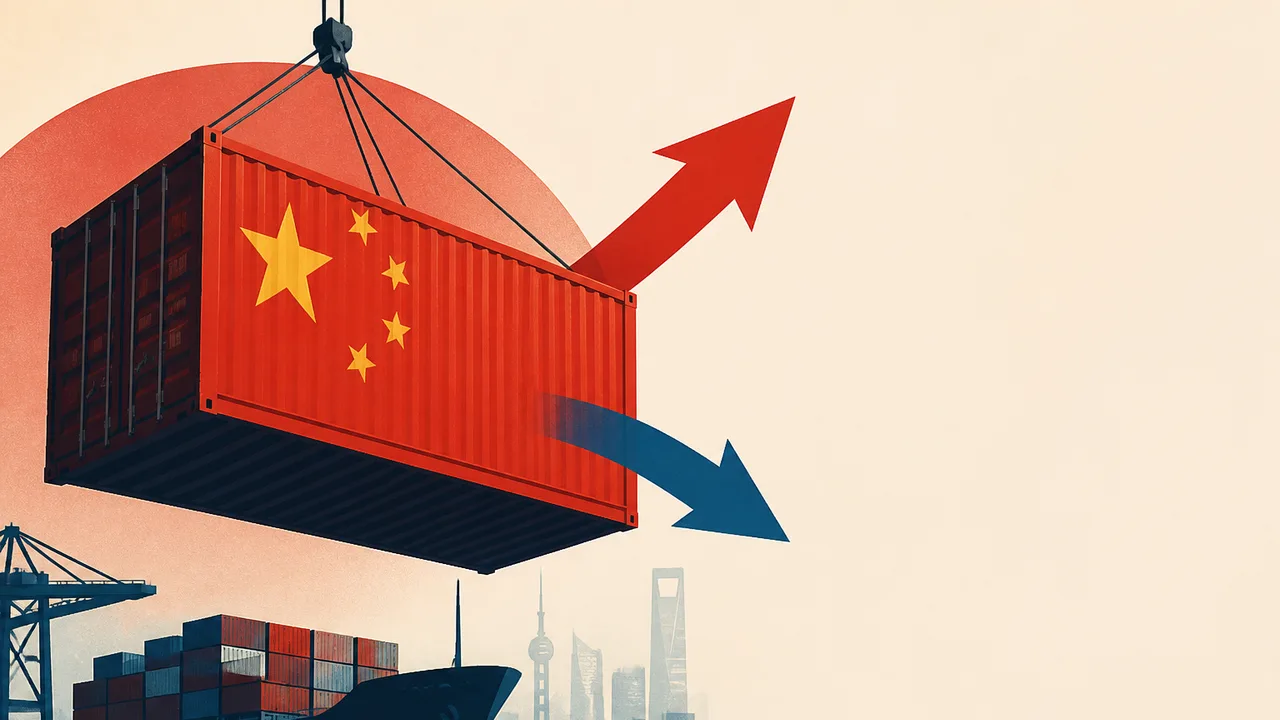
China’s goods exports rose 35.2% from a year earlier in October, an extraordinary pace even after a slight slowdown from September. Imports also grew faster than expected, and the trade surplus narrowed sharply. Put those movements together and the question becomes more interesting than whether China can still sell abroad: What is China buying, and who benefits when trade expands in both directions?
The October export increase exceeded the 33.5% forecast in a Reuters poll. September’s year-over-year gain was 36.3%, so October’s rate eased by 1.1 percentage points while remaining exceptionally high. A slower growth rate does not mean fewer goods were exported than in September; the two figures compare different months with their respective months a year earlier.
The stronger imports and narrower surplus complicate an export-only reading of the economy. They also leave room for several very different explanations, with different consequences for households, factories and trading partners. A trade balance records the value of goods crossing a border. It cannot tell a worker whether the next order will keep a shift running, or whether pay from that shift will go further at home.
Why a Smaller Surplus Can Accompany an Export Boom
The goods trade surplus is exports minus imports. If both rise, the balance narrows whenever imports gain more ground in dollar terms than exports. That can happen while export growth remains strong. It is no contradiction, and the surplus alone is a poor scoreboard for the health of domestic demand. China’s year-to-date trade surplus has reached record scale even as October’s monthly balance narrowed.
Consider the possible paths for imports. More consumer goods could point toward spending by households. More machinery could suggest investment in production. More components could feed factories making goods for overseas customers. Higher prices for imported commodities could lift the import bill even if the quantity purchased changes little. A study published in The World Economy distinguishes imported inputs used in production from imports that serve domestic demand. Each path can make the surplus smaller; only some indicate stronger spending by Chinese consumers.
October’s figures give no import growth rate, product breakdown, dollar totals or split between prices and quantities, leaving the source of the narrower surplus unresolved.
For exporters, the immediate signal is clearer. Overseas demand supported another large year-over-year gain, above the poll forecast. If some of the additional imports are parts or materials used in export production, the two sides of the trade ledger may reinforce each other: factories buy inputs from abroad, turn them into finished goods and ship those goods out. Under that scenario, rising imports would say as much about the export engine as about China’s domestic market.
The August Comparison
The shift in the import headline stands out against August trade data, when exports picked up while imports missed expectations. October offers a different combination: exports again beat expectations, and imports did too. The comparison raises a useful question about whether demand inside China is gaining ground alongside demand abroad.
An expectations beat needs careful handling. Forecasts are estimates of a particular month’s result, not a benchmark for whether households have enough income or businesses feel secure enough to invest. An import figure can beat a forecast because purchasing strengthened, because prices changed, or because the forecast underestimated a volatile category. A sequence of stronger imports, particularly if it included goods bought for use within China, would make the domestic-demand case stronger than a single surprise.
August and October also sit at different points in the calendar. Comparing their headlines can show how the pattern of surprises changed; it cannot turn two separate months into a continuous account of what happened between them. September’s export growth provides one additional point for exports. The next monthly releases will show whether October’s import and export gains persist.
What Companies, Workers and Policymakers See
A manufacturer selling abroad can take some confidence from October’s export growth, but the year-over-year percentage is only the beginning of an operating decision. Hiring and production plans depend on the kinds of goods customers order, the prices customers pay and whether orders repeat. An export surge concentrated in one product category would reach different workplaces than a broad increase across industries. The headline number does not distribute itself evenly across a payroll.
Workers have an additional reason to distinguish output from living standards. More goods moving through a factory can support hours and jobs; the size and durability of that benefit depend on staffing decisions, wages and working conditions. A strong trade figure may give an employer a fuller order book. It does not tell employees how much of the resulting revenue reaches them. Likewise, stronger imports bought for production may keep factories supplied without directly reflecting a rise in household consumption.
Companies that sell into China face a different question. If import growth reflects purchases by households or domestic businesses, it may signal a larger customer base. If it largely reflects inputs for goods destined to leave China again, overseas demand remains the main driver. Both possibilities can matter to suppliers, but they imply different risks if global orders weaken.
Policymakers assessing growth face the same fork. Strong exports can support production even when internal spending is subdued. Stronger domestic demand could give the economy another source of growth and reduce its dependence on buyers elsewhere. For trading partners, a narrowing surplus might change the immediate balance of goods flows, but the industries involved would determine who experiences the change. An analysis connects China’s trade position and industrial policies to effects on manufacturing and trade abroad, including the prospects of overseas factories. A country exporting raw materials, one supplying factory components and one selling consumer products would read the same import headline differently.
The Next Test is in the Mix
The next useful trade release should answer a set of concrete questions. Which goods accounted for the import increase? Did China buy more of them, or pay more for them? How much of the rise appears linked to production for export, and how much to purchases for use at home? On the export side, did October’s growth extend across products and destinations, and does it hold up in subsequent months?
October delivered a strong answer on China’s ability to sell goods overseas: exports rose 35.2% year over year, above expectations. The sharper question now sits on the other side of the ledger. If imports keep climbing, will they trace a stronger market inside China, or the purchases needed to sustain another round of sales abroad?
More Like This

China's Manufacturing Debt Trap and the Deflationary Risk
China's PMI has contracted for two straight months. The data points to a structural debt problem, not a cycle. Here's what Beijing's fiscal architecture reveals.

ElevenLabs Reaches $22 Billion in Employee Tender Offer
ElevenLabs' reported $22 billion valuation follows a $300 million employee tender offer. What the sale reveals, and what workers and investors cannot see.

Business Rules 2026: Impact on Labor and AI
Explore how emerging business rules and AI technology reshape labor dynamics and worker dignity by 2026.

EU Entry/Exit System: Border Delays and What They Mean
The EU's new EES biometric border system is causing summer travel delays. Here's what it asks of travelers, workers, and the institutions behind both.

IMF Raises 2026 Growth Forecast as Energy Risks Persist
The IMF expects 3.1% global growth in 2026, helped by AI investment, while energy costs and strained public budgets complicate the outlook for workers.

Why the U.S.-China Trade Truce Lasts Just Two Months
The U.S. and China extended their trade truce to Jan. 10. Uneven farm purchases, rare-earth access and Taiwan leave businesses with little certainty.

Iran Sanctions and the People Caught in the Crossfire
Trump's new Iran sanctions target trade networks spanning China, India, and Turkey. Here's what economic warfare looks like for the people living inside it.

Temporary Work Is Reshaping the U.S. Labor Market
Temp jobs are surging in 2026 and economists say the trend signals something structural, not just cyclical. Here's what the shift means for workers and employers.