Chaitin's Omega: The Number That Knows Everything
Chaitin's Omega encodes answers to every mathematical question—yet its digits are provably uncomputable. Here's what that actually means, and why it matters.

Written by AI. Nadia Marchetti

Photo: AI. Sela Marin
Pick a number. Any real number between 0 and 1. Write it down in binary, let its digits unspool into infinity, and ask yourself: do those digits, somewhere in their endless tail, encode the answer to every yes-or-no question mathematics has ever posed?
For almost every number you could name, the answer is no. Pi's decimal expansion doesn't resolve the Riemann Hypothesis. The square root of two has nothing to say about the Twin Prime Conjecture. They're infinite, beautiful, rich with structure—and yet they don't know anything. They just sit there on the number line, being themselves.
Now meet Chaitin's Omega. It sits on the same line. It looks like all the others. And according to a rigorous mathematical construction developed by Gregory Chaitin in the 1970s, its digits encode the answers to every mathematical question that has a proof of finite length. The Goldbach Conjecture. P versus NP. Fermat's Last Theorem. All of it, in principle, locked inside the binary expansion of a single real number between zero and one.
The catch—and the Derivia video on this subject puts it cleanly—is that "you cannot ever compute its digits. Not now, not in a thousand years, not with a computer the size of the galaxy."
This is not a practical limitation waiting for better hardware. It is a provable, fundamental wall. And understanding exactly why that wall exists is what makes Omega genuinely strange.
Where Omega Comes From
The construction starts with Alan Turing's 1936 result on the halting problem. Run any program on a universal machine with no input, and one of two things happens: it halts, or it runs forever. Turing proved there is no general algorithm that can tell you which—you can sometimes determine it, but never always.
Chaitin's move was to reframe the question probabilistically. Instead of asking whether this program halts, ask: if you assembled a program by flipping a coin—one bit at a time—what's the probability it halts?
The technical machinery here matters. For this probability to be well-defined, you need what's called a prefix-free code: no valid program can be the opening segment of another. This constraint makes Kraft's inequality apply, which keeps the sum of all halting-program contributions bounded between 0 and 1. Without it, the whole construction collapses. With it, you get Omega: the sum, over every halting program P, of 2 raised to the power of negative its length.
Short programs that halt contribute large terms. Long ones contribute nearly nothing. Sum them all up, and that's Omega.
The Oracle Argument
Here's where the construction goes from curious to genuinely unsettling. Suppose some benevolent oracle handed you the first n bits of Omega. What could you do?
The answer, as the Derivia video explains, is that you could "solve the halting problem for all programs of length up to n." The mechanism is elegant: run every program simultaneously, one interleaved step at a time—a technique called dovetailing. Each time a program halts, add its contribution to a running total. That total climbs slowly toward Omega. The moment your running total matches Omega to n bits of precision, you know something sharp: every program of length up to n that was ever going to halt has already halted. If any short program were still secretly running and destined to halt later, its contribution would push your total past the actual value of Omega. But Omega is where it is. So you're done.
And once you can solve the halting problem up to length n, you can settle every mathematical statement whose formal proof fits within n bits. Because "does a proof of this theorem exist under n symbols?" is itself a question you can phrase as a program: search through every possible proof in order, halt if you find one that works. Whether that program halts is a halting question. Which you just answered.
One million bits of Omega, the video suggests, would be "more than most theorems ever need"—and would settle every open conjecture with a proof that fits inside that window. All at once.
Why You Can't Compute It
The circularity is immediate and irresolvable. To compute Omega, you'd need to know which programs halt. But that's precisely what Turing showed no algorithm can determine. The construction is honest and well-defined. It just relies, essentially, on information that doesn't exist in any computable form.
It's actually worse than uncomputable. Omega is algorithmically random, which is a precise technical claim: no program shorter than n bits can produce the first n bits of Omega, past a certain threshold. The digits have no pattern, no shortcut, no compression—none that any algorithm could exploit. The Levin-Schnorr theorem, proved independently in the early 1970s, established that this notion of incompressibility is exactly equivalent to Martin-Löf randomness, the measure-theoretic definition where a sequence passes every effectively constructible statistical test. Two completely different routes to the same concept of randomness—one through compression, one through statistics—converge on the same set of sequences. Omega is in that set.
So you have a number definable in one sentence, whose digits are maximally random by every rigorous standard, and which also encode answers to every decidable mathematical question. Both things are true simultaneously. The tension between them is real, and it doesn't resolve.
Incompleteness, Without the Trick
Gödel's 1931 incompleteness theorem established that any sufficiently powerful, consistent axiom system contains true statements it cannot prove. His construction was clever but had a self-referential quality—"this statement is unprovable"—that some mathematicians find philosophically slippery. It feels, as the Derivia video notes, like "the system was tripped up by a clever construction rather than running into a genuine wall."
Chaitin's version has no self-reference. Take ZFC, the standard foundation for mathematics, with some finite description of C bits. Chaitin proved ZFC can determine at most C-plus-a-constant bits of Omega. After that, it's silent. There exists a specific bit of Omega—say, the ten-billionth—that ZFC cannot prove is 0 and cannot prove is 1. The bit has a definite value. Mathematics just cannot access it.
The proof structure has a Berry-paradox flavor: if ZFC could certify that some specific string X has Kolmogorov complexity greater than C plus a fixed constant, then a short program—"search through ZFC proofs until you find such a statement, output X"—would produce a string whose complexity ZFC certified as larger than the program that produced it. Contradiction. So ZFC can never certify genuine incompressibility past its own description length. The bits of Omega are exactly the strings that hit that ceiling.
You cannot escape by adding axioms. Add a thousand new ones, and you've raised C by a thousand. You see a thousand more bits of Omega. Then the wall comes back. As the video frames it: "Your axiom system contains a finite amount of mathematical information. Omega contains an infinite amount. Subtraction does the rest."
The unprovable statements aren't exotic self-referential constructions. They're just: what is the seventh bit of this number? A clean factual question. Your axioms don't have enough information to answer it.
A Number, Not a Canon
There's an important caveat worth sitting with. Omega is not a single canonical value—it depends on which universal machine you choose to define it. Different machines, different Omegas. The deep properties (uncomputability, algorithmic randomness, information-theoretic incompleteness) are robust across all reasonable choices. But the specific digits shift.
This machine-dependence cuts in interesting directions. In 1975, Solovay constructed a universal machine whose Omega has the property that ZFC cannot prove the value of any of its bits. Not one. The wall starts at bit one. Then in 2002, Calude, Dinneen, and Shu went the other direction: they chose a carefully designed universal machine, ran an enormous computation enumerating short halting programs, and pinned down 64 specific bits of that particular Omega—written down, in binary, in a published paper.
Same definition. Same theorems. Completely different windows onto the number, depending on which machine you aimed at.
Sixty-four bits. After which, almost certainly, the wall comes back forever.
There's something worth noticing about what Omega is and isn't claiming. It's not a mystical object. It doesn't violate any physical law. It's a real number, sitting on the number line between 0 and 1, as mundane in that sense as 0.5 or π minus 3. You could mark it in principle. You just can't say where.
What Omega actually represents is a precise articulation of a limit: the point at which the information content of mathematics outstrips what any finite formal system can capture. The digits you can't write aren't magic. They're just answers your axioms don't contain.
Whether that limit is a bug or a feature of mathematics—a frustration or a sign that mathematical truth runs deeper than any formal system—is a question the construction itself cannot answer.
More Like This

Can Directed Heat Beams Help Reverse Global Warming?
Caltech researcher Yae-Chen Lim thinks we can engineer thermal radiation into directed beams—and aim our waste heat straight into outer space.
The Mind-Bending Magic of Banach-Tarski
Explore how the Banach-Tarski paradox challenges our understanding of volume, infinity, and math's quirks.
Unknown Humans Are Hidden Inside Your DNA
New genetics research reveals only 1.5–7% of our DNA is uniquely human. The rest? Ancient relatives—including species we haven't even named yet.
How Big Is a Rubik's Cube? Absurdly, Mathematically Big
A mathematician walks through the combinatorics of Rubik's Cubes, from 43 quintillion states to 10^349—and the numbers stop feeling like numbers.
Exploring the Enigma of Recamán's Sequence
Delving into Recamán's sequence, a simple rule with complex questions. Does every integer appear?
Exploring Infinity: Cantor's Paradoxes & Hilbert's Hotel
Dive into the mind-bending world of infinity with Cantor's paradoxes and Hilbert's Hotel—a journey through mathematics and philosophy.
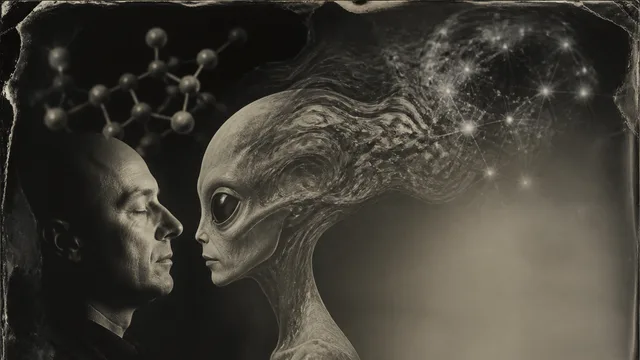
Do DMT Entities Point to Alien Consciousness?
Cognitive scientist Donald Hoffman claims DMT entities may be real alien minds. The math is real. Whether it proves anything about consciousness is a different question.
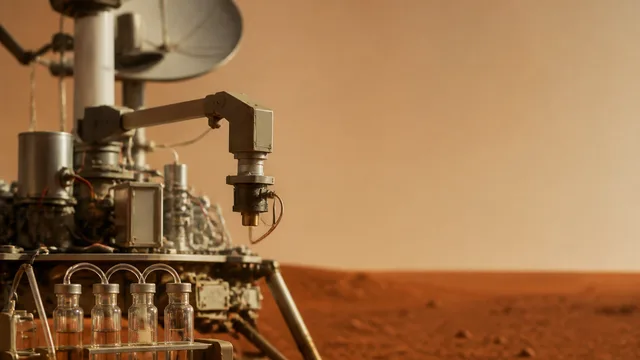
Viking Landers and the Unsolved Mars Life Debate
Fifty years after Viking landed on Mars, one experiment's positive result remains unexplained. Here's what the science actually shows—and what we've learned since.