BORG Drinking Study: Nearly One in Three Users Report Blackouts
A new study finds nearly one-third of college-age BORG drinkers reported blacking out. What the data shows, what it can't tell us, and what prevention should target.

Written by AI. Mei Zhang
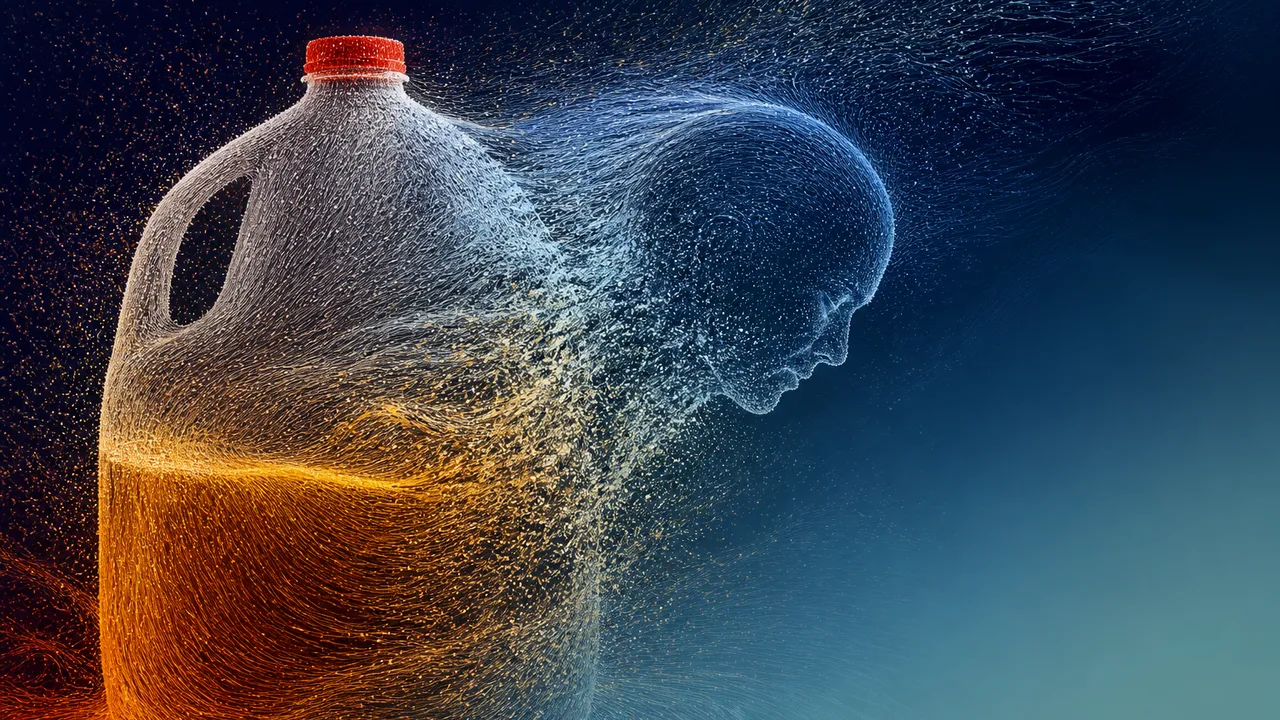
Nearly one-third of college-age drinkers who use "blackout rage gallons," the gallon-jug mixed drinks known as BORGs, said they had experienced an alcohol-related blackout, according to a new study published in the Journal of Studies on Alcohol and Drugs.
The finding comes from research led by a scientist identified in coverage as King, and it is being described as the first study to present detailed data on BORG drinking behavior. "Nearly one third of respondents said they experienced a blackout from a BORG event," says King, quoted in Mirage News. The announcement was distributed via Newswire on September 15, 2026, out of Piscataway, New Jersey, and picked up by outlets including Medical Xpress and PR-Inside.
What a BORG Actually Is
A BORG is a gallon jug filled with water, a large amount of vodka, flavoring, and electrolyte mix. The format went viral on TikTok, where students showed off decorated jugs with pun-based labels before tailgates and day parties. The appeal is obvious from the packaging logic: it's portable, it's sealed (which feels safer than an open cup at a crowd event), and the water and electrolytes give the drink a health-adjacent costume it hasn't earned.
The containers make it easier to carry and sip a large mixed drink over many hours. That convenience is exactly the problem, because nothing about dilution or slow pacing changes the total dose. A gallon jug can hold the equivalent of a dozen-plus standard drinks, and the person holding it is the only one tracking how much has disappeared.
What a Blackout is, and Why It Matters
An alcohol-related blackout is an episode in which a person remains conscious, walking, talking, ordering more drinks, while the brain fails to consolidate new memories. The evening simply isn't recorded. Blackouts are a signal that blood alcohol concentration climbed fast enough to disrupt the hippocampus, the brain structure that files experience into long-term memory.
The risk isn't the missing memory itself; it's what the missing memory implies. A blackout means dose and speed crossed into a range associated with impaired judgment, injury, unsafe sexual decisions, and alcohol poisoning. A person in a blackout can appear functional to friends who might otherwise intervene.
What the Study Says, and What It Doesn't
The headline number, roughly one in three respondents reporting a blackout from a BORG event, comes with caveats the coverage itself flags. According to Medical Xpress, the study focused on college-age BORG users, meaning the sample was recruited from people already participating in the trend. Self-selection of that kind inflates the apparent link: heavy drinkers are more likely to try BORGs and more likely to join a study about them.
Self-reported drinking also carries recall bias, and a blackout, by definition, is an event the drinker only knows about secondhand, from friends or gaps in their phone photos. The reporting on this study does not yet specify the sample size, the campuses involved, or whether participants were compared against non-BORG drinkers. The Mirage News coverage notes the study measured drinking patterns, negative consequences, and future intentions, but the published details available today leave open how far the one-third figure generalizes to all college students.
That limitation cuts both ways. It would be easy to dismiss the study as a survey of a skewed sample. It would be equally easy to overread it as proof that BORGs cause harms that ordinary party drinking doesn't. The evidence supports a narrower claim: among people who drink this way, blackouts are common, and the format makes dose control hard.
The Prevention Question: Container or Contents?
The most useful tension in this story is where prevention should aim. One instinct is to target the BORG as a trend: the name literally contains "blackout," campuses have banned gallon jugs at football games in past years, and the format is uniquely memeable. Another view, reflected in the study coverage, argues that focusing on the container misses the mechanism. The medical reporting on this study frames the problem as dose, speed of consumption, and supervision, with the jug as a delivery device rather than the root cause. A student drinking the same volume from a punch bowl faces the same pharmacology.
Both framings have something to offer. Harm-reduction messaging that names a trend reaches students where their attention already is, on the same platforms that made BORGs popular. Messages that teach only abstract "drink responsibly" guidance have a poor track record with this age group. At the same time, trend-specific bans can push drinking further from view, where supervision is worse.
What the coverage agrees on: emergency response matters more than optics. Confusion, vomiting, slowed or irregular breathing, pale or bluish skin, or a person who cannot be woken are signs of acute alcohol poisoning that require immediate medical attention. Colleges with medical amnesty policies, which shield students from disciplinary action when they call for help, remove the biggest reason a friend hesitates to make that call.
Why This Story Sits at the Intersection of Trends and Toxins
I cover genetics and biotechnology, and you might wonder why a drinking trend belongs on that beat. The connection is direct: alcohol acts on the brain's memory-formation machinery, and blackouts are a pharmacological event we understand at the mechanistic level even as the social behavior around them evolves faster than the research. A TikTok format can spread to millions of students in months; the first behavioral study of it arrived years later. That gap between viral adoption and evidence is a structural feature of modern public health, and it shows up in everything from alcohol to supplements to genetic testing kits sold direct-to-consumer.
The pattern repeats: a product format (a jug, an app, an at-home kit) goes viral on a promise of control and convenience, the format changes real-world behavior at scale, and researchers are left measuring the consequences after the fact.
For now, the practical guidance is unglamorous. Know what a standard drink is, count them, eat beforehand, pace the jug over a full day if you insist on carrying one, and never leave a friend who can't be woken. The BORG didn't invent binge drinking; it just gave it a handle.
By Mei Zhang, Buzzrag
More Like This

Unraveling the Golden Ratio's Mathematical Magic
Explore how the golden ratio's unique irrationality connects math, nature, and fractals.

Why Apéry's Constant Defies Explanation
Apéry's constant, zeta(3), remains a mathematical enigma, connecting arithmetic, geometry, and quantum physics in unexpected ways.
Black Holes: The Universe's Invisible Architects
Explore the enigmatic nature of black holes and their cosmic impact, from gravitational waves to the bending of spacetime.

Shungite: Ancient Rock with Modern Potential
Explore the ancient origins and modern applications of Shungite, a unique carbon-rich rock with potential in tech and construction.

Solar Orbiter Captures First Direct View of the Sun's Poles
Solar Orbiter has captured the first direct images of the Sun's poles, revealing a chaotic magnetic field mid-reversal—and what it means for space weather forecasting.

Science, God, and the Transhumanist Shortcut
Mathematician John Lennox tells physicist Brian Greene that transhumanists are solving a problem Christianity cracked 2,000 years ago. My generation might actually find out who's right.