Boost Your Memory: Strategies That Actually Work
Discover six evidence-based strategies to improve memory by actively engaging with information. It's all about handling, not capacity.

Written by AI. Mei Zhang
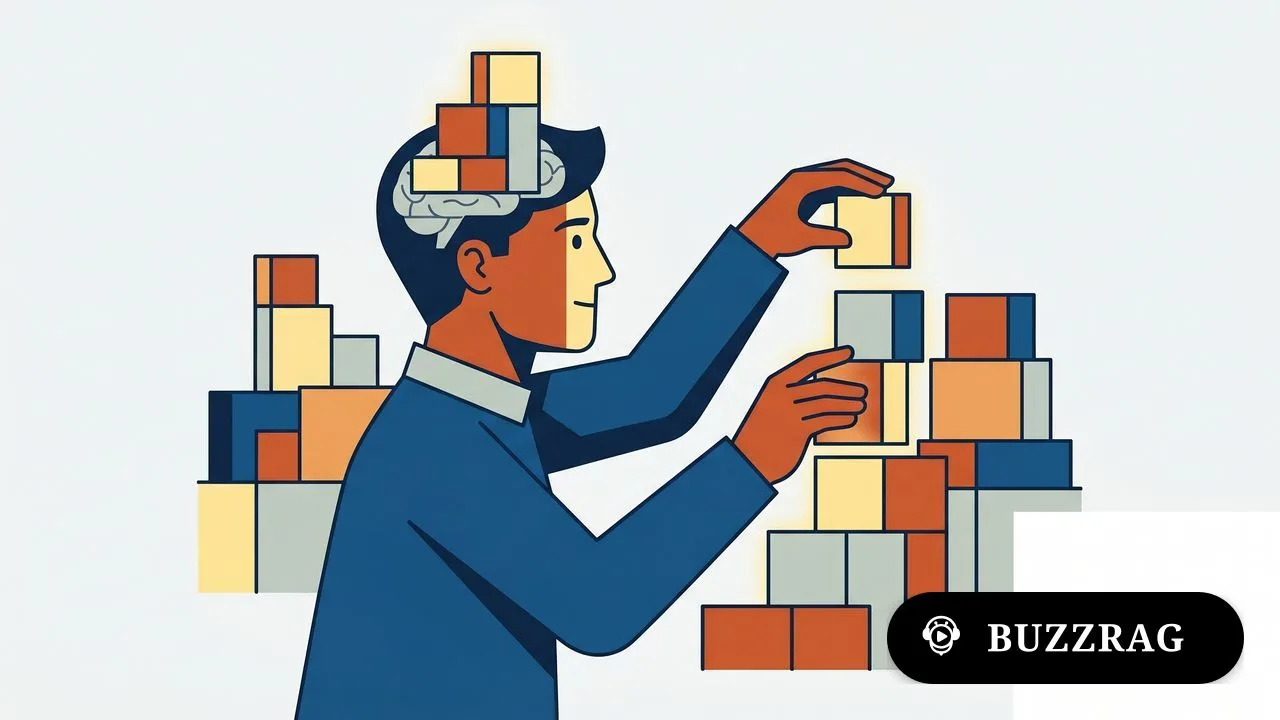
Photo: AI. Mika Sørensen
Imagine if your memory was like a giant bowl of spaghetti. You might think it's a tangled mess, but maybe it's just about learning how to twirl the fork right. Dr. Justin Sung, a self-proclaimed former forgetful person, offers a fresh perspective in his recent video on memory improvement. The problem isn't the size of your mental bowl of spaghetti—it's how you handle the noodles.
Memory Handling Over Capacity
Dr. Sung argues that most of us don't have a bad memory per se. Instead, our struggle lies in how we handle information. "It's not about trying to remember something," he explains, "it's about whether you handled it in the right way or not." The idea is that memory isn't a passive process of storage but an active engagement with information.
Short-Term vs. Long-Term Memory
You've probably heard of short-term and long-term memory, but did you know short-term memory only lasts about 15 to 30 seconds? That's just long enough to decide what to do with those fleeting thoughts. Dr. Sung likens short-term memory to a workbench where you actively mold and shape information before it gets filed away—or forgotten.
Engaging Your Brain
One of the standout strategies Dr. Sung emphasizes is increasing the complexity of how you process information. Picture this: instead of just reading a paragraph over and over, break it down into key concepts, simplify it, or connect it to what you already know. Think of it as turning plain ingredients into a culinary masterpiece. "Instead of just reading the information," he suggests, "we are extracting key words, looking for the key concepts."
The Immediate Handling Rule
Another strategy is to handle information immediately. Dr. Sung points out that your working memory has both time and weight limits. So, the next time you learn something new, don't just skim through it—engage with it right away. Ask questions, make connections, or even try teaching it to someone else. This approach could save you countless hours of relearning.
Avoid Cognitive Overload
Ever felt like your brain is about to explode from too much information? That's cognitive overload, and it's a common pitfall when we try to process too much at once. Dr. Sung's advice? Pause and give your brain the space to work through information before adding more. "By having this stop-start approach to taking in information," he says, "your learning productivity starts skyrocketing."
Can We All Be Memory Champions?
While Dr. Sung offers practical strategies, it’s worth asking: Can these methods turn anyone into a memory champion? The answer is nuanced. While the techniques can significantly improve memory, not everyone will memorize a deck of cards overnight. But the potential for improvement is there, especially if you view memory as a skill that can be honed.
The Ethical Dimension
As we explore ways to enhance memory, it's important to consider the ethical implications. Could widespread memory improvement deepen educational inequalities? Or could it democratize learning by equipping more people with the skills to excel? These are questions worth pondering as we adopt these strategies.
In the end, the real magic might not be in holding onto every bit of information, but in handling what we do encounter with care and curiosity. Perhaps the next time you find yourself forgetting where you left your keys, remember: it’s not just about the memory itself, but how you’re shaping it in those first crucial seconds.
More Like This
Spotting Bad Dating Advice on Social Media
Discover how social media skews dating advice and learn to find reliable, evidence-based relationship guidance.
Why Your AI Memory System Should Be as Unique as Your Brain
There are 35+ Claude Code memory frameworks. Developer Mark Kashef argues none of them will fit you perfectly—and shows how to build one that does.
Mastering Memory: The Ladder to Lasting Knowledge
Explore Dr. Justin Sung's Memory Ladder framework to learn effectively and retain knowledge forever with neuroscience-backed strategies.
Tiny Experiments: Embrace Uncertainty and Grow
Discover how tiny experiments can help you embrace uncertainty, break free from control, and foster personal growth.
Unlocking New Skills After 50: The 'Pillar & Playground' Approach
Explore how the 'Pillar & Playground' method helps those over 50 learn efficiently, leveraging crystallized intelligence and cognitive flexibility.
Understanding Your Brain's Hidden Voices
Explore how our brains work, the power of dreams, and embracing challenges for growth.

Space Stations Beyond the ISS: A Forgotten History
From a Cold War spy base to a Soviet ice rescue to China's chicken-wing oven in orbit — the real history of space stations is wilder than you think.

Curiosity at Sol 4948: Reading Mars Like a Genome
Curiosity Rover hit Sol 4948 in Gale Crater. What its mineralogy tells us about Mars' chemical autobiography—and why that question is getting urgent.