Understanding Your Brain's Hidden Voices
Explore how our brains work, the power of dreams, and embracing challenges for growth.

Written by AI. Marcus Obi
Ever wonder why your brain feels like a chaotic board meeting sometimes? Dr. David Eagleman, a Stanford neuroscientist, argues that our brains are more like a bustling city than a solitary island. It's a bit like parenting twins—there's always a debate on what to do next.
Dr. Eagleman's take on dreams is particularly intriguing. He suggests that the purpose of dreaming is to keep our visual cortex in check, preventing it from being overrun by other senses. This isn't too far off from my nightly ritual of making sure my kids' toys don't take over the living room. Just like our brains, it's all about balance and keeping things in their rightful place.
One of the most fascinating parts of Eagleman's discussion is the idea of 'brain plasticity.' It's like the ultimate Play-Doh set for your mind—malleable, adaptable, and full of potential. Eagleman explains, "If you go blind, the visual cortex in the back of the brain gets taken over by hearing and by touch and by other things." This adaptability is what allows us to keep evolving, even when life throws curveballs.
As parents, we're constantly faced with challenges that test our patience and creativity. Eagleman suggests that embracing these challenges is key to maintaining a healthy and dynamic brain. He shares, "The key is challenge. The key is seeking challenge." This resonates with me as I think about the daily hurdles of parenting. It's not about being perfect; it's about adapting and growing with each new experience.
Eagleman also touches on the concept of fluid and crystallized intelligence. Remember when you could memorize song lyrics after just one listen? That's fluid intelligence in action. As we age, our brains shift towards crystallized intelligence, where we rely more on accumulated knowledge. It's like having a mental toolbox that's always expanding.
In the realm of technology, Eagleman plays the role of a cyber optimist. He believes that AI and social media, when used wisely, can enhance our intelligence rather than make us lazy. It's a reminder that technology is like a double-edged sword—it all depends on how we wield it.
Dr. Eagleman's insights encourage us to rethink how we view our brains and ourselves. Just as parenting sheds light on our strengths and weaknesses, understanding our neural networks can help us navigate life's complexities. So next time you're debating with yourself over that last cookie, remember—it's just your brain's way of keeping things interesting.
More Like This
Neural Foundations of Language and Theory of Mind
Exploring how human brain specializations for language and theory of mind impact our societal evolution.
Unlocking New Skills After 50: The 'Pillar & Playground' Approach
Explore how the 'Pillar & Playground' method helps those over 50 learn efficiently, leveraging crystallized intelligence and cognitive flexibility.
Tony Robbins: Transforming Trauma into Triumph
Explore Tony Robbins' insights on turning adversity into growth and his ambitious philanthropic goals.
AI vs. Human Brain: What’s Missing in the Machine?
Explore the gap between AI and human brain. Can neuroscience bridge it?
Dopamine & AI: Parenting in a World of Abundance
Exploring dopamine addiction, AI's impact, and parenting challenges in today's tech-driven world.
Brainwaves and Communication: Beyond Words
Exploring how brainwave tech could revolutionize emotional communication.
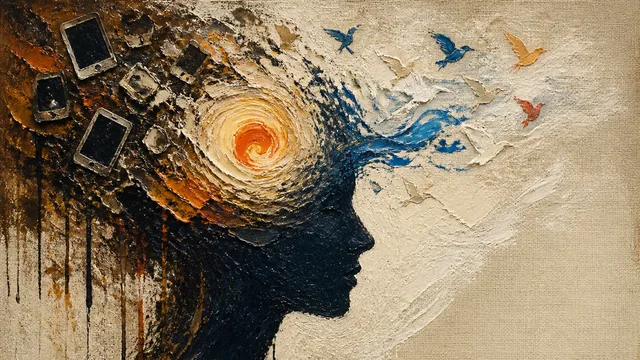
Boredom Is Good for Your Brain, Science Suggests
Research suggests boredom sparks creativity and deep thinking. Here's what the science says about letting your mind wander in a distraction-saturated world.
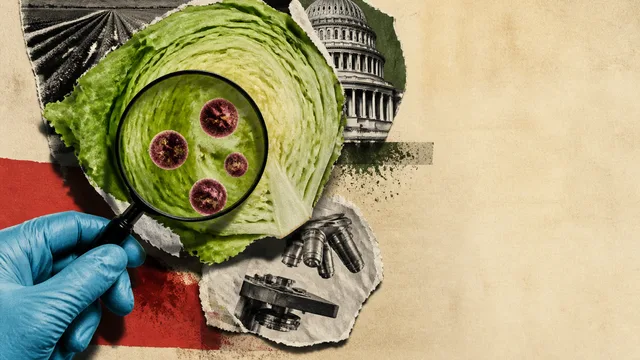
Taylor Farms Lettuce and the Cyclospora Investigation
The FDA retracted a positive Cyclospora test but still links Taylor Farms lettuce to a multistate outbreak. Here's what that means for your fridge.