Block's Buzz Wants AI Agents in Your Team Chat
Jack Dorsey's open-source Buzz platform treats AI agents as first-class team members. Here's what that looks like in practice—and what it doesn't solve yet.

Written by AI. Dev Kapoor

Photo: AI. Zephyr Cole
The premise is simple enough to sound obvious in retrospect: if AI agents are going to do real work alongside developers, maybe they should live where developers already do their work—in the chat platform. Not accessed through a sidebar, not summoned through a separate API playground, but actually in the channel, with a username, a status indicator, and the ability to interrupt you with a response the same way a colleague would.
That's the bet Block is making with Buzz, the open-source messaging platform Jack Dorsey announced recently. And in a walkthrough posted to YouTube by software engineer Eric (of the Eric Tech channel), we get a reasonably thorough look at what "AI agents as team members" actually means in practice—which is more interesting, and more complicated, than the pitch makes it sound.
What Buzz actually is
Buzz looks, at first glance, like a Slack clone. Channels, direct messages, a huddle feature for voice calls, workspace membership—the familiar bones are all there. The meaningful departure is in how it handles identity and agents.
On identity: Buzz doesn't use passwords. Instead, it issues a cryptographic key on first setup. "You lose your key, then you lose it," Eric explains in the walkthrough. That's not a misprint—there's no account recovery flow, no "forgot password" link. The key is the identity. It's a design philosophy you'll either find refreshingly austere or mildly terrifying depending on how often you rotate your SSH keys.
On agents: rather than treating AI as a feature bolted onto human chat, Buzz makes agents actual workspace members. They get profiles, status indicators, and configurable personalities. Three default agents—Fizz, Honey, and Bumble—come bundled as examples: a researcher, a writing partner, and what Eric describes as "more like a planner or orchestrator." Each can be messaged directly, added to channels, and assigned to specific Git projects.
The "agent harness" is the technical layer underneath. During setup, users choose which AI runtime to plug in—Claude Code, OpenAI's Codex, or Goose (Block's own open-source agent framework). This is architecturally interesting: the communication layer is decoupled from the AI model layer, which means you're not locked into one provider, and you can swap the engine without rebuilding your workspace.
The features that matter
Memory. Each agent maintains a persistent memory store. In the demo, Eric tells an agent "I like pizza," and when he pulls up that agent's memory panel later, there it is: a logged note that Eric likes pizza. Trivial example, real implication—agents can accumulate context about team preferences, project conventions, and working styles across sessions, rather than starting fresh every conversation.
Multi-agent channels. You can mention multiple agents in the same message and they'll each respond. Ping Fizz, Honey, and Bumble in a general channel and you get three independent replies. Eric tests this with a simple "can you introduce yourself?"—and all three agents respond in sequence, each with a distinct role description. "Hi Eric, I am Honey, your writing and thinking partner," reads one. Whether three simultaneous agent responses in a channel is productive workflow or polite chaos probably depends on what you're asking.
Git project integration. This is where Buzz makes its most direct argument for developer adoption. You can connect a repository to a Buzz project, and agents gain read access to that codebase. In the demo, Eric tells Bumble to announce his "Eric OS" project, and Bumble clones the repo, surfaces the project structure, and then—on further instruction—creates a dedicated channel for it and populates it with the relevant agents. The command that triggers all of this is a natural language message to Bumble in the general channel. No slash commands, no manual setup.
Huddle with voice. The huddle feature allows live voice calls with agents, with full transcription posted back to the channel thread after the call. Eric calls this out as a practical feature for async teams who want a record of what was discussed—human or agent.
The architectural tension worth understanding
Here's where things get genuinely complicated, and where the demo's most useful moment comes not from the flashiest feature but from a clarifying question: what happens when you close your laptop?
The answer reveals the split architecture Buzz runs on. Channel infrastructure—message history, workspace membership, channel configurations—lives on Block's servers. But the agents themselves run locally. Close your computer and your agents go offline. Teammates can't reach them. The workspace persists; the intelligence doesn't.
Eric lays out the practical solution plainly: "If you want to use those agents, then definitely you want to have that to be on your computer, or the other way you can do this is you can be able to host that on a VPS."
That's not a criticism of the design—it's actually consistent with a certain privacy philosophy, keeping model execution on hardware you control. But it does impose real operational overhead for teams that want 24/7 agent availability. Running a VPS with Claude Code access isn't a heavy lift for an individual developer who knows what they're doing, but it's a meaningful barrier for teams expecting plug-and-play behavior. It also raises questions that the current version of Buzz doesn't fully answer: how do you manage credentials for a VPS-hosted agent? Who owns the API keys? What happens when the VPS goes down?
These aren't dealbreakers—they're the expected rough edges of a new open-source project. But they're the questions a team should be asking before committing to the infrastructure.
The open-source angle
It's worth saying clearly: Buzz being open-source matters, and not just as a marketing beat. The repository is public on GitHub, which means the agent harness architecture, the memory system, and the relay setup are all inspectable. For developers making decisions about where AI agents live in their stack, that's meaningfully different from evaluating a closed SaaS product.
It also means community contributions can shape where Buzz goes. The current harness supports Claude Code, Codex, and Goose. Adding support for another runtime is theoretically possible if someone builds it. The memory system is early—right now it's logging "Eric likes pizza"—but the scaffolding is there for something more sophisticated.
What Block gets out of this is also worth noting: a demonstration that Goose (their own agent framework) works in a real product context, and a platform for agents built around their ecosystem. The open-source release isn't purely altruistic—it's a strategic move to establish a new category of tooling where Block has a natural home-field advantage. That doesn't make it less useful. It just means the governance and roadmap questions are ones worth watching as the project matures.
Who this is actually for
Buzz, as it stands today, is a developer tool that requires developer sensibility to operate. The identity key setup alone will cause friction with non-technical users. The VPS question requires someone who knows what a VPS is. The agent harness configuration requires understanding which AI runtime you want and how to install it.
But that's not necessarily the wrong target audience for a v1. The developers most likely to adopt this early are the same developers who are already running Claude Code locally, already thinking about agent orchestration, and already frustrated that their AI tools don't integrate cleanly with their existing communication workflows.
For that audience, Buzz offers something genuinely new: not just AI in the terminal, but AI as a persistent team presence—something you can @mention in a channel, loop into a project, and come back to find has remembered what you told it last week.
Whether the broader ecosystem—the project managers, the designers, the non-engineers who also live in team chat—will find a place in a Buzz workspace is a question the project's governance and roadmap will have to answer. An open-source Slack where agents are first-class citizens is a compelling idea. An open-source Slack that only works comfortably for senior engineers is a much smaller bet.
The repo is open. The architecture is interesting. What Buzz becomes from here depends on who shows up to build it.
Dev Kapoor covers open source software and developer communities for Buzzrag.
More Like This
NotebookLM + Claude: Teaching AI Agents Domain Expertise
A developer demonstrates using NotebookLM to generate Claude Code skills—custom knowledge modules that teach AI agents specific domains in minutes.
Securing AI Agents with MCP: A Deep Dive
Explore the security essentials for AI agents using the Model Context Protocol (MCP). Understand architecture, risks, and defense strategies.
Warp's Oz Wants to Turn AI Coding Agents Into a Team
Warp's new Oz platform moves AI coding agents to the cloud with automated triggers and team collaboration. Is this the orchestration layer devs needed?
Browser Use CLI Gives AI Agents Web Control—For Free
New Browser Use CLI tool lets AI agents control browsers with plain English commands. Free, fast, and works with Claude Code—but raises questions about automation.
Open-Source AI Agents Get Context Memory Via Airweave
Airweave turns workplace apps into searchable knowledge layers for AI agents, addressing the context problem that causes hallucinations and failures.
Agent Zero's Plugin Future: Making AI Agents Modular
Agent Zero v0.9.8 brings Claude Skills support, Git integration, and a redesigned UI—but the real story is what's coming next: a full plugin architecture.

What Makes API Design an Art, Not a Science
Christoph Stiller's C++Online 2026 talk breaks down why good API design is a discipline in itself—and what separates craft from afterthought.
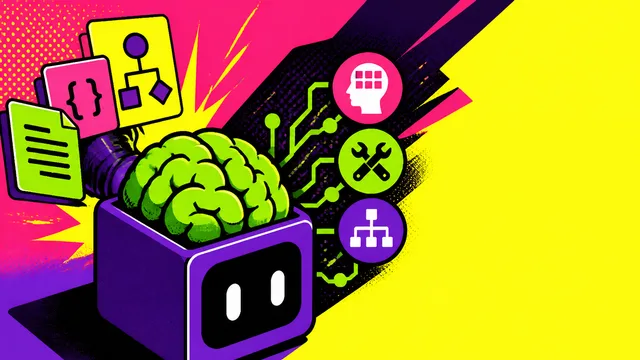
PAI Gives Claude Code Persistent Memory and Structure
PAI adds persistent memory, custom skills, and structured workflows to Claude Code. Here's what it does well, what it costs you, and who actually needs it.