Claude Obsidian 2.0 Gives AI a Persistent Memory
Claude Obsidian 2.0 is a free, MIT-licensed GitHub project that gives Claude a local knowledge base built on Obsidian markdown files. Here's what it actually does.

Written by AI. Dev Kapoor
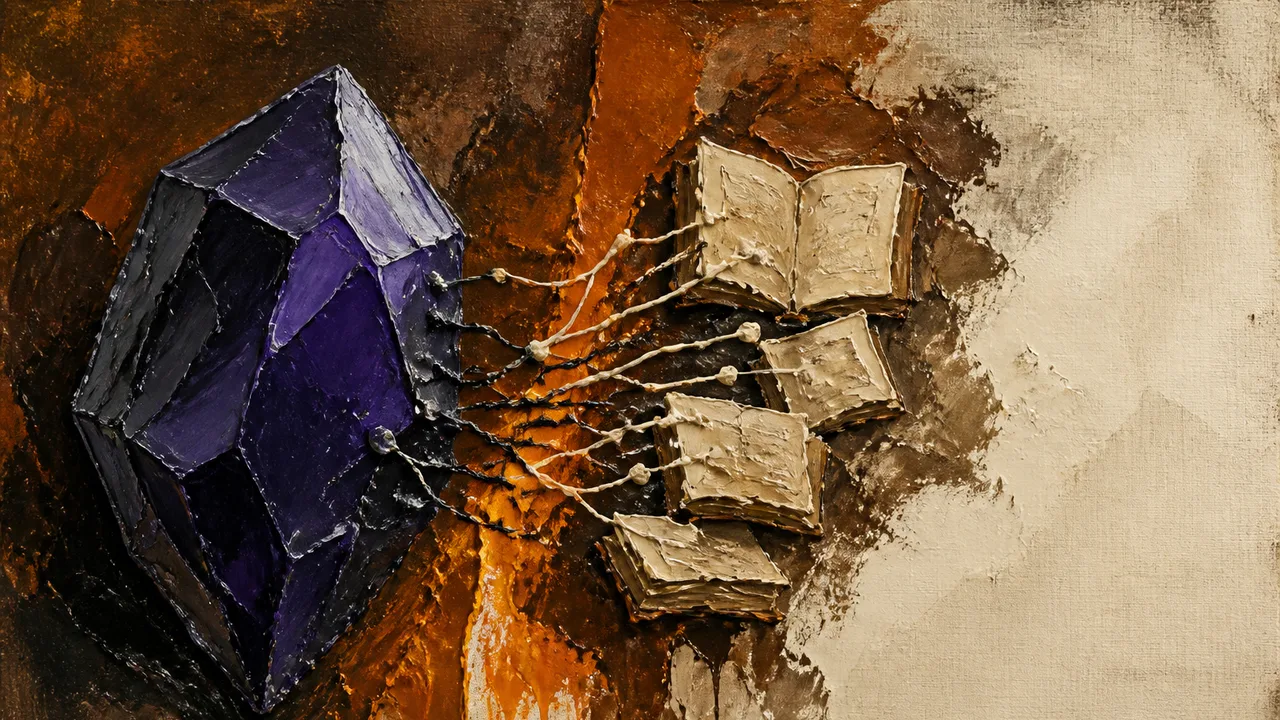
Photo: AI. Saskia Aaltonen
Every morning, millions of people open a chat window and spend the first five minutes re-explaining themselves to an AI that has no memory of them whatsoever. Your projects, your preferences, your voice, your context—gone. Start again. It's the conversational equivalent of Groundhog Day, and it's baked into how these systems fundamentally work.
That's the problem Claude Obsidian is trying to solve, and version 2.0—released this week as a free, MIT-licensed project on GitHub—is the most complete attempt yet.
The Goldfish Problem Is Real
SEO consultant Julian Goldie, who made a video walkthrough of the new release, has a name for this: the goldfish problem. "Here's what nobody tells you about using AI every day," he says. "It's like you're generating more knowledge than any human in history, but you're keeping almost none of it."
It's a line that stings because it's accurate. That research session from three weeks ago? Buried in a chat thread. The strategy you worked through with Claude last month? Orphaned in a note with no links, no sources, no way to know if it's still valid. The tools themselves—ChatGPT here, Claude there, other assistants elsewhere—don't talk to each other, don't share context, don't build on what came before.
The result is that every AI interaction starts at zero. Which means you're paying for intelligence you've already purchased, repeatedly.
What Claude Obsidian Actually Does
At its core, Claude Obsidian is a structured workflow that pairs Claude with Obsidian—the popular, free, local-first markdown note-taking app—to create a persistent knowledge base that the AI can read, update, and cite.
The mechanism is less magical than it sounds, but no less useful for that. You maintain a local folder of markdown files. Drop a document into an inbox folder, and Claude reads it, links it to related content already in the vault, and files it. When you ask a question, Claude draws answers from that vault and—crucially—cites which notes it's pulling from. And when the vault doesn't contain an answer, it says so rather than hallucinating one.
That last part deserves emphasis. The "vault flags what's unverified instead of bluffing" behavior is arguably the most practically valuable thing here. Grounding AI responses in a source-linked knowledge base doesn't just improve recall—it changes the epistemics of the whole interaction. You can trace where an answer came from. You can interrogate it. That's a meaningfully different relationship with an AI output than the usual situation where you have no idea what the model is drawing on.
This is the same territory that Claude-Mem has been working in—solving Claude's statelessness through local, persistent context. What Claude Obsidian adds is the Obsidian layer: a visual graph interface that renders your knowledge base as a web of interconnected nodes, which Goldie calls the "memory galaxy." It's a genuinely nice interface for understanding what your AI actually knows about you.
The Three-Layer Architecture
Goldie describes the system as a three-layer stack, and the framing is useful for understanding how the pieces fit together.
The first layer is the vault itself—a local folder of markdown files with an inbox directory. Nothing exotic. Obsidian renders this as a visual graph, giving you a literal picture of how your knowledge connects.
The second layer is what the project calls the librarian function: Claude's role in actively maintaining that vault. Rather than just reading files, Claude is responsible for linking new content to existing notes, sourcing every claim, and keeping the graph coherent. The organizing principle here—every claim keeps its source—is the rule that makes cited answers possible downstream.
The third layer is mission control: the agent operating system that automates vault updates. This is where the workflow becomes genuinely low-friction. Goldie notes that his agents update the vault automatically—he showed a memory that had been updated 19 minutes prior without any manual input. The idea is that the system improves through use rather than requiring deliberate maintenance.
It's worth noting that Claude Obsidian is agent-agnostic despite the name. Goldie demonstrates it working with a different agent entirely, asking for personalized SEO keyword suggestions and receiving answers grounded in vault context—no re-explaining, no generic output. "It doesn't have to be with Claude," he notes. "You could teach any agent this skill."
The Compounding Vault Idea
The central claim Goldie makes—and it's worth taking seriously as a design principle even if you're skeptical of the execution—is that a well-maintained knowledge base compounds. Each piece of information you add makes future answers better. Citations make the knowledge auditable. Links between notes create emergent connections you didn't explicitly program.
This is the second-brain concept applied to AI interactions, and it's not new. The open-source approach to Claude's memory problem has been circulating in developer communities for a while now, with various projects attacking it from different angles. What Claude Obsidian 2.0 brings is a more polished, more automated version of the workflow—and a visual interface (Obsidian's graph view) that makes the knowledge structure legible without requiring you to build it by hand.
The honest version of the pitch is: if you're already living in Obsidian, or willing to, this is a thoughtful integration that could meaningfully change how you interact with AI tools. If you're not—if your workflow is elsewhere—then the Obsidian dependency is a real friction point that Goldie doesn't fully reckon with.
What to Be Realistic About
Nothing in Claude Obsidian 2.0 solves the fundamental architecture of these models. Claude itself is still stateless between API calls. What the project does is build an external memory layer that sits outside the model and gets injected into context—a pattern that works, but one with its own overhead. Vaults grow. Context windows have limits. At some point, a large enough knowledge base creates its own navigation problem.
There's also the question of who actually maintains this over time. The appeal of "agents do it automatically" is real, but agents make mistakes. A knowledge base that gets silently corrupted by an overzealous agent organizing files it misunderstood is arguably worse than scattered notes—at least scattered notes don't pretend to be authoritative.
And then there's the frankly unavoidable observation that this video exists partly to funnel viewers toward Goldie's paid community and Agent OS ecosystem. That doesn't make the underlying project less useful—Claude Obsidian is genuinely free and MIT-licensed on GitHub, and you can stand it up without buying anything—but the video's framing as pure education obscures the promotional architecture underneath it.
The Real Question
The interesting thing about Claude Obsidian 2.0 isn't the specific implementation. It's what the project's existence tells us about where we are with AI tools right now.
We're in a moment where the models themselves are extraordinarily capable but architecturally amnesiac, and the community is scrambling to paper over that gap with external memory systems, vector databases, RAG pipelines, and now Obsidian vaults. Some of these solutions will get absorbed into the platforms themselves as native features. Others will remain in the ecosystem as community tooling.
The goldfish problem—as Goldie calls it—is real. The question isn't whether Claude Obsidian solves it. The question is whether patching statelessness at the workflow layer is the right long-term answer, or whether we're building elaborate scaffolding around a problem the model providers will eventually fix natively.
For now, the scaffold is free and it runs on markdown. That's not nothing.
Dev Kapoor is Buzzrag's open source and developer communities correspondent.
More Like This
NotebookLM + Claude: Teaching AI Agents Domain Expertise
A developer demonstrates using NotebookLM to generate Claude Code skills—custom knowledge modules that teach AI agents specific domains in minutes.
Claude's New Computer Control: AI Agent or Chaos Engine?
Anthropic's Claude can now control your browser, publish blog posts, and automate workflows. SEO consultant Julian Goldie tests whether it actually works.
Claude Code Agentic OS: Skills Beat Dashboards
The flashy Claude Code dashboards get the clicks, but the real value lives in a skill and automation backbone most users never build. Here's what that actually means.
DeepSeek V4: Build Apps and AI Agents for Free
DeepSeek V4 lets non-coders build apps and run AI agents for free. Here's what actually works, what breaks, and what the hype leaves out.

Claude Agent OS: Building AI Systems That Outlast the Models
Julian Goldie's Claude Agent OS connects multiple AI agents through shared memory and model-agnostic orchestration. Here's what the architecture actually does—and why it matters.
AI Agents Are Now Hiring Humans for Real-World Tasks
New platforms let AI agents post jobs and hire humans, creating an inverted gig economy. What happens when automation needs manual labor?
What Makes API Design an Art, Not a Science
Christoph Stiller's C++Online 2026 talk breaks down why good API design is a discipline in itself—and what separates craft from afterthought.

Hacker News Digest: June 12, 2026
From a $6K AI AWS bill to Meta's facial recognition playbook, Hacker News surfaced the tensions defining tech in June 2026. Here's what mattered.