Securing AI Agents with MCP: A Deep Dive
Explore the security essentials for AI agents using the Model Context Protocol (MCP). Understand architecture, risks, and defense strategies.

Written by AI. Dev Kapoor
The New Frontier of AI Security
AI agents have evolved beyond quirky chatbots. They're now entrusted with executing tasks that demand a higher level of responsibility and security. As someone who has seen the evolution from within, I can say with confidence: this is not your average software challenge—it's a whole new ballgame.
Understanding the Model Context Protocol (MCP)
Think of MCP as the digital Swiss Army knife for AI agents, allowing them to connect with external systems and execute tasks. But with great connectivity comes an even greater attack surface. Aron Eidelman explains, "AI agents are increasingly trusted to select tools and execute tasks on our behalf. That means their attack surface is growing too." The MCP isn't just a technical protocol; it's the new scaffolding for our digital future.
The Expanding Attack Surface
The more capabilities an AI agent has, the more vulnerable it becomes. It's reminiscent of the early days of open source, where increased functionality often came with increased risk. The MCP architecture, with its client-server model, is particularly susceptible. If one piece of the chain is compromised, the damage can cascade. Eidelman notes, "A compromise affecting a single tool or its permission set can potentially spread and compromise more of the system."
Vulnerabilities in the Wild
Several vulnerabilities lurk within the MCP ecosystem. These include broken authorization that violates the principle of least privilege, indirect prompt injections that trick agents into unintended actions, and command injections that could lead to remote code execution. It's a multi-headed hydra of threats that require a robust defense-in-depth strategy.
Defense-in-Depth: A Layered Approach
Addressing these threats demands a multi-layered strategy, similar to how we approached open-source security. Each agent needs a unique identity, cryptographically attested and bound to its runtime. "This identity is cryptographically attested and bound directly to the runtime. So it cannot be impersonated," Eidelman explains. Storing credentials securely in a secret manager rather than environment variables is a must, reducing the risk of data breaches.
The Role of Agent Identity and Model Armor
Agent Identity and Model Armor are not just buzzwords—they're essential tools in the security toolkit. Agent Identity ensures that each agent acts only within its authorized scope, while Model Armor inspects incoming inputs to prevent prompt injections and other malicious activities. This approach mirrors the careful governance we see in well-maintained open-source projects, where transparency and accountability are key.
MCP Security Is Still Uncharted Territory
The journey to securing AI agents is as much about governance as it is about technology. It's a reminder that while the tools and protocols evolve, the core principles of transparency, accountability, and community remain steadfast. As we continue to push the boundaries of what AI can do, ensuring these systems are secure isn't just a technical challenge—it's a commitment to sustainable and ethical development.
More Like This
RAG & MCP: The AI Duo You Didn't Know You Needed
Explore RAG & MCP: AI's dynamic duo for building advanced systems with hands-on learning.

Building Secure AI Agents With Bigtable and ADK
Google's Bora Beran demos a healthcare AI agent built on Bigtable and ADK—and the security layers that make it worth taking seriously.
OpenClaw Gives AI Agents Root Access to Your Machine
OpenClaw lets you run autonomous AI agents with full system access. The security implications are fascinating—and the project handles them honestly.
Model Context Protocol Explained: How MCP Works
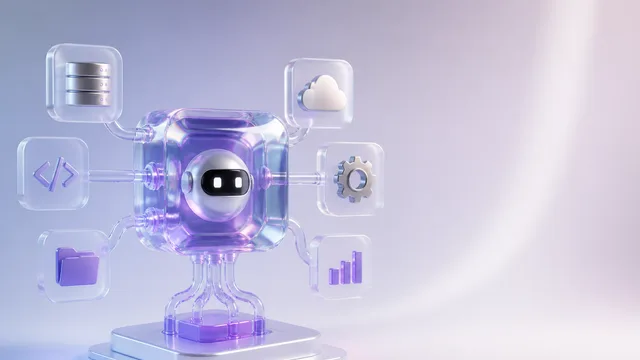
MCP standardizes how AI models connect to tools and data. Here's what the protocol actually does, how clients and servers talk, and why it matters for developers.
Google's Model Armor: AI Security Through Callbacks
Google's Model Armor adds security checkpoints to AI agents through ADK callbacks, intercepting threats before they reach language models.
Claude Code's New Batch Migration Tools Change the Game
Claude Code adds parallel agent tools for code quality and large-scale migrations. Plus HTTP hooks, markdown previews, and a clipboard command that actually works.

Thinking Machines Launches Inkling, Its First Open-Weight AI Model
Mira Murati's Thinking Machines has released Inkling, an open-weight multimodal AI model built on DeepSeek's architecture—and the implications go well beyond benchmarks.

35 GitHub Projects Mapping the AI Agent Trust Gap
This week's GitHub trending list is less a catalog of tools and more a collective argument: developers don't fully trust AI agents yet—and they're building accordingly.