Betelgeuse's Hidden Star: Solving Celestial Mysteries
Unveiling Betelgeuse's hidden companion star reshapes our understanding of stellar evolution and supernova precursors.

Written by AI. Mei Zhang
Betelgeuse, the red supergiant that's been an enigma wrapped in stardust, has finally given up one of its secrets. Thanks to NASA's Hubble Space Telescope, astronomers have discovered a hidden companion star that's been playing cosmic hide-and-seek within Betelgeuse's expansive outer layers. This discovery not only solves a longstanding mystery about the star's unusual behavior but also offers fresh insights into how massive stars evolve and eventually explode as supernovae.
The Unseen Partner
For years, Betelgeuse has been a bit of a drama queen among the stars. Its brightness fluctuates, its atmosphere seems like it's having a perpetual identity crisis, and standard stellar models just couldn't keep up. While some variability is expected in stars of this size, Betelgeuse's patterns were like trying to predict the mood swings of a caffeinated cat. Enter the hidden companion star, now charmingly named Siwara. This cosmic buddy creates a noticeable wake in Betelgeuse's atmosphere, akin to the ripples a boat makes in water.
"This marks the first time astronomers have been able to directly connect Betelgeuse's long-term variability to a physical companion," the video explains. Previously, any external influences were more like whispers in the dark, inferred rather than observed.
Why This Matters
Understanding this companion-driven mass loss could be a game-changer in our knowledge of supernovae. Betelgeuse, with its massive, diffuse atmosphere, loses material in ways that determine how and when it might explode. The discovery that a companion star can reshape this atmosphere offers a new lens through which to view similar massive stars.
"The wake appears at the same point in the cycle each time the companion crosses in front of Betelgeuse from our perspective," the video notes. This regularity is key, ruling out random atmospheric fluctuations and providing a concrete link between Betelgeuse's behavior and its hidden partner.
Broader Implications
Beyond Betelgeuse, this discovery opens up a Pandora's box of possibilities for other massive stars. Many exhibit unexplained variability that might not be due to their own internal processes but to unseen companions. As the video emphasizes, "Binary and multiple star systems are common, particularly among massive stars."
But why haven’t we noticed this before? Well, detecting companions around red supergiants is like trying to find a needle in a haystack of flaming marshmallows—challenging, to say the least, due to their size and brightness.
What's Next?
With Betelgeuse's companion now officially out of the cosmic closet, astronomers can focus on refining the details of its orbit and mass. Siwara is expected to reemerge around 2027, offering a prime opportunity to test predictions made by this wake model.
Future observations will aim to separate the companion-driven effects from Betelgeuse's internal dynamics. Advances in technology and extended observation times promise to make this more feasible, allowing astronomers to untangle the intricate dance of these celestial bodies.
The Cosmic Takeaway
This discovery underscores the importance of patience and persistence in astronomy. The wake wasn’t revealed by a single dramatic observation but through years of careful analysis. It serves as a reminder that even the most familiar stars can surprise us, revealing new physics when we least expect it.
As we continue to peer into the universe, armed with better tools and longer timelines, who knows what other celestial secrets we'll uncover? For now, Betelgeuse's hidden companion gives us a fresh perspective on the complex mechanics of massive stars and the spectacular fireworks show that is a supernova.
More Like This
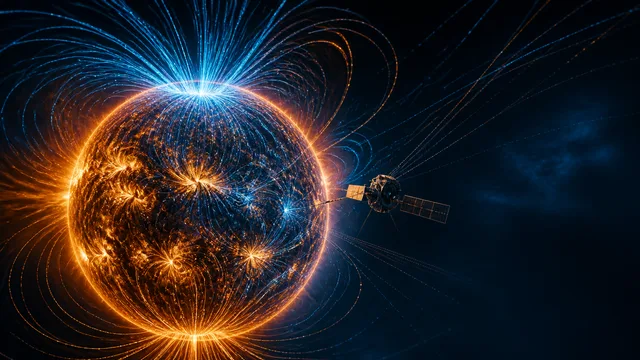
Solar Orbiter Captures First Direct View of the Sun's Poles
Solar Orbiter has captured the first direct images of the Sun's poles, revealing a chaotic magnetic field mid-reversal—and what it means for space weather forecasting.
Magnetic Mayhem: 400 Car Batteries Unleashed
Explore the electrifying effects of extreme currents as a nuclear engineer reacts to a wild experiment with 400 car batteries.
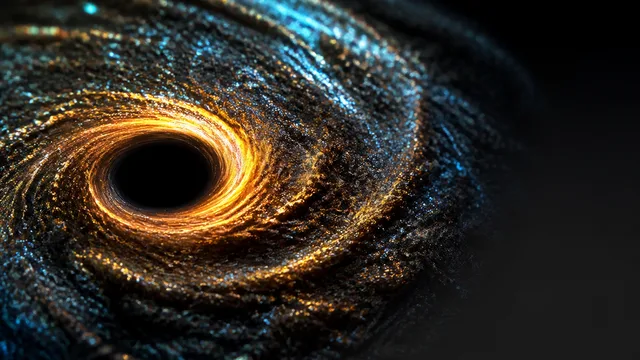
A Star in Andromeda Vanished. A Black Hole Remained.
A massive star in Andromeda faded without exploding. Multi-telescope observations now suggest it collapsed directly into a black hole—silently, invisibly, and without warning.
Exploring Cosmic Time Delays and Dark Energy
Time delay cosmography may unveil dark energy mysteries, resolving Hubble tension with new cosmic insights.

How a Single Hack Nearly Crippled the Internet
A 2021 hack nearly exposed millions of servers, highlighting the risks in open-source software's reliance on individual contributors.

First Real-Time Supernova Observation Challenges Theories
Astronomers capture supernova SN 2024ggi in real-time, unveiling unexpected explosion shapes and challenging existing theories.
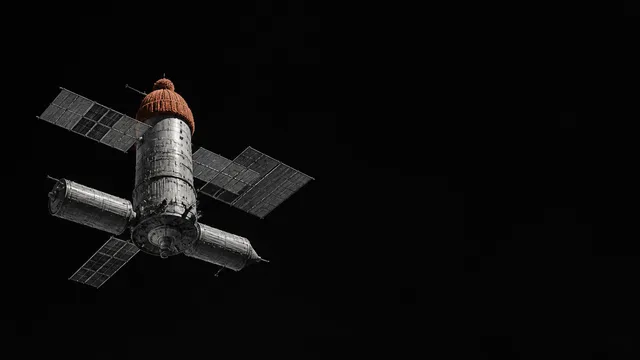
Space Stations Beyond the ISS: A Forgotten History
From a Cold War spy base to a Soviet ice rescue to China's chicken-wing oven in orbit — the real history of space stations is wilder than you think.
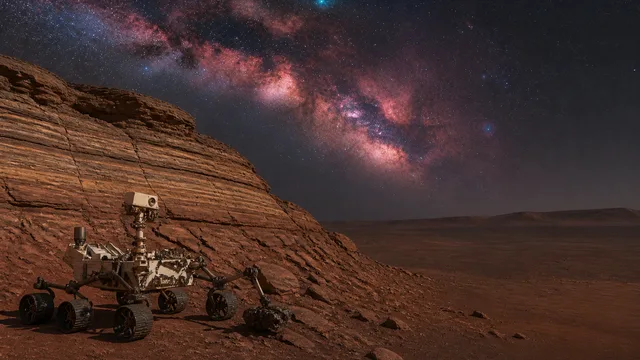
Curiosity at Sol 4948: Reading Mars Like a Genome
Curiosity Rover hit Sol 4948 in Gale Crater. What its mineralogy tells us about Mars' chemical autobiography—and why that question is getting urgent.