Basic French Phrases That Help Tourists in France
A handful of French words can shift how locals treat you in France. Here's what actually matters, and why the effort carries more weight than fluency.

Written by AI. Mariel Fontaine
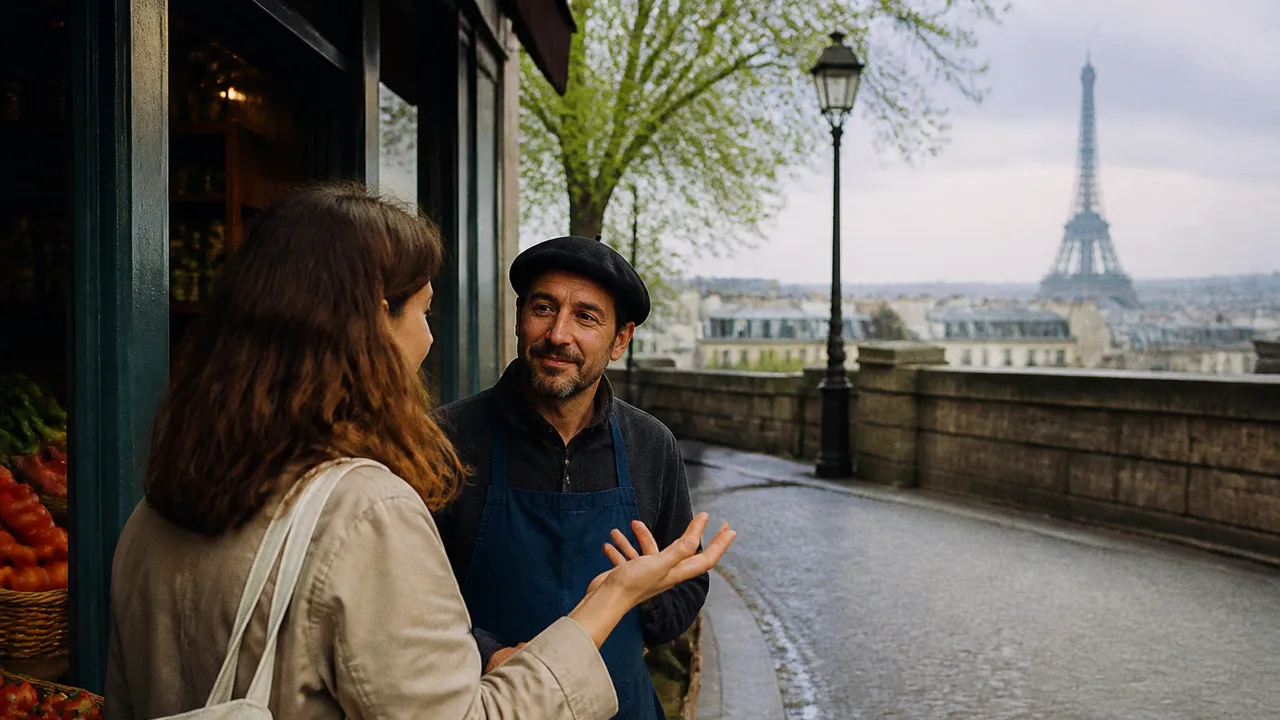
Photo: AI. Marcel Dubois
France ranks among the world's most-visited destinations—according to Statista's tracking of international tourist arrivals, the country pulled in roughly 100 million inbound overnight visits in 2023. That volume means French service workers have spent decades decoding every possible register of tourist behavior, from the charming to the oblivious. They have seen it all. Which raises an honest question: does it actually matter anymore whether you attempt a few words of French, or has the sheer scale of tourism rendered the effort ceremonial?
Mark Wolters, who runs the travel channel Wolters World, makes a case in a recent video filmed in Lille that the effort still matters—and that the bar is lower than most people assume. His argument isn't about fluency. It's about something closer to social signaling: a small linguistic gesture that communicates respect before any transaction begins.
It's worth taking that argument seriously, because the instinct to dismiss it is real. When a city processes millions of tourists a year, the romantic notion that your halting bonjour will unlock some authentic local connection can feel like tourism-industry mythology. And yet the mechanics Wolters describes are recognizable to anyone who has spent time in France.
The Threshold Word
The centerpiece of his framework is bonjour, and he's careful to explain why it functions the way it does. "Bonjour is much more than just good day," he says in the video. "When you walk into a shop, you walk into a restaurant, you walk into a hotel—you say bonjour when you walk in that door. That is you showing a sign of respect."
This is not hyperbole. French social etiquette has long treated the greeting as a structural necessity rather than a pleasantry. Entering an establishment without it isn't neutral—it reads as dismissive. The greeting acknowledges the personhood of whoever is working the space before you make any demand of them. Skipping it, particularly in smaller towns or neighborhood shops outside the major tourist corridors, registers as rudeness in a way that is quite specific to French culture.
Wolters notes the pragmatic bonus: a well-delivered bonjour immediately reveals that you don't speak French, which often prompts staff to switch to English on their own. You've demonstrated goodwill; they reciprocate with utility. The exchange works precisely because it's not transactional at its core.
The Logic of Imperfection
What makes Wolters' approach interesting—and, I'd argue, more honest than most language-prep travel content—is his insistence that imperfection is part of the point. His French, by his own admission, is poor. He leans into this rather than apologizing for it.
His preferred full sentence is a case in point: Pardon, je suis un idiot, je ne parle pas français, pouvez-vous m'aider? Translated: "Pardon me, I'm an idiot, I don't speak French, can you help me?" He describes deploying this in France over many years with consistent results. "I cannot tell you how many times I've met people and made friends with people here in France just because I could say that."
There's something worth unpacking here. The sentence works not because it's grammatically impressive but because it's self-aware. It signals that the speaker understands the asymmetry of the situation—that they are a guest in someone else's linguistic home—and chooses humor and humility over entitlement. The French have a well-documented appreciation for irony and self-deprecation. A tourist who announces their own idiocy in French is doing something categorically different from one who simply raises their voice in English.
This gets at a broader point that travel content rarely addresses directly: the frustration French people sometimes express toward tourists isn't fundamentally about language. It's about the attitude that a service economy creates an obligation to accommodate whatever the customer brings, including a refusal to engage with local norms. The language attempt is a proxy for a disposition—one that acknowledges France as a place with its own codes, not simply a backdrop for your holiday.
The Practical Core
Wolters builds from bonjour outward in sensible order. Merci (thank you) comes second, which he treats as a basic dignity marker rather than a charm offensive. S'il vous plaît (please) follows, paired with the practical observation that pointing plus s'il vous plaît will get you through most patisserie encounters without a full sentence.
Où est (where is) earns its place for the navigation value alone—you can point your phone at a map, name a landmark, and the phrase bridges the gap. Les toilettes he defends with characteristic directness: you can mime ordering food, but there are no universally interpretable gestures for needing a bathroom, and you'd rather not find out the hard way.
Parlez-vous anglais? (Do you speak English?) appears on the list, but Wolters makes a point that I find genuinely useful: if your primary language is Spanish, German, or anything other than English, frame the question in French around that language. Asking parlez-vous espagnol? in a formal register is a different move from defaulting to English as the assumed global fallback. It extends the same courtesy while not positioning English as the neutral option.
He also flags something that gets overlooked in phrase-list content: pronunciation of place names. Knowing to say Pah-ree rather than Pair-iss, or to approximate the nasal quality of France as French speakers render it, signals a level of preparation that locals notice. It's a small thing. It registers anyway.
Santé (cheers, more formally) and chin chin (informal) round out the social utility section—not because they're essential, but because they function differently from logistics phrases. They belong to leisure rather than navigation, and Wolters correctly identifies them as the kind of small effort that lands well in a bar or at a dinner table.
What the List Can't Settle
The argument Wolters is making is essentially anecdotal and observational, built from repeated experience across France over many years of travel. That's a legitimate form of evidence for travel content—sustained pattern recognition across varied contexts is worth something. But it doesn't fully resolve the underlying tension.
France's tourism industry has become, in some cities and regions, so saturated that the individual tourist's linguistic effort may matter less in the mechanics of a transaction than it did twenty years ago. Paris in high season is not Brittany in October. The service worker at a busy brasserie near the Eiffel Tower has processed hundreds of bonjours today, some genuine, many rehearsed from a phrase app. Whether the gesture still carries the same social weight in that context is a fair question.
What the list can't tell you is how to read the room—when a brief bonjour is the right threshold and when a situation calls for more sustained navigation. That's the gap between a phrase list and actual cultural competence, and no seven-minute video closes it entirely.
But Wolters isn't claiming it does. His framing throughout is modest: a few words, sincerely deployed, will improve your trip. That is almost certainly true, and it's a more defensible claim than most travel content makes about language preparation.
The more interesting question may be what these small linguistic rituals actually accomplish at scale—whether millions of tourists each attempting a bonjour constitutes meaningful cultural respect or a kind of mass performance of respect that has its own hollow quality. France will keep drawing visitors in extraordinary numbers regardless. The phrases help you navigate it better. Whether they help France absorb tourism more gracefully is a different conversation entirely.
More Like This
American Tourists in Europe: The Etiquette Gap
From date formats to tipping culture, the everyday customs that trip up American travelers in Europe—and what they reveal about deeper cultural differences.
Small Group Italy Tours Are Reshaping Travel
Small group Italy tours promise authenticity over crowds. But do they deliver — and at what cost to the communities they claim to honor?
What Poles Actually Want Tourists to Know
From geography to drinking etiquette, here's what Polish locals wish visitors understood before arriving—and why it matters more than you think.

Travel Spending Is Rebounding—But Read the Fine Print
Travel spending rebounded in June and agents are booking again—but the data tells a messier, more interesting story than the headlines suggest.
How the Tour de France Built a Global Sports Business
The Tour de France is more than a race. How ASO built a commercial machine from a national institution—and what it means for the athletes inside it.
What to Expect When Staying in European Hotels
European hotels operate by different rules than North American ones. Here's what actually differs—room size, beds, breakfast pricing, accessibility, and more.
Romania Travel: What Visitors Love and Struggle With
From Carpathian forests to chaotic mountain roads, Romania rewards patient travelers. Here's an honest look at what works and what doesn't.
World Cup 2026 Is Reshaping US Tourism's Global Image
The 2026 World Cup is reversing a slump in international visits to the US—but the real story is what travelers are discovering beyond New York and LA.