AmaNubia's Nile Debut Tests Demand Beyond Europe's Rivers
AmaNubia is due on the Nile in November 2026, pairing a cruise with Cairo hotels. Asian traveler interest is reported, but bookings and local benefits remain unclear.

Written by AI. Kael Maddox
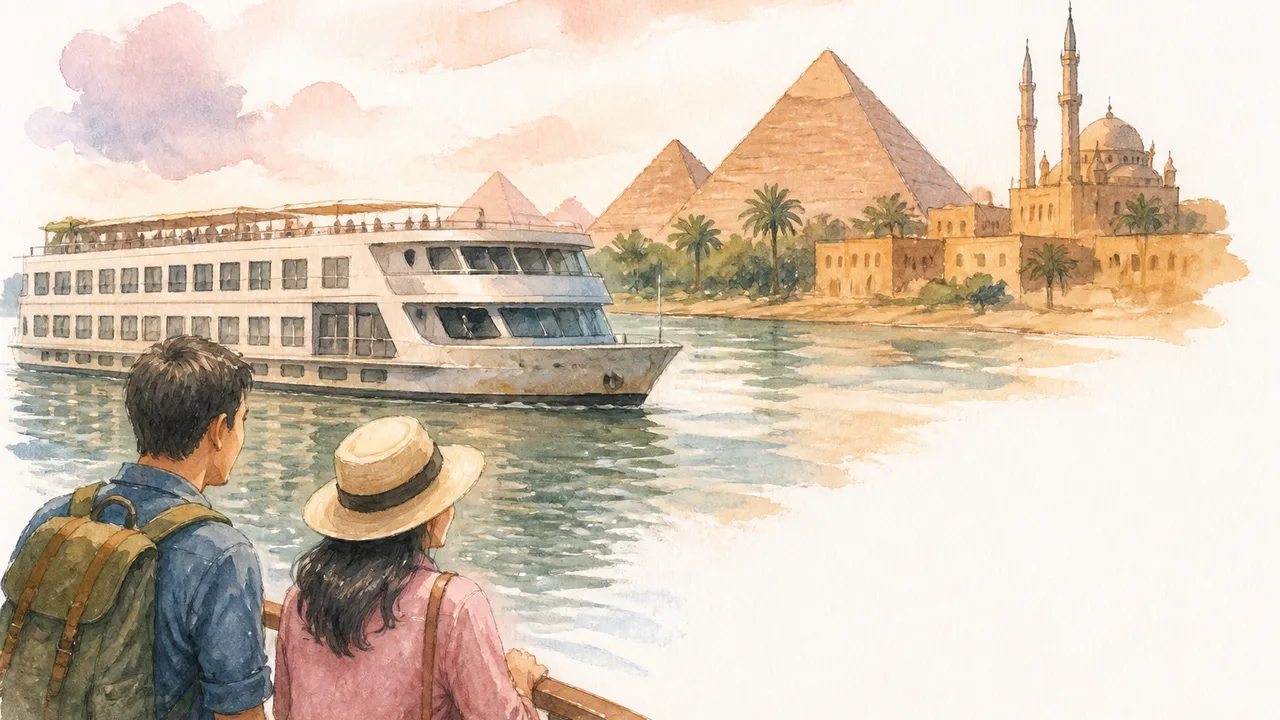
AmaWaterways plans to put AmaNubia on the Nile in November 2026, with an itinerary that pairs a river cruise with hotel stays in Cairo. It is the first named vessel among three ships due to join the company, and the new ships are drawing interest from Asian travelers looking beyond Europe's familiar river-cruise routes, TTG Asia reported.
That combination makes Egypt a sharper test of the river-cruise pitch than a new ship alone would be. The boat supplies a fixed route and a place to sleep; Cairo puts travelers back on land, where time depends on hotel check-ins, transfers and what they choose to do beyond the organized trip. For someone spending a limited block of leave, those hours deserve as much attention as the sailing itself.
Interest, though, is a soft measure. A traveler can ask about a Nile trip, admire the prospect of Cairo and still decide against booking. The available account gives no booking figures or measure of how many Asian travelers are considering the ships. I would read it as evidence of an opening in the conversation, not evidence that a large new market has arrived.
The Appeal of a Route Someone Else Has Arranged
River cruising offers a clear bargain: pay for a planned sequence of places, and hand much of the coordination to an operator. On a trip that combines a city stay and a vessel, that can be attractive. A traveler choosing independently has to decide how long to remain in each place, arrange accommodation and transport, and work out how the parts connect. A fixed itinerary replaces many of those decisions with one booking.
That reduction in work has value, especially when the trip must fit between two work Mondays. I can see the appeal of knowing where you'll sleep before you've learned how tired you'll feel on arrival. The risk is that the neatness of the plan hides how much of the leave goes toward moving between its parts. Two travelers could buy the same package and judge it differently: one wants the certainty of a route already built; the other would trade a scheduled stop for another uncommitted afternoon in Cairo.
Here is a hypothetical calculation, not AmaNubia's published schedule. Give a traveler eight days away and assume, purely for illustration, that transfers and waiting consume one full day in total. Seven days remain for the experiences the traveler meant to buy. That calculation does not tell us whether the package is efficient. It shows what I would look for before paying: door-to-door timing, hotel nights, time available after each transfer and how much of a day at a stop belongs to the traveler rather than the timetable. A full day lost from a short leave allowance can change the choice between a fixed route and arranging fewer stops independently.
Money complicates that choice. A packaged trip may spare someone the work of piecing together transport and hotels, but convenience alone says nothing about value. The useful comparison is total trip cost against usable time, with the same care given to what each option includes. If a traveler pays more to avoid planning, that may be a sound decision. If they pay more and still spend hours waiting to move between a hotel and a ship, they should know that before committing leave.
Why Cairo Changes the Calculation
Cairo is part of AmaNubia's stated itinerary, rather than an incidental gateway to the vessel. That gives the trip two different modes: a hotel stay in a city and a cruise with its own daily rhythm. Egypt's urban and historic attractions help explain the appeal. They also make a simple question harder to dodge: how much time will a traveler have to engage with a place once the organized movements are done?
The strongest argument for combining the two is practical. A traveler interested in both Cairo and the Nile can buy a trip designed around them, rather than building a connection from scratch. The strongest reservation is just as practical. A city stay measured mainly in arrivals and departures can look substantial on an itinerary while leaving little room to follow an interest that appears once you're there. Neither outcome follows from the ship's name or launch date; the daily plan will decide it.
I would ask for the hours, not just the list of destinations. What time can guests actually leave the hotel on a Cairo day? How much of the shipboard schedule is committed to organized activities? What happens if a traveler wants to step away from the group for an afternoon? Those are preference questions as much as service questions. Some people have no desire to spend their vacation solving transport problems. Others will accept that work in exchange for control over their time.
The same itinerary choices affect people who host the trip. A package that includes Cairo hotels and a Nile cruise will send spending through accommodation and river operations, but its broader distribution depends on purchasing and the activities guests take part in. Local guides, businesses and communities may encounter visitors in very different ways depending on who designs those activities and who gets paid. The available information does not establish those arrangements for AmaNubia, so a claim about its local benefit would be premature. Travelers can still ask operators who leads excursions and whether there is room to choose services beyond the package.
What the Interest Can Tell Us
The current information has firm edges: three incoming AmaWaterways ships, Asian traveler interest reported by TTG Asia, and AmaNubia's planned November 2026 Nile start with Cairo hotel stays. It does not provide booking totals, fares, detailed schedules or local-spending arrangements; it also does not identify the other two ships and their routes. Bookings would show demand, a timed itinerary and fare would help a traveler assess value, and spending detail would help a destination assess who benefits.
Asian travelers are not a single market with a single set of vacation rules, budgets or interests. Without numbers or a breakdown of where inquiries originate, the reported interest cannot tell us who is most likely to book, or whether the same travelers would otherwise have chosen a European cruise. It does, however, put a different destination into a sales conversation often associated with Europe's established routes. The next useful sign will be whether curiosity turns into bookings for trips people can fit into their actual time off.
For a prospective passenger, I would start with the calendar and work backward. Mark the days away from home, then find the hours spent in Cairo, on the river and in transit. Ask what the quoted price covers. Decide which parts you want the operator to arrange and which parts you would rather keep for yourself. A new Nile ship may make a trip easier to book; its itinerary will determine how much of that limited leave feels like time you could call your own.
More Like This

JetBlue BlueFirst: What the A320 Cabin Shift Means
JetBlue's new BlueFirst cabin adds 12 first class seats to its A320 fleet. Here's who gains, who quietly loses, and what it signals about the airline's direction.

Hotel AI Visibility: Why Google Rank No Longer Guarantees Discovery
Hotels that rank well on Google are disappearing from AI chatbot results. Here's what's driving that gap and what properties need to rethink about their content.

Flight Attendants Share Honest Tips for Air Travel
Flight attendants reveal what they actually do on planes, from skipping the coffee to packing smarter. Here's what their habits tell frequent flyers.

Light Rail Automation Borrows Tech from Cars and Satellites
Cities are automating light rail using car sensors and satellite positioning. Here's what that shift means for urban transit, safety, labor, and city design.

World Cup 2026 Economic Ripple Reaches Non-Host Cities
The 2026 World Cup is lifting hotels and spending in cities nowhere near a stadium. Here's what the data shows—and what it obscures about who actually keeps the money.
What Experienced Cruisers Know Before They Board
Professor Melissa's 14-minute cruise guide distills hard-won tips on packing, pricing, seasickness, and gratuities that first-timers rarely hear before embarkation day.