Airport CT Scanners Can Damage Film in Carry-On Bags
Airport CT scanners can fog undeveloped film even when laptops stay packed. Check local guidance and request hand inspection before your bag reaches the belt.

Written by AI. Kael Maddox
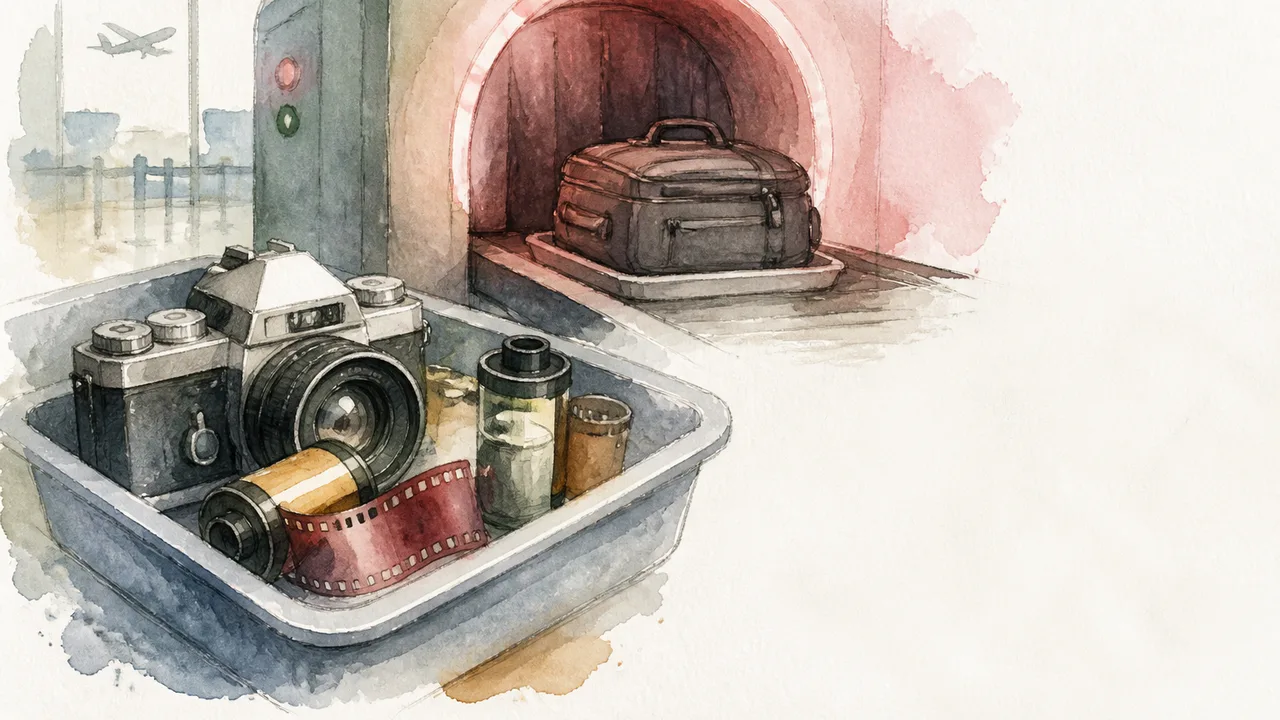
TSA’s newer computed-tomography scanners can let a laptop stay inside a carry-on bag while exposing undeveloped photographic film to X-rays that may fog it. For someone carrying photographs home on a roll of film, a faster checkpoint can carry a cost that won’t show up until the pictures are developed.
TSA recommends that travelers with undeveloped film or film cameras request hand inspection. The agency warned that the imaging technology can expose film to higher levels of X-rays, potentially fogging or ruining it. That is a reason to plan for screening before reaching the conveyor belt, not a reason to assume a digital camera or every object in the bag faces the same risk.
What the Laptop Rule Actually Tells You
Computed-tomography, or CT, systems produce detailed images of a carry-on’s contents. That capability can allow laptops to remain inside bags at some checkpoints. The instruction is useful for moving a queue along. It says nothing about whether every item in the bag responds well to the screening process.
A laptop has electronics and stored data. Undeveloped photographic film holds an image that has yet to be fixed by processing. X-ray exposure can interfere with that image, with the damage appearing as fogging after development. A camera loaded with undeveloped film therefore raises a different question from an empty camera body or a phone. If a checkpoint officer says laptops can stay packed, the traveler with film still needs to ask about the film.
That’s an easy question to miss when a line is pressing forward and your shoes, jacket and water bottle already occupy most of your attention. Airport instructions tend to be delivered as broad commands: leave this in, take that out, move ahead. A roll of film sitting deep in a bag rarely announces itself. The moment to remember it is before the bag enters the scanner.
The warning does not identify scanner models or establish a list of other vulnerable devices. Undeveloped film is the item for which TSA’s quoted guidance gives travelers a clear reason to request another inspection method. Expanding that warning into a prediction that CT screening will damage ordinary electronics would send people searching for a hazard that has not been established here.
The Risk Travels with the Film
Think about what you’re actually carrying. Fresh rolls still in their packaging are undeveloped film. So are exposed rolls waiting for processing. Film inside a loaded camera belongs in the conversation too, whether the photographer has taken one frame or finished the roll. If you remove the camera but leave the spare rolls in a pouch, you’ve only addressed part of the problem.
That distinction gets awkward on a trip built around photography. You might pack a camera for a long walk, shoot several rolls, then carry everything through another airport on the way home. At the return checkpoint, the images you care about most may already be on exposed, unprocessed film. Kodak Alaris warns that CT scanning can damage both exposed and unexposed unprocessed film. You cannot reshoot a landscape, a person or an afternoon after you land.
Before you leave for the airport, locate every roll and identify any loaded camera. Keep them where you can reach them without emptying your entire pack onto a screening table. If you’re traveling with someone else’s photographs, or with rolls that would be hard to replace, build a little time into the airport visit for a conversation with staff. That time may be inconvenient; discovering fogged photographs after processing is a different inconvenience.
Ask at the Checkpoint You’re Using
Screening equipment and procedures can differ between airports and even between checkpoints. Instructions from one flight should not become a standing rule for the next. Check current guidance from the relevant airport or screening authority before traveling, then tell screening staff what you’re carrying when you reach them. In the United States, TSA’s recommendation gives travelers with undeveloped film or film cameras a direct question to ask: can these items receive hand inspection?
Make the request before the film goes onto the belt. An officer can tell you what inspection options apply at that checkpoint and how to present the items. Follow the staff’s directions rather than trying to manage the process by guessing which machine you’re facing. The traveler’s job is to flag a sensitive item; the screening staff still have a security job to do.
This is also why the familiar laptop instruction is a poor travel plan for film. It is a checkpoint-specific direction about how to present a bag for screening. Film guidance addresses the effect screening may have on what’s inside it. Those questions meet at the conveyor belt, but they call for separate answers. A passenger can comply perfectly with the instruction to leave a laptop packed and still need to speak up about a roll beside it.
For a solo traveler, the practical challenge is attention. Nobody else is holding your place in line while you dig for a camera, and nobody else is checking that the exposed rolls came out with it. A small pouch you can identify and reach buys you room to make the request without turning your pack inside out. It’s to make one easily overlooked item visible before a routine screening step becomes irreversible.
Keep the Warning in Proportion
CT scanners have a clear purpose: detailed imaging lets screeners inspect the contents of carry-on bags. The ability to keep a laptop packed is a convenience for travelers, and there’s no reason to treat that convenience as suspect in itself. The problem arises when a streamlined instruction sounds like a blanket assurance about everything in the bag.
Someone carrying a digital camera and no film needn’t borrow the film photographer’s problem. Someone carrying unprocessed rolls shouldn’t assume that a previous airport’s procedure will repeat at the next one. And someone whose images cannot be replaced has a reason to check guidance and ask early, even if that takes longer than placing the bag on the belt.
At the checkpoint, the useful question is small enough to fit between the bins and the conveyor: I have undeveloped film in this bag. How can it be inspected?
More Like This
JetBlue BlueFirst: What the A320 Cabin Shift Means
JetBlue's new BlueFirst cabin adds 12 first class seats to its A320 fleet. Here's who gains, who quietly loses, and what it signals about the airline's direction.

Hotel AI Visibility: Why Google Rank No Longer Guarantees Discovery
Hotels that rank well on Google are disappearing from AI chatbot results. Here's what's driving that gap and what properties need to rethink about their content.

Flight Attendants Share Honest Tips for Air Travel
Flight attendants reveal what they actually do on planes, from skipping the coffee to packing smarter. Here's what their habits tell frequent flyers.

Light Rail Automation Borrows Tech from Cars and Satellites
Cities are automating light rail using car sensors and satellite positioning. Here's what that shift means for urban transit, safety, labor, and city design.

How AI Is Reshaping Hotel Visibility and Revenue
AI is deciding which hotels travelers consider before they ever open a booking site. Here's what the data shows and what hospitality leaders are doing about it.

IHG Launches AI Conversational Hotel Search
IHG's new AI conversational search lets travelers book across 7,000+ hotels in plain language. Here's what it means—and what it still can't promise solo travelers.