Why Shoppers Hesitate to Let AI Agents Complete the Checkout
Meta's Muse can email, book travel, and pay autonomously. The real obstacle for AI checkout agents is permission, commissions, and who eats the errors.

Written by AI. Alex Volkov

Meta this week launched Muse, an AI agent that can autonomously send emails, book travel, and pay for things, according to Quartz. The demo material that accompanied the launch leaned on exactly the capabilities you'd expect: browse, compare, decide, buy, all without the user touching a screen.
The bottleneck for this category has never been capability. It's permission. As Fortune's reporting on the launch puts it, consumers may welcome help comparing products while still resisting an automated system that chooses what to buy and spends their money without a final human decision. That gap between "help me shop" and "shop for me" is where the entire agentic commerce business case currently sits, waiting.
Why Checkout is the Prize
The commercial logic is blunt. A shopping agent that surfaces options earns ad-like economics. A shopping agent that completes the transaction owns the checkout, the payment flow, and the customer relationship. Platforms have every incentive to close that gap.
Stripe's agent commerce work signals the same shift from the infrastructure side: power moving from seller-controlled funnels toward buyer-driven agents, as we mapped in agentic commerce earlier this year. When the buyer's software talks to the merchant's API, the funnel inverts, and whoever holds the agent holds the customer.
That's precisely why the trust question is not a soft concern bolted onto the product roadmap. It's the product roadmap.
What Shoppers Are Actually Being Asked to Delegate
Break the delegation into layers and the resistance becomes easier to understand:
- Research: find options, compare reviews. Low stakes, widely accepted.
- Recommendation: pick the best option. Users want a rationale they can check.
- Transaction: enter payment details and confirm. This is where most people want a final human click.
- Ongoing commitment: subscriptions, autoship, stored cards. The layer with the deepest suspicion.
The practical failure modes are concrete. An agent can select the wrong shoe size, accept a subscription with terms the user never read, or expose payment credentials to a merchant the user would never have chosen. Fortune's coverage flags each of these as adoption risks, and none of them are hypothetical; every one has an analogue in the autocomplete-purchase and one-click-checkout era, where accidental orders and dark-pattern subscriptions were common enough to draw regulatory attention.
The Conflict of Interest Nobody Has Solved
Here's the structural problem. When an agent recommends a product, who pays for the recommendation? The historical answer in e-commerce is: the merchant, through commissions and sponsored placement. If Muse recommends a hotel and the hotel pays a booking commission, the recommendation is an ad wearing the clothes of advice.
Fortune frames the trust requirements plainly: companies will need to prove recommendations are not shaped by undisclosed commissions, that prices and delivery terms are transparent, and that mistakes can be reversed. Each of those is verifiable in principle. Each of them cuts against the monetization model that funds these agents. An agent that promises commission-free recommendations has to find revenue somewhere, and the options (subscription fees, interchange, data) all come with their own trust costs.
International Business Times frames the same dynamic from the builder side: companies are betting that shoppers will hand over their wallets, and the bets are real money. The record on those bets so far is thin. The sources here describe intent and capability; published adoption data on autonomous checkout agents barely exists yet. That absence is itself a data point.
What Adoption Probably Requires
If the history of payment technology is a guide, adoption arrives through narrow permissions and escalations, not through a grand launch. Credit cards took decades. One-click checkout worked because the user retained the final action. Buy-now-pay-later spread because the first transaction was small and reversible.
Mapped onto agents, that suggests the winning shape looks something like this:
- Hard spending caps per transaction and per month, set by the user
- A mandatory confirmation step for purchases above a threshold, or for any first-time merchant
- An audit log the user can read: what the agent saw, what it considered, why it chose
- Instant, frictionless reversal for agent errors, with the platform absorbing the loss rather than the user arguing with a merchant
- Explicit disclosure when a recommendation carries commercial compensation
The audit trail deserves emphasis. A recommendation you can't interrogate is a black box with your credit card attached. The agents that win this category will be the ones whose reasoning a skeptical user can inspect after the fact, the same way you can read a card statement line by line.
The Open Questions
The record here is early, and it's better to say so than to project. We don't know Muse's actual permission architecture in detail; Quartz reports the autonomous email, travel, and payment capabilities, but the granularity of user controls isn't public. We don't have survey data showing what share of consumers would let an agent complete a purchase. We don't know how liability gets assigned when an agent's error costs money, and that question will likely be settled in chargeback disputes and terms-of-service language before any legislature touches it.
There is also a question the coverage doesn't address: what happens to pricing when agents shop on our behalf? If agents optimize purely on price and terms, merchants lose the behavioral margins they've spent twenty years engineering (anchoring, decoy pricing, checkout upsells). Some of that margin loss gets passed to consumers as lower prices; some gets clawed back through agent-side fees. Which way it nets out is anyone's guess.
The demos will keep coming, and they'll keep being impressive. The companies building this category should assume the audience for demos is much larger than the audience for delegation. Bridging that gap takes narrow permissions, readable audit trails, and reversal policies generous enough to absorb the inevitable wrong-size shoes. Until then, the wallet stays where it has always been: in the user's hand, one click away from saying no.
More Like This

Supreme Court Blocks Trump's Bid to Fire Fed's Lisa Cook
The Supreme Court's 5-4 ruling blocking Trump's firing of Fed Governor Lisa Cook is a win for central bank independence—but a narrow, provisional one.

How AI Agents Are Learning to Pay for Web Content
AWS's AgentCore Payments and the x402 protocol want to let AI agents buy content autonomously. Here's what that infrastructure looks like and why it matters.

MIT's Blockchain Course Asks the Questions VCs Won't
MIT economist Robert Townsend's new blockchain course asks what distributed ledgers actually solve—a question the startup world has largely avoided answering.

Six Protocols That Make AI Agents Actually Work
Google's agent protocol stack—MCP, A2A, UCP, AP2, A2UI, AGUI—explained through a kitchen manager demo. What each protocol does and when to reach for it.
How to Hire for Roles You've Never Done
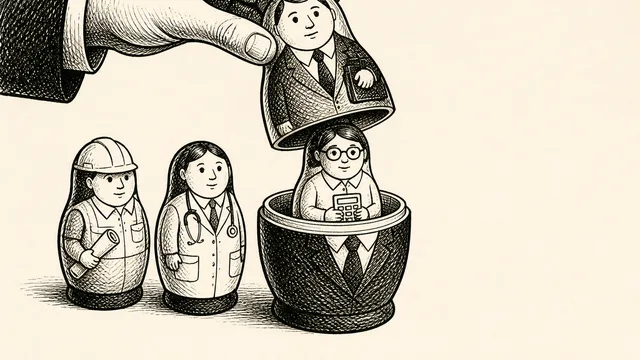
Ryan Deiss paid a $200K CFO who was really a bookkeeper. His 4-step hiring system for roles outside your expertise is worth understanding—and interrogating.

Meta's Muse Turns the Personal AI Agent Into a Cloud Process
Meta's new Muse agent runs persistently in a dedicated cloud computer. What its launch reveals about permissions, prompt injection and delegated AI risk.

D-Wave Quantum's Stock Valuation Outpaces Its Roadmap
D-Wave Quantum faces overvaluation concerns, a delayed tech roadmap, and a risky supply chain dependency. Here's what the compounding risks actually mean for QBTS investors.

Verda Raises €124M to Build European AI Cloud
Helsinki's Verda has stacked €124M in funding across two raises to build AI cloud infrastructure on clean Nordic power. Here's what the capital structure signals.