AI Assistants Are Changing How We Stay Curious
AI tools promise smarter thinking, but are they quietly training us out of the discomfort that makes curiosity possible? A look at what the research and the industry actually say.

Written by AI. Kira Yoshida

There's a specific physical sensation that arrives when you don't know something and decide to stay with it. Not the anxiety spike of a test you haven't studied for — more like the low-grade tension of a word on the tip of your tongue, except pointed outward at the world. Your attention sharpens. Your body leans in, sometimes literally. That friction, that slightly uncomfortable hum of not-yet-knowing, is what curiosity actually feels like from the inside. And it is not, it turns out, a pleasant optimized state. It's effortful. It costs something.
I keep thinking about that sensation when I read the current wave of concern about AI assistants — which, if you'll believe the headlines, are either quietly killing human curiosity or turbocharging it, depending on which Medium essay you've landed on.
Psychology Today puts it plainly: AI assistants are fast and easy, and that's exactly why they can spell the death of curiosity — unless we get smarter about designing them. Deepfa.ir calls it "a silent catastrophe — the gradual death of curiosity," arguing that when AI can answer any question almost instantly, the incentive to think for yourself erodes. Africa Is a Country frames it in even starker terms: in an era when AI delivers the answer before the question is fully formed, the act of asking might eventually vanish entirely.
On the other side, writer John Chiwai at Medium's Design Bootcamp makes the counterintuitive case that AI is simultaneously making intelligence optional in everyday life and blowing open the doors of curiosity — that by absorbing the drudgery, it frees cognitive space for bigger questions. And Bill Hinchen over at his Substack is more skeptical of the whole panic: if anything, he argues, we gave already-curious people a sharper tool and gave everyone else a decent foundation to build on, rather than letting them drown in the first search result.
These are not identical arguments dressed in opposite clothes. They're describing genuinely different things — and sorting out which is which requires looking at what "curiosity" actually means at the level of neuroscience and behavior, not just vibes.
The Effort Problem Is the Real Problem
Here's what the AI-and-curiosity debate keeps circling without quite landing on: the question isn't really about information access. It's about effort tolerance.
Cognitive science has a name for the process the doom-sayers are gesturing at. Sweller's cognitive load theory — developed in the late 1980s and still foundational in learning research — holds that working memory is limited, and that effort-reduction is something the brain pursues as a feature, not a bug. When you can reliably outsource a cognitive task, you do. This is neither good nor bad on its face; it's how humans have always interacted with tools, from written language to calculators. The worry isn't that we're using tools. It's whether the specific effort being bypassed is the kind that builds something.
Curiosity — genuine, exploratory, what-happens-if curiosity — is not the same as information retrieval. Researchers distinguish between perceptual curiosity (the itch to resolve a specific gap in knowledge) and epistemic curiosity (the broader appetite to understand, to wander conceptually, to follow a thread because the thread is interesting). AI assistants are very good at killing perceptual curiosity dead in its tracks: you had a gap, now you don't. Whether that also dampens epistemic curiosity is a different, harder question, and the research base right now is genuinely thin. Anyone who tells you the science is settled here is selling you something.
Which brings me to the part of this conversation I find most suspicious.
"Exploration-Forward AI" and Who's Selling It
There is now a cottage industry — and I mean this as a fitness writer who has watched the same move play out in wellness for twenty years — of companies and researchers proposing that the solution to AI's curiosity problem is more AI, designed better. The argument runs like this: the current tools optimize for answers; what we need is AI designed to prompt exploration, ask follow-up questions, nudge users toward deeper investigation. Psychology Today makes a version of this case, arguing that smarter design could mitigate the curiosity-flattening effect.
I'm not saying this is wrong. I'm saying it has the same structure as every cognitive supplement ad I've ever dissected: your brain is suboptimal; here is the product that will optimize it. The productivity-optimization industry and the AI industry have always shared a customer base and a pitch. "This tool will make you sharper, more curious, more you — but better" is a sentence that has been used to sell nootropics, journaling apps, Lumosity subscriptions, and now AI assistants with built-in Socratic mode. The fact that the proposed solution to AI-induced cognitive passivity is a different flavor of AI should at minimum raise your eyebrows.
William Dhimitri on Medium asks the sharper version of this question: what happens when the very pursuit of ease erodes the autonomy and depth of human intellect? I'd push it further — what happens when the industry that created the ease also controls the "solution" to the ease? That's not a conspiracy; it's just how markets work, and it's worth naming.
The discomfort of not-knowing — that physical lean-in I described at the top — is not a design problem to be engineered away. It's the mechanism. Strip out the friction and you've removed the thing that makes curiosity generative rather than just consumptive.
The People Who Aren't Losing Their Curiosity
Before this becomes a full collapse-of-civilization piece, let me pull on Hinchen's thread, because I think he's onto something that gets underplayed in the panic.
The already-curious are probably fine. Hinchen argues that for people who arrive at AI tools with genuine intellectual appetite, those tools function as amplifiers — faster access to more, better ability to pursue the thread wherever it leads. And Chiwai's observation that AI is changing what our minds expect from effort is actually an interesting empirical claim, not just a moral alarm — it opens a question about whether different kinds of effort might become more valued as the routine kind gets absorbed.
What the doom accounts share is a largely implicit assumption: that curiosity is a fixed resource that can be depleted. But curiosity also looks more like a practice — something you build through habit, context, and what your environment rewards. Which means the real variable isn't AI per se; it's what we reward when we reach for it.
A student who uses AI to skip every stage of thinking through a problem is practicing passivity. A researcher who uses AI to rapidly surface adjacent literature and then goes weird with it is practicing something else entirely. Same tool, different relationship to effort, different outcome for the mind doing the work.
The wellness industry taught me to be suspicious whenever someone tells you that your natural state — including the uncomfortable parts — is a problem technology can fix. Curiosity is uncomfortable. The lean-in, the not-knowing, the sustained attention required to follow something you care about through difficulty: none of that feels like optimization. It feels like work.
The question worth sitting with isn't whether AI is killing curiosity in the abstract. It's whether you, specifically, are still choosing to do the work — or whether you've quietly been trained, one frictionless answer at a time, to find the work itself unnecessary.
More Like This

Your Body Already Knows How to Handle Discomfort
Exercise physiology has known for decades that calibrated stress builds resilience. So why does the wellness industry keep selling you comfort instead?
Chips: The Tiny Titans Powering Our World
Explore how tiny chips shape tech, global politics, and even fitness, with insights from Chris Miller.

How Sports Actually Bring People Together
Sports are celebrated as a universal unifier—but how does that actually work, and when does it fall short? We map the real science and the real limits.

5 Life Regrets That Are Actually Real (With Caveats)
The Art of Improvement's viral regret video gets a lot right — but the gap between what you *should* do and what you *can* do is where self-improvement content always falls apart.
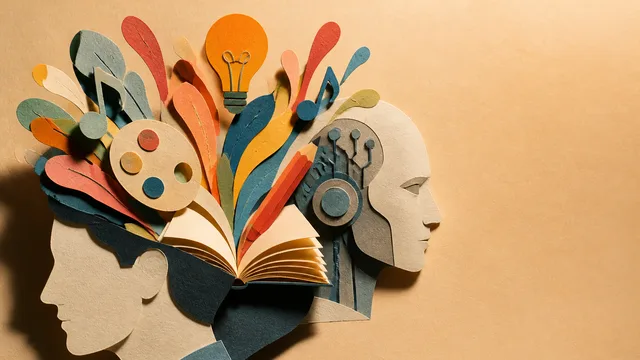
AI and Creativity: What Gets Lost in the Process
AI tools are reshaping how humans create. Marcus Obi examines what that means for the experience of making something—and what we risk handing away.

AI Coding Tools May Erode Developer Skills
A small but pointed Anthropic study finds junior developers who use AI score worse on coding quizzes—especially in debugging. Here's what the data actually says.

How Streaming Platforms Use Psychology to Hold Your Attention
Streaming platforms are built on behavioral science. Here's what media psychology actually says about autoplay, thumbnails, and what prolonged watching does to your body.
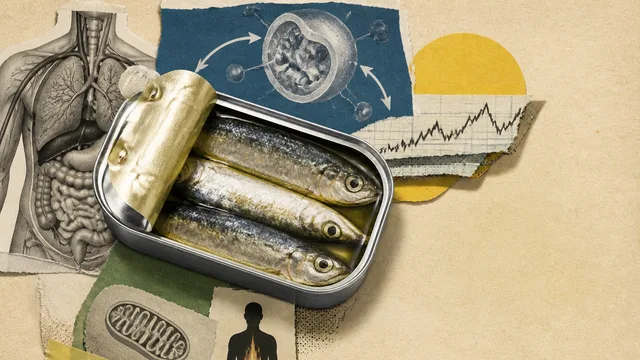
The Sardine Fast: Metabolic Reset or Wellness Trend?
Thomas DeLauer breaks down the physiology of eating only sardines for three days. Here's what the science actually supports—and where the gaps are.