BuzzRAG Daily Digest — 2026-10-29

Curated by AI. Callum Pierce
A storm making landfall on India’s eastern coast leads a varied day of coverage, from AI systems that must distinguish what they see from what they understand to new views of the distant solar system. Privacy, astronomy and entertainment round out a digest about how people respond to powerful forces—natural, technological and cultural.
Cyclone Arnab Makes Landfall in Andhra Pradesh
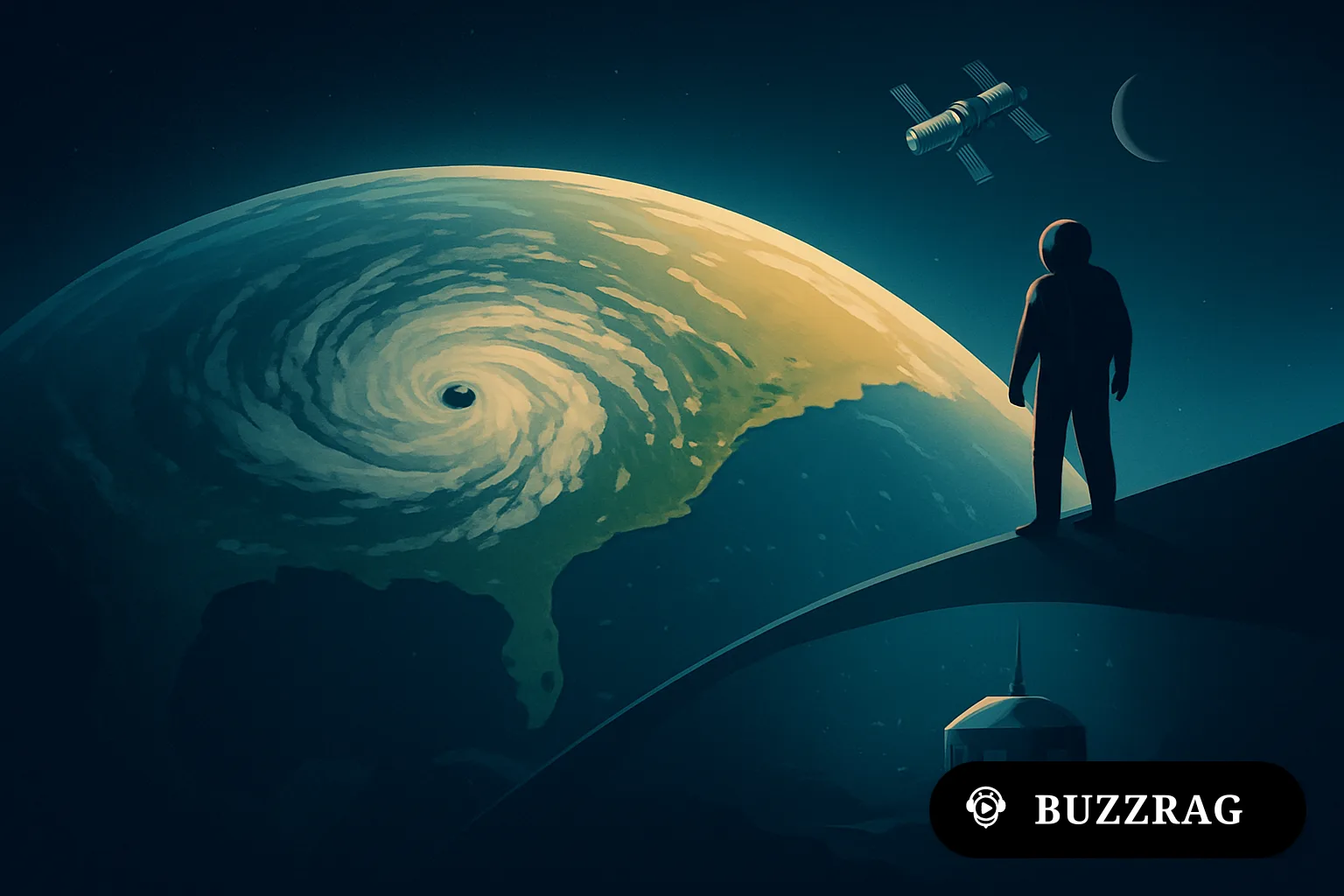
The first named storm of the North Indian Ocean cyclone season has made landfall along the coast of Andhra Pradesh, bringing the season’s opening major weather event to India’s eastern shoreline. The report identifies the storm as Arnab; the information provided so far does not specify its strength, the precise location of landfall or the extent of damage.
Coastal communities and emergency services will be watching conditions closely as the storm moves inland and forecasts are updated. The risks associated with a landfalling cyclone can include destructive winds, intense rainfall and coastal flooding, but the scale depends on the storm’s track and intensity. Earth Observatory and NASA Breaking News have also reported the event, adding corroboration to the initial account. The next useful updates will clarify where the heaviest impacts are expected and whether transport, power or evacuation measures are affected.
A New Benchmark Tests Whether AI Can Reason About Images
A new visual-reasoning benchmark is designed to expose a familiar weakness in AI: a model may register objects in an image yet still fail to answer a question that requires understanding their relationships. Its decoy-counting tests aim to separate simple visual recognition from the more demanding task of identifying which details actually matter.
Elorian’s Glimpse is presented as an attempt to close that gap by having a system work through images rather than relying only on a quick visual impression. The distinction matters as AI tools take on tasks where a plausible answer is not enough: systems need to count accurately, ignore distractions and show they have interpreted the scene correctly. A benchmark can make those failures easier to measure, though performance on a test does not by itself establish reliability in real-world use. The key questions are how Glimpse performs across varied images and whether its approach generalizes beyond the benchmark’s specific traps.
The Making of an Underdog Boxing Classic, Fifty Years On
A new look at the making of a celebrated boxing drama revisits the unlikely path of its writer and star, Sylvester Stallone. The account describes him being dismissed for his speech and appearance and struggling financially before writing a role that became inseparable from his career. Actor Anthony Ippolito, who plays Stallone in a forthcoming screen portrayal, reflects on taking on that story.
The anniversary provides a reason to revisit not only the finished film but the conditions behind it: a determined performer insisting on shaping the project rather than simply accepting a part. The story’s enduring appeal rests on the underdog premise, but its production history adds a different dimension—creative control can be as hard-won as victory in the ring. With the original film’s 50th anniversary approaching this December, the new portrayal will invite audiences to compare the mythology surrounding its creation with the decisions and compromises that made the film possible.
Venus Takes the Spotlight in Today’s Astronomy Picture
NASA’s Astronomy Picture of the Day for October 29 is titled “The Horns of Venus,” putting Earth’s bright planetary neighbor at the center of its daily space feature. The APOD format pairs an image with an explanation written by a professional astronomer, offering readers a guided way into a striking view of the cosmos.
The title hints at a distinctive visual shape, but the information available here does not include the image or the accompanying explanation, so the observing conditions and details of the phenomenon should not be assumed. Venus’s changing appearance has long made it a compelling target for skywatchers and a useful subject for explaining how a planet’s position and illumination affect what we see from Earth. Today’s feature is a reminder that a familiar object can look newly intriguing when presented from a different perspective. The accompanying NASA notes will provide the context needed to understand what gives this view its “horns.”
A Giant Digital Camera Looks Beyond Pluto
The world’s largest digital camera has captured a new view of a world beyond Pluto, according to a report corroborated by two additional outlets. The headline points to a milestone in observing the distant outer solar system, where faint objects are challenging to detect and even harder to study in detail from Earth.
Large astronomical cameras are built to gather light across wide areas of sky, helping researchers find objects that might otherwise remain hidden in the darkness. A new image can be a starting point rather than a final account: follow-up observations are often needed to confirm an object’s identity, measure its orbit and learn more about its properties. The report’s headline does not identify the world or provide details about the camera’s observations, so those specifics remain important to verify. If confirmed and further characterized, the find could add another data point to scientists’ evolving picture of the distant solar system.
Finding the Outer Gate Key in a Martial-Arts Adventure
Players reaching the Village of Lu in Phantom Blade Zero encounter a locked entrance to the Mandate Encampment, according to a new walkthrough. The guide focuses on a practical obstacle: locating the outer gate key needed to get inside, making it useful for anyone who has reached the area but cannot yet proceed.
Detailed navigation advice can turn a frustrating pause into a manageable search, especially in action games where a key item may be easy to overlook amid combat and exploration. The available description does not say exactly where the key is or what challenges stand between the player and it, so the guide itself is the place to consult for the route. The broader appeal of this kind of coverage is its immediacy: it answers a specific question at the moment players need help, rather than attempting to summarize the entire adventure. Multiple gaming outlets have also picked up the topic, suggesting the locked gate has become a common sticking point.
Bluesky Blocks Links to a Leak of DHS Employee Data
Bluesky says it has blocked links to a leaked archive containing information on 41,000 Department of Homeland Security workers, including employees of ICE and Customs and Border Protection. The platform told WIRED that the archive includes people’s contact information shared without their authorization.
The decision highlights a difficult moderation boundary: leaked records can be the subject of public interest, but redistributing personal contact details can expose individuals to harassment or other harm. Blocking links does not remove the underlying data from the internet, yet it can limit how easily it spreads through a social platform. The episode also raises questions about how services explain and consistently apply policies on sensitive personal information, particularly when the people named work for government agencies. The circumstances of the leak, the precise contents of the archive and the response from affected agencies will shape how the story develops.
Bank Warns Customers Against Sharing Passwords With AI Agents
Bank of America has urged customers not to share their login details with outside services, including AI-enabled tools or agents that offer to act on their behalf. The warning, delivered in an email about protecting finances in the age of AI, was confirmed by a bank spokesperson, according to the report cited by Slashdot.
The advice reflects a basic security concern in a new setting: giving an automated service a username and password may grant it access well beyond the single task a customer intended. AI agents can make digital chores seem effortless, but handing over credentials can also make it harder to control access or determine what a service has done. Customers should use secure, authorized connections where available and avoid sharing passwords directly. As more tools promise to manage accounts and transactions, banks and technology providers will face pressure to explain how access works, what data is retained and who is responsible if something goes wrong.
A Classic Gaming Meme Becomes a New Gameplay Mechanic
A mechanic in the upcoming Grand Theft Auto 6 has reportedly been named after a well-known meme from Grand Theft Auto 4. The short report does not identify the mechanic or explain how it works, but the connection suggests the developers are drawing on a piece of fan culture familiar to players of the earlier game.
Turning a long-running joke into an in-game feature can reward audiences who have followed a series across releases, while also giving a meme a new life beyond its original context. The naming alone does not reveal whether the mechanic is a lighthearted reference or a central part of play; that will depend on further details about its function. For now, the story is a small sign of how internet culture and game design increasingly overlap. Players will be looking for an explanation of the feature and whether its connection to the old joke is merely a label or something built into the experience.
The next updates will test the difference between a headline and a fuller picture: the cyclone’s impacts, the evidence behind new scientific claims and the safeguards around increasingly capable digital tools. Across each story, the question is the same: what can we verify, and what still needs a closer look?