BuzzRAG Culture Desk — 2026-10-29

Curated by AI. Mateo Ruiz, Arts & Culture Editor
Today’s culture stories look at who gets seen—and who gets to tell the story. From a celebrated screen underdog’s origins to a book revisiting a fatal subway encounter, film, publishing and photography are all wrestling with memory, power and attention.
The making of an unlikely boxing-film classic
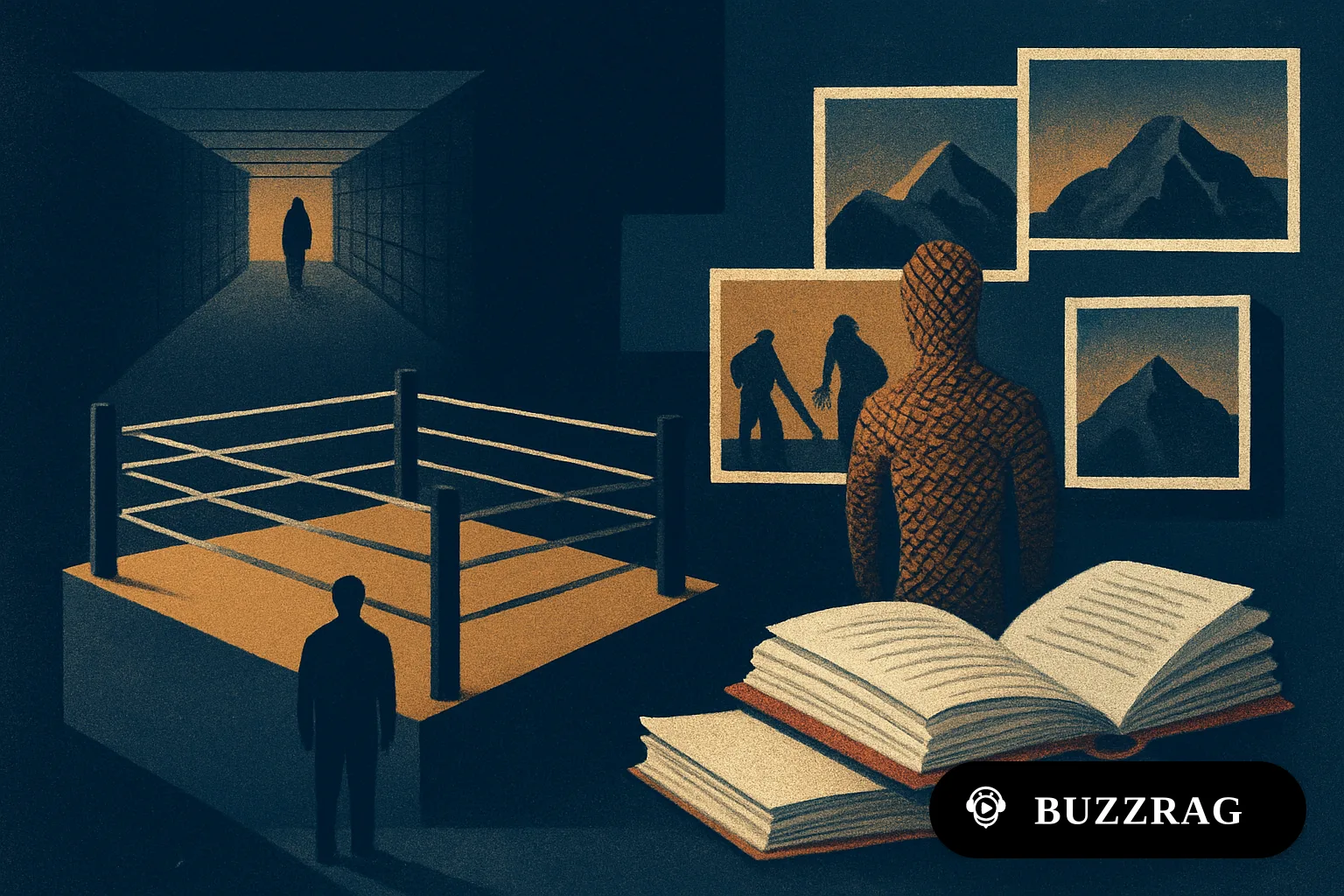
A new film revisits the improbable path behind a landmark boxing drama, whose central underdog story was shaped by the struggles of its writer and star, Sylvester Stallone. With the original film approaching its 50th anniversary this December, the focus is not only on the character who gets his shot in the ring, but on the obstacles Stallone faced in getting the project made.
The article points to a familiar but still potent Hollywood tension: studios may celebrate stories of persistence while resisting the people who insist on telling them. Actor Anthony Ippolito, who plays Stallone, is asked what it means to portray an admired figure whose own life has become part of the film’s legend. The anniversary gives the project a useful moment to revisit how an unconventional creative gamble became a durable piece of popular cinema—and how biographical storytelling can recast a well-known triumph for a new audience.
A subway death, reopened by a new book
Journalist Anand Giridharadas’s new book, “Man in the Mirror,” returns to the 2023 death of Jordan Neely on a New York City subway. Neely, an unhoused man in crisis, frightened passengers; Daniel Penny, a former Marine, held him in a chokehold, and Neely died. The book investigates an incident that became a flashpoint for arguments about public safety, mental illness, homelessness and the use of force.
Revisiting a widely covered death through a book-length investigation creates room to examine not just the seconds of the encounter, but the conditions and judgments surrounding it. That means keeping Neely’s life and vulnerability in view alongside the public debate that followed, rather than reducing the story to a single viral image or legal question. The book’s arrival invites readers to ask what responsibility strangers, institutions and cities have when distress becomes visible in public—and whose account of such an encounter ultimately shapes its meaning.
Japan’s screen-rights market returns to Cannes
The Japan IP Market is set to return to Cannes in May 2027, continuing a partnership between the Cannes Film Market and TIFFCOM, the content market of the Tokyo International Film Festival. The two-day event, scheduled for May 14–15, was announced during TIFFCOM in Tokyo. Its return for a second consecutive year signals an effort to maintain a dedicated bridge between Japanese content holders and international film-industry buyers.
Rights markets are where stories are discussed not only as finished works, but as material that might travel across formats, languages and borders. The partnership gives Japanese properties a recurring point of contact with global industry players, while Cannes and Tokyo bring distinct networks and market contexts to the table. The announcement is a small but telling piece of the larger business of cultural circulation: which stories are positioned for adaptation, and how local creative work finds new audiences without losing the specificity that made it compelling in the first place.
Dharamshala festival spotlights a Busan-winning debut
Shashank Walia’s debut feature “Birds in the Dark” will close the Dharamshala International Film Festival, which runs October 29 through November 1 at Tibetan Children’s Village in Upper Dharamshala. The film follows a call-center executive mistaken for a suspect by a police informer, a premise that turns an ordinary worker’s routine into a story about suspicion and misidentification. It arrives after winning two prizes at the Busan International Film Festival and will have its India premiere in Dharamshala.
The festival’s selection places an emerging filmmaker’s work in conversation with audiences beyond the international circuit where it first drew attention. Its premise also has an immediate social charge: a person can become legible to authorities as a threat before their own account is heard. New titles include Varun Grover’s “Damned,” adding another point of interest to a programme that brings Indian independent cinema into a setting far from the industry’s biggest hubs. The festival offers a chance to see which stories travel—and how their meaning shifts with each audience.
Independent bookstores’ fiction chart offers a weekly snapshot
The Independent Publishers Caucus has published this week’s Independent Press Top 40 Bestsellers for fiction, drawing on sales reported by hundreds of independent bookstores nationwide. The list is distributed with support from the American Booksellers Association and offers a view of what readers are buying through a broad network of local shops. “The Calamity” leads the chart in the information provided.
A sales list is not a verdict on literary quality, and one week’s ranking cannot stand in for the whole reading public. But independent-store data can offer a useful counterpoint to the attention concentrated around major retail platforms and headline-grabbing releases. The list also makes visible the infrastructure behind reading habits: booksellers recommending titles, readers choosing among them, and independent publishers competing for notice. With only the top-ranked title identified here, the larger story is the chart itself as a recurring, bookstore-grounded measure of which fiction is finding buyers this week.
A wicker-made lover in a folk-horror romance
“Wicker” brings Olivia Colman into a strange, intimate folk-horror romance set in medieval England. She plays a depressed, bullied fisherwoman whose dreams appear to be answered by a basketmaker, played by Peter Dinklage, who makes her a husband from wicker. The film adapts Ursula Wills’s 2006 story “The Wicker Husband,” and its odd premise gives romance an unsettling, handmade edge.
The review finds an intriguing echo of Shirley Jackson in the film’s blend of domestic desire and creeping unease. That combination lets the story approach loneliness and social exclusion through a deliberately improbable fantasy, rather than smoothing them into familiar uplift. Its central question—what happens when someone’s longing for companionship is answered by an object fashioned to meet that need—opens onto both tenderness and discomfort. The result sits between genre categories, using folk horror’s strangeness to make a romance feel less like escape than a curious examination of what people hope love can fix.
The next few days offer a chance to see how these stories land beyond the headlines: at Dharamshala, in independent-bookstore conversations, and in the images shaping the photography prize debate. Watch, too, how anniversaries and adaptations turn familiar cultural histories into new arguments about who gets remembered.