BuzzRAG Daily Digest — 2026-10-28

Curated by AI. Callum Pierce
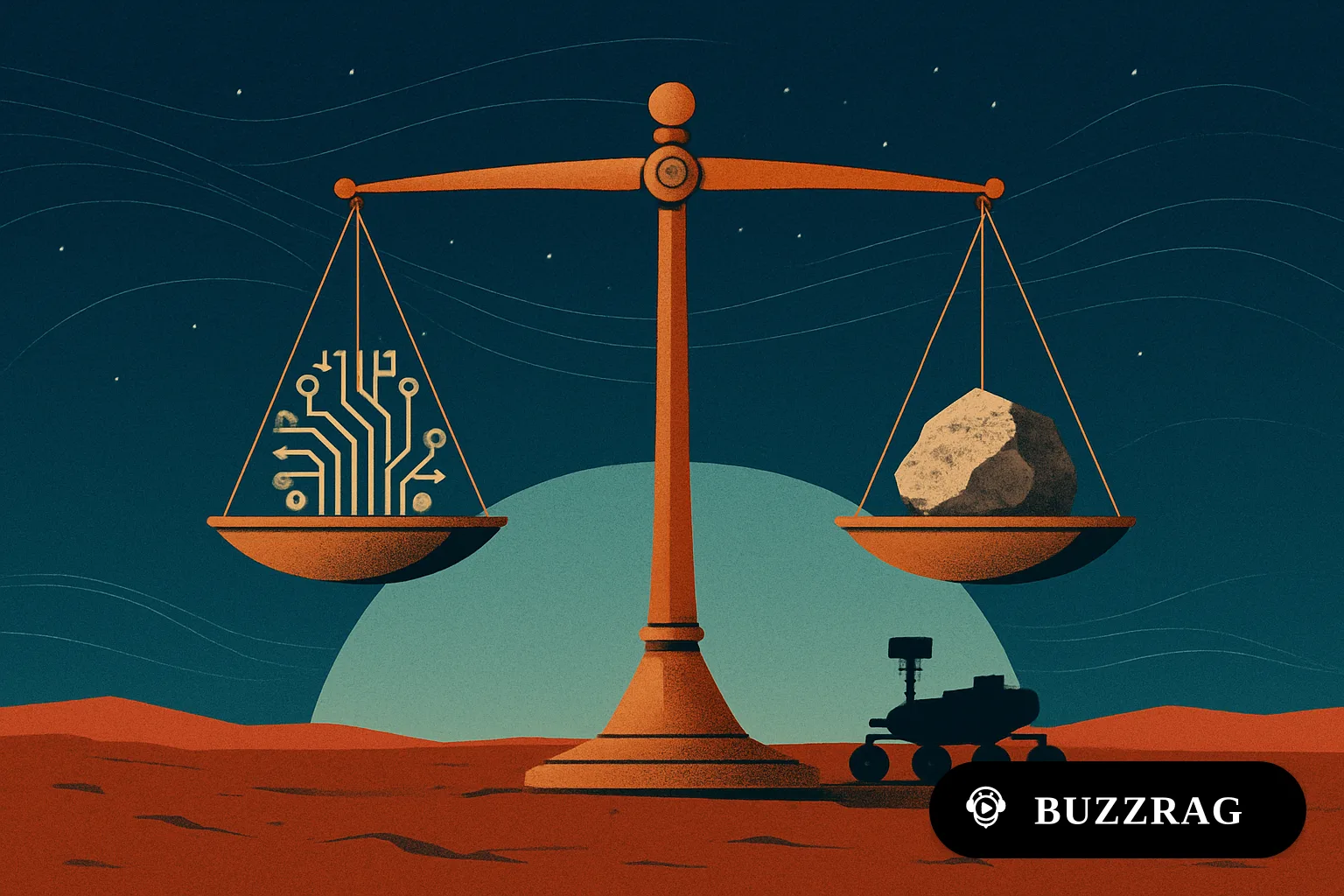
Today’s trends range from decisions with immediate consequences on Earth to clues gathered across deep time and space. The common thread is how people interpret evidence—and where technology, institutions and scientific uncertainty should shape what happens next.
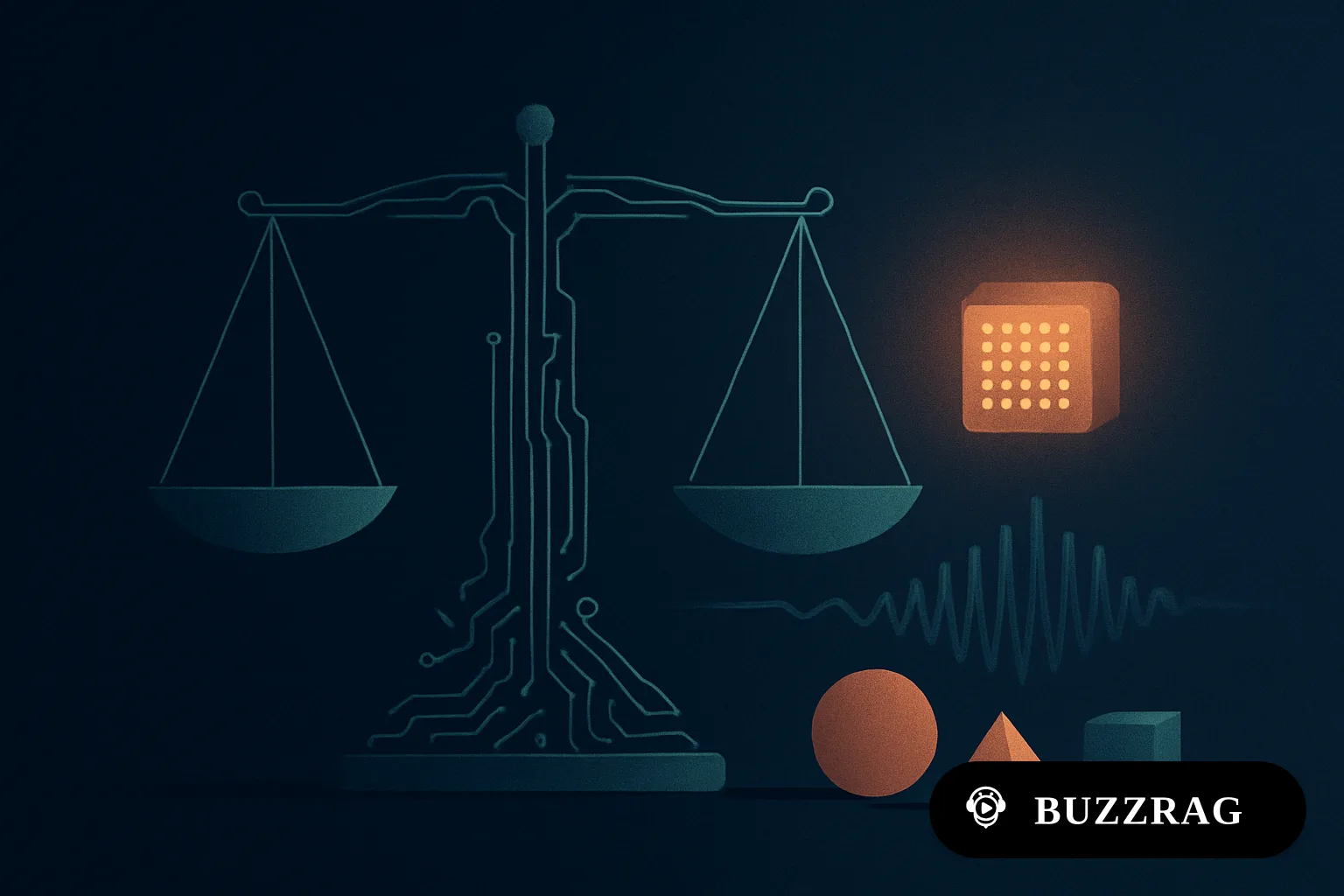
Could AI Adjudicate Civil Cases?
A leading English judge has argued that artificial intelligence could decide some civil disputes, putting a difficult question before courts: which cases, if any, are appropriate to delegate? The proposal is not a claim that every hearing can be automated. It opens a debate about how far AI might assist or replace human judgment in routine matters, and where the boundary should sit.
Civil cases often turn on evidence, procedure and the application of established rules, but even apparently straightforward disputes can involve credibility, context and consequences that resist simple categorization. Any system used to decide them would raise questions about transparency, accountability, accuracy and the ability of parties to challenge an outcome. A judge’s support for exploring the idea may sharpen discussion, but it does not settle how such a system would be governed. The key test will be whether efficiency can be gained without making justice harder to understand or contest.
Chiricahua’s ‘Standing-Up Rocks’ Become a National Park
Chiricahua, a landscape of striking rock formations in the American Southwest, is described as the country’s newest national park. The area has been protected as a national monument since the 1920s; the change in designation brings a long-protected place back into the news and puts its unusual geology in the spotlight.
The formations give the landscape its popular “standing-up rocks” description, while the monument’s history reflects nearly a century of public recognition and preservation. A national park designation can raise visibility and visitor interest, as well as expectations for stewardship. The challenge is to welcome people while protecting the terrain and the experience that make the site distinctive. The announcement also invites a closer look at how public lands are named, managed and funded, and what a change in status means for the communities and ecosystems around them.
CDC Flags the Scale of Drug-Resistant Infections
The CDC estimates that 19 drug-resistant pathogens cause 9.7 million infections and more than 50,000 deaths in the United States each year. The agency’s first comprehensive assessment of these threats warns that resistance continues to outpace the development of new treatments, placing a growing burden on patients and health services.
Drug resistance can make familiar infections more difficult to treat, narrowing clinicians’ options and increasing the stakes of prevention, diagnosis and appropriate use of medicines. The scale described in the report spans multiple pathogens, rather than a single emerging outbreak, and points to a problem that requires sustained attention. Surveillance can help identify where resistance is spreading, while infection control and research into new treatments remain central parts of the response. The report’s estimates provide a baseline for tracking progress, but the speed at which the threat evolves means public-health planning cannot rely on a one-time assessment.
Why Clearer Emails May Outperform Elaborate Design
A business article makes a simple case about marketing email: visual polish alone does not guarantee that readers will act. It recounts a founder’s carefully designed message—with custom illustration and product images—that produced a 0.4% click rate, setting up a broader look at what makes an email effective.
The contrast suggests that layout and branding should support a clear purpose rather than compete with it. Readers need to understand quickly what the message offers and what action, if any, is being asked of them. That does not mean design is irrelevant; hierarchy, readability and mobile-friendly presentation can all affect whether a message is easy to use. But the anecdote is not a universal benchmark, and a single click rate cannot explain performance without context such as audience, subject line and campaign goals. The useful takeaway is to test whether every element helps the reader, rather than assuming more decoration will produce more engagement.
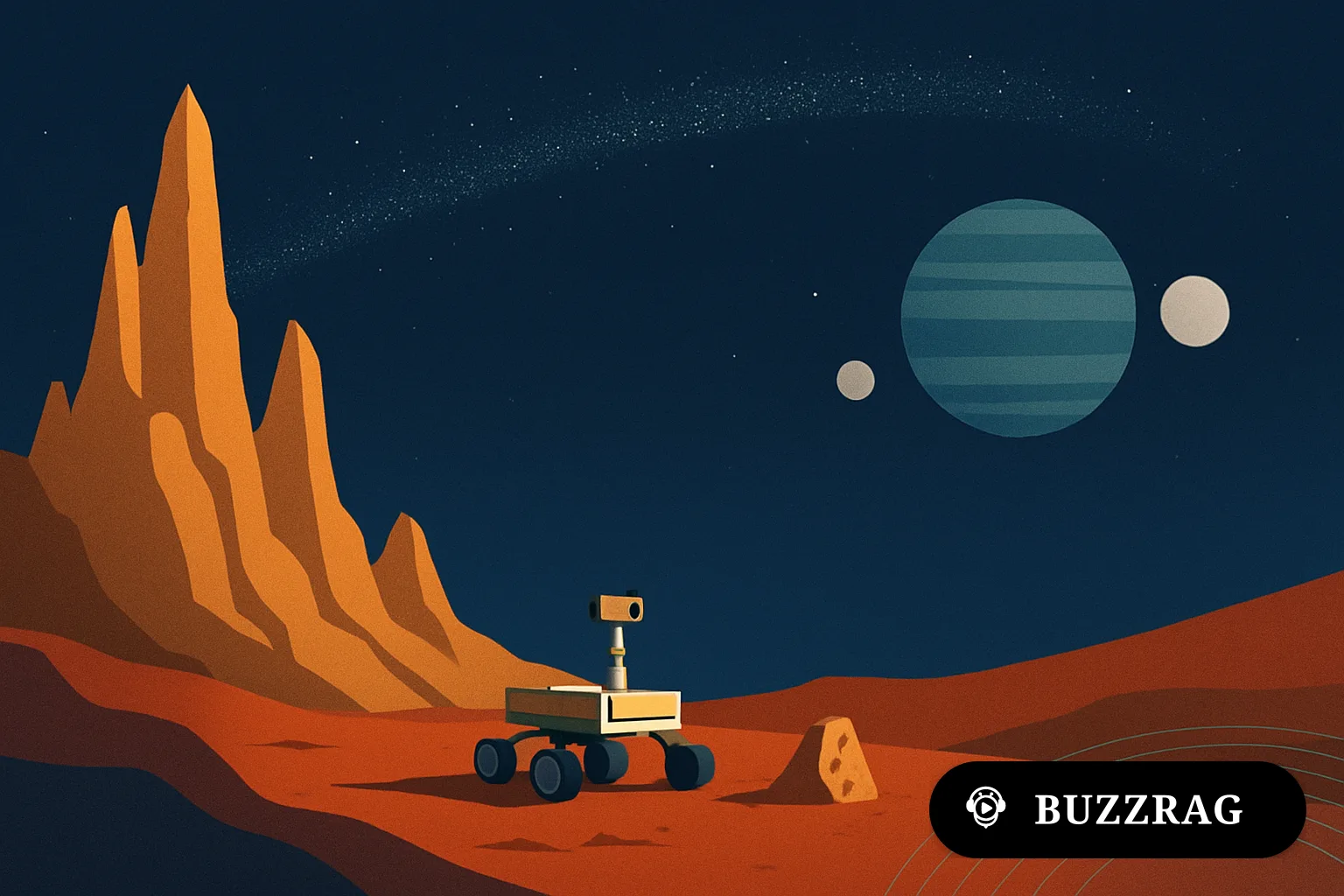
Curiosity Prepares a New Mars Drill Target
NASA’s Curiosity rover has returned to a nearby area after completing a drill campaign at Basque Lakes and is preparing to sample a target called “Nazca.” The mission update says the rover moved only a few metres from the “Chiu Chiu” block, which was judged unsuitable for the next drilling attempt.
Choosing a target is a careful process: the science team must identify a rock that can be safely approached and drilled while offering material useful for understanding Mars. The sequence of nearby stops shows how exploration depends on local geology as well as the rover’s capabilities and the planning work conducted from Earth. A successful sample can add evidence to the mission’s broader study of the planet’s past environments, though a target name alone does not reveal what the material will show. The next stage is the drill campaign itself, with observations and sample analysis determining what the team can conclude.
Could Ancient Warming Have Averted a Return to Ice?
A new report advances a provocative possibility: global warming may have helped prevent a return to ice-age conditions roughly 2,000 years ago. The headline points to a question about how natural climate variability and warming influences interacted in the distant past, rather than a settled account of what would otherwise have happened.
Reconstructing ancient climate requires scientists to interpret indirect evidence, then test it against models of the forces that shape temperature over long periods. The phrasing “may have prevented” is important: it describes a proposed explanation, not a direct observation of an alternate history. The finding also sits on a different timescale from modern climate change, so it should not be read as a simple analogy or prediction. The central issues are what evidence supports the hypothesis, how confidently researchers can distinguish competing explanations, and what the work adds to understanding the climate system’s sensitivity to changing conditions.
A Maximalist Queer Epic Builds Awards Momentum
A Spanish film described as a lavish epic about war and prejudice is attracting attention for its bold scale and early awards recognition. The story follows the directors behind the project, whose creative partnership and shared vision helped bring the work into being. Its maximalist style and queer perspective set it apart from more conventional awards-season dramas.
The reported casting and visual extravagance are part of the film’s public profile, but the article also points toward the people and collaboration behind it. A story that tackles prejudice through an expansive historical frame can face the challenge of balancing spectacle with the experiences it represents. Early acclaim may broaden its audience, though awards attention is only one measure of how a film resonates. As it reaches more viewers, the conversation may turn to how its scale, performances and subject matter work together—and whether its ambition translates into a lasting cultural impact.
A New Method Reads the Milky Way’s Stellar Streams
A research paper proposes a framework for jointly inferring the Milky Way’s gravitational potential and the origins of the stellar stream known as GD-1. Stellar streams are elongated trails of stars left by disrupted systems; their shapes preserve clues about the gravitational forces they have experienced and the structure of their progenitors.
The work combines flow-matching methods with simulation-based inference, techniques intended to compare observed patterns with possible models while accounting for uncertainty. That joint approach matters because the stream’s present-day appearance reflects both the Galaxy’s gravitational field and the properties of the object that produced it. Separating those influences is a difficult inverse problem: different combinations of assumptions can sometimes fit the same observations. The paper’s contribution is a method for tackling both questions together. Its value will depend on how well the framework performs against data and alternative models, but stellar streams remain a promising way to map otherwise hard-to-measure structure in our Galaxy.
The Trade-Offs of Bank Charters for Fintechs
A report on fintech companies and bank charters frames the decision as a mix of benefits and obligations. A charter can alter how a financial-technology firm operates and how its services fit within the banking system, but the headline’s emphasis on “baggage” signals that access comes with responsibilities rather than being a simple upgrade.
The broader stakes are regulatory and practical. Firms considering this route must weigh what a charter could enable against the demands of oversight, compliance and operating as a more closely regulated institution. Those choices can affect business models and the way customers encounter financial products, while regulators must assess whether new entrants can meet the standards expected of banks. The available item provides no details about particular companies or rules, so the central question remains how the advantages and burdens compare in specific cases. The debate is part of a larger effort to define where financial innovation belongs within a system built around public trust and accountability.
The day’s stories point to decisions shaped by evidence, from courtroom procedures and public-health planning to the rocks and celestial patterns scientists study. The next questions are practical ones: how new tools are governed, how protections keep pace with emerging risks, and what fresh observations will reveal.