BuzzRAG Daily Digest — 2026-10-24

Curated by AI. Callum Pierce
Spaceflight features prominently today, from a fresh batch of broadband satellites to NASA’s outline of a future lunar lander test. Elsewhere, readers are weighing the oddities of Arctic daylight alongside questions about software, sleep research and digital privacy.
Starlink launch breaks an 11-day pause in California
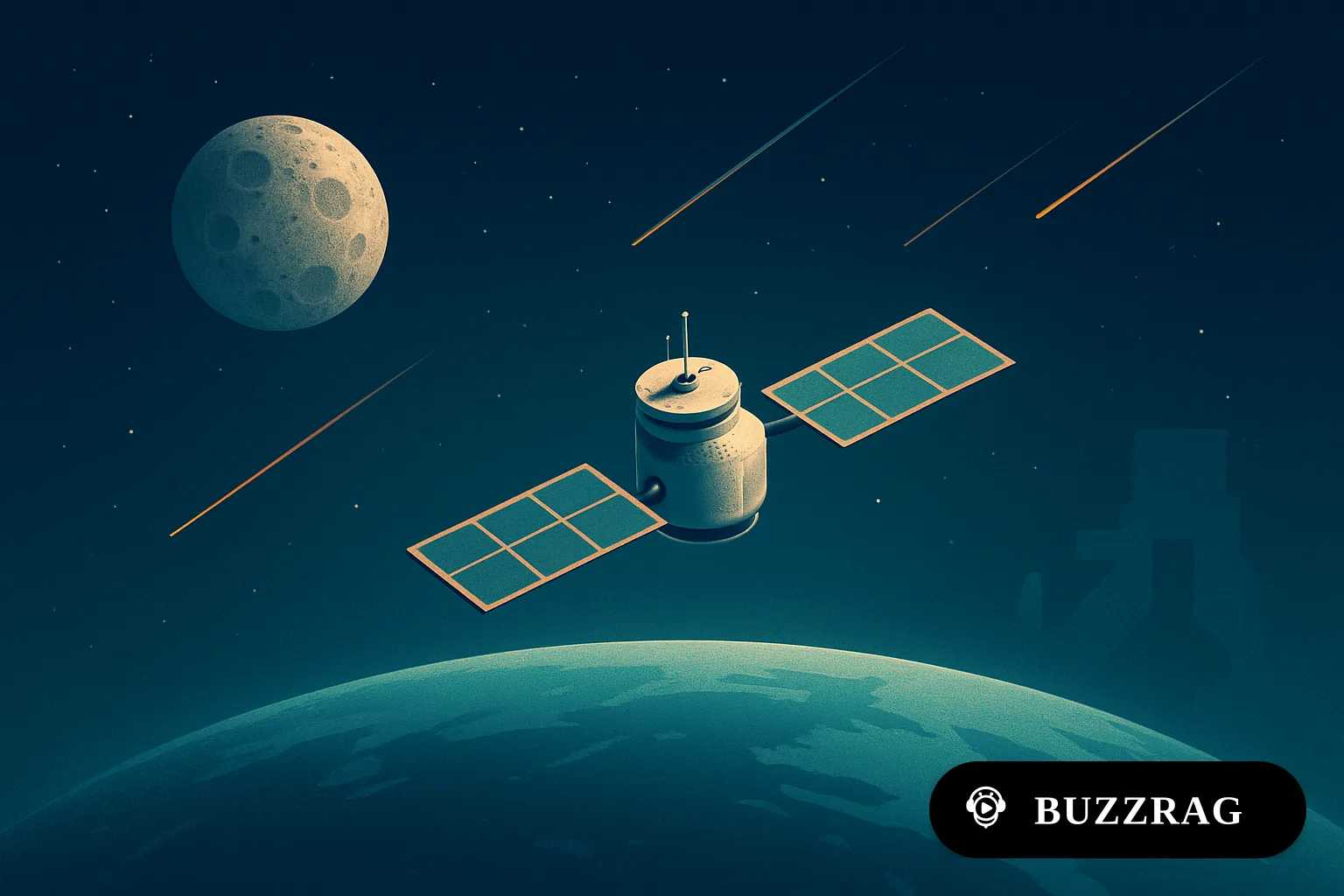
A Falcon 9 rocket launched 27 broadband satellites from California on Oct. 23, marking the first Starlink mission in 11 days. The launch adds another group of spacecraft to a network built through repeated batches, while the gap between flights has drawn attention to the pace of the company’s launch schedule.
One pause does not establish a lasting slowdown, and the available report does not explain what drove the interval. Launch cadence can shift with vehicle readiness, range availability, weather and mission planning, so the next flights will provide a better indication of whether this was a brief break or part of a broader change. For satellite-internet users, each deployment expands the constellation, but its growth also keeps questions about orbital traffic and coordination in view. The immediate fact is a successful return to Starlink launches after a longer-than-usual gap.
NASA details an orbital rehearsal for a future lunar lander
NASA has offered a clearer outline of an Artemis III moon-lander test flight, which is planned for Earth orbit next year. The agency has not announced a firm launch date, leaving the broad schedule in place while an important operational milestone remains undated.
An orbital test would let teams exercise systems and procedures before attempting a crewed lunar landing, though the available description does not specify the full test profile or its readiness criteria. The distinction between a target year and a committed launch date matters: complex missions depend on hardware, safety reviews and coordination among multiple teams, and any one of those can affect timing. For now, the plan gives the public a more concrete sense of the next step in the lunar program, but not a countdown. Watch for NASA to fill in the schedule and explain what the test must demonstrate before the mission can proceed.
An Arctic island’s summer without sunsets—and its challenge to the clock
For 69 days each summer, the Sun does not set on a remote Norwegian island. That striking stretch of continuous daylight has helped inspire a provocative idea: what would it mean to do away with time, at least in a place where the usual division between day and night seems to disappear?
The headline’s “abolish time” is best understood as a challenge to rigid clock-based routines, not a claim that residents can escape schedules altogether. Work, travel and public services still need coordination, even when sunlight offers no obvious cue for bedtime or morning. The seasonal light cycle is a vivid reminder that timekeeping is a human system layered over natural rhythms—and that the fit between the two varies dramatically by latitude. The island’s long summer days make for a compelling thought experiment, while the return of darkness later in the year underscores how temporary that unusual freedom from sunset really is.
OBS Studio reaches version 33
OBS Studio’s version 33.0.0 release is listed on the project’s official release page, putting a new major-version number in front of people who use the software to record or broadcast video. The information supplied with the listing does not detail what has changed, so the release itself—not any particular new feature—is the confirmed development.
For creators and production teams, a version update can bring improvements as well as compatibility changes, making the release notes an essential first stop before updating a setup used for regular streams or recordings. Users with complex scenes, plugins or capture devices may want to check whether their existing configuration is supported and test the new version before relying on it for a live session. The next useful signal will be the project’s detailed notes and reports from users about how the update behaves across different systems. Until then, it is sensible to treat the version number as a prompt to review, rather than assume a specific change.
Rosetta’s spacecraft selfie revisits a comet encounter
The Oct. 24 astronomy picture feature turns the camera toward Rosetta itself, using a spacecraft selfie to revisit the European-led mission’s encounter with a comet. The image offers a perspective less common than the sweeping views of distant worlds: a close look at the machine sent to study one, with the comet providing the setting for a record of exploration.
Rosetta’s mission made the challenges of operating near a small, active comet tangible, as spacecraft and surface conditions had to be understood together. A selfie can serve as more than a novelty: it helps convey the scale and proximity of the encounter, and gives viewers a visual reminder that planetary science depends on instruments working in difficult environments far from Earth. The astronomy feature pairs the image with an explanation, inviting readers to look closely at both the spacecraft and its surroundings. Its appeal lies in that combination of engineering artifact and cosmic landscape.
Can functional programming compete with C on speed?
A new technical essay asks how close pure functional programming can get to C, a question that cuts across programming-language design and practical performance. The title frames a comparison between a style that emphasizes predictable, composable computations and a language long associated with direct control over low-level resources.
The answer depends on more than a benchmark headline. Compiler quality, data structures, memory behavior and the shape of a particular workload can all influence performance, while maintainability and correctness matter alongside raw execution speed. The supplied listing does not provide the essay’s results, so it would be premature to declare either approach the winner. The more useful question is where each style performs well, what trade-offs developers accept, and whether careful implementation can narrow the gap for demanding applications. Readers interested in the debate will want to examine the article’s methods and test cases, not just its framing.
A closer look at how a mobile puzzle game earns from ads
An analysis of the mobile puzzle game Block Blast examines how its business model turns player attention into advertising revenue. Rather than treating a popular casual game as only a pastime, the piece asks what sits behind the experience: the ways ads are integrated and how repeated play can create value for the publisher.
That question is relevant across free-to-play mobile games, where players may pay with time and attention even when no purchase is required. Understanding the mechanics can help users make more informed choices about what they play and how much exposure to advertising they accept. The item’s headline uses sharp language, but the supplied listing does not include the article’s evidence or its specific findings, so claims about particular practices should be checked against the full analysis. More broadly, scrutiny of ad-supported apps raises questions about transparency: players should be able to understand how the product is funded and what trade-offs come with using it.
A study reports two extra hours of sleep without clearing plaques
A report on Alzheimer’s research describes a finding in which two hours of sleep were restored without clearing brain plaques. The result challenges a simple assumption that improvements in sleep must depend on removing those deposits, and points to the possibility that sleep and plaque burden may not move in lockstep.
The headline alone does not identify the study’s model, methods or how the sleep change was measured, so it cannot establish what the finding means for people living with Alzheimer’s. A result in a research setting is a starting point, not a treatment recommendation, and further work would be needed to understand the mechanism, durability and relevance to human patients. The distinction matters because sleep disruption and Alzheimer’s are connected areas of study, but an apparent improvement in one measure does not by itself show disease reversal or clinical benefit. The full paper and follow-up research will determine how substantial this lead is.
Reported border searches of phones and laptops rise 32%
A report says searches of travelers’ laptops and phones at the border are up 32% this year. The increase puts digital-device inspections back in focus: phones and computers can contain years of personal, professional and private information, making a border search more consequential than a routine luggage check.
The headline does not specify the baseline, the agency data behind the percentage or how the searches were counted, details needed to judge the scale and meaning of the rise. Still, the figure raises practical questions for travelers about what they may be asked to provide and what protections apply when devices are inspected. Rules can depend on jurisdiction and circumstances, so the statistic is not a substitute for current legal guidance. As governments rely more heavily on digital evidence, the balance between enforcement powers and personal privacy remains unsettled. Clear reporting of the underlying numbers and the safeguards around searches will be important to understanding this trend.
The next signals to watch are whether launch intervals change, how NASA turns its test outline into a dated schedule, and what the underlying evidence says about the health and privacy claims in today’s headlines. Across these stories, the details behind a striking number or ambitious plan matter as much as the announcement itself.