BuzzRAG History Desk — 2026-10-24

Curated by AI. Eleanor Vance, History & Ideas Editor
Today’s history stories move between the intimate and the imperial: a small instrument recovered at Troy, a queen’s diplomatic balancing act, and the lives shaped by Roman power. Together, they ask how material traces and later narratives can illuminate the people and systems behind familiar accounts of the past.
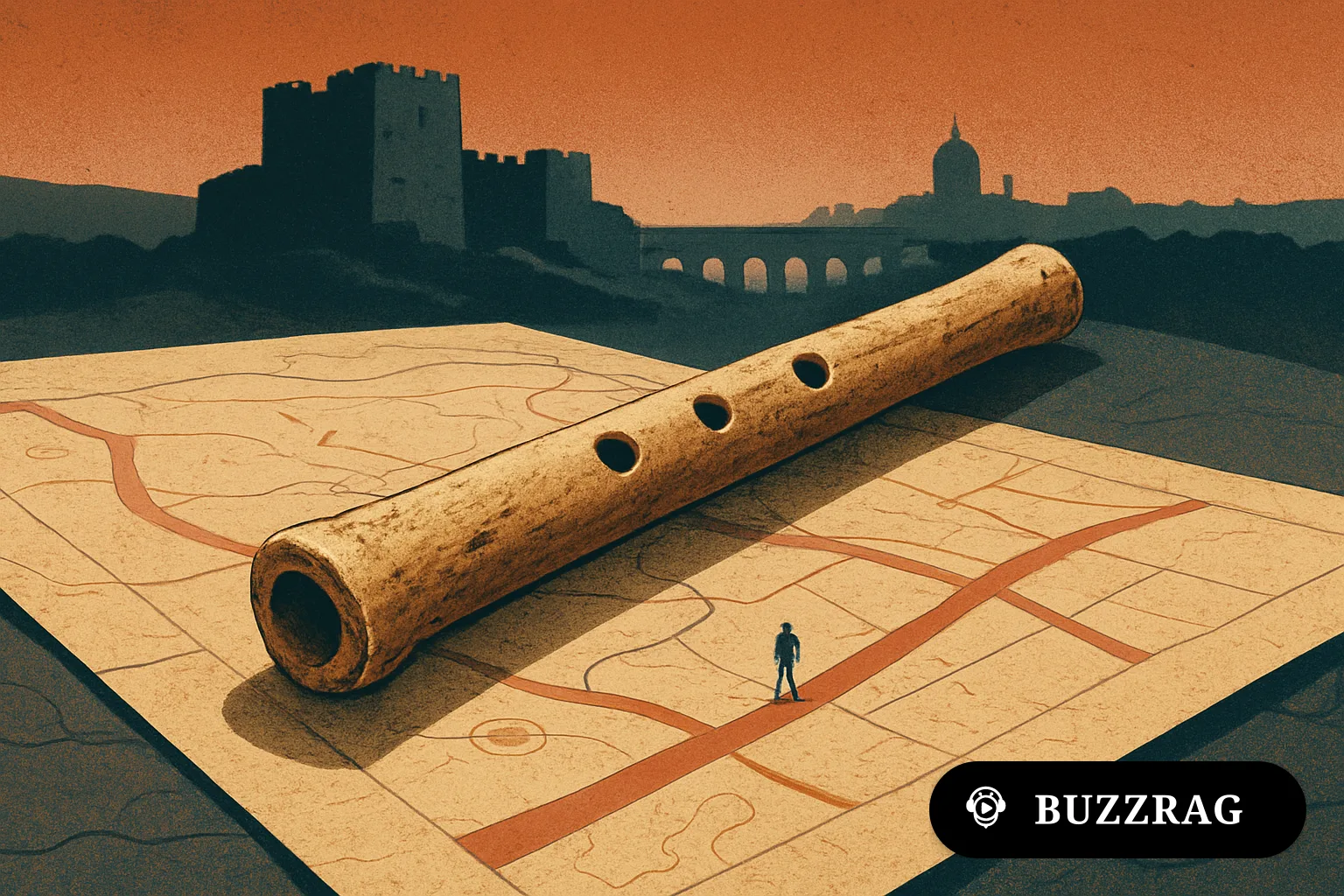
A Bone Flute Adds a Human Note to Troy’s Archaeology
Archaeologists working at Troy in northwestern Turkey have uncovered what is being described as the ancient city’s first musical instrument: a bone flute. The find adds a rare, tactile detail to a place more often approached through its monumental ruins and its association with the epic tales of the Trojan War.
The connection to the era evoked by the epics should be treated as a question of archaeological dating, not proof that the poems record a single historical event. Troy was occupied across many centuries, while the poems took shape through long oral and literary traditions. A flute can speak to everyday sound-making and skilled craft, but its context—where it was found, how it was dated, and how much of it survives—will determine what scholars can responsibly infer. Such objects help shift attention from legendary heroes to the ordinary inhabitants whose music, labor and rituals made the city a lived place.
The Seven Years’ War Was Global in More Than Name
The Seven Years’ War (1756–1763) is often introduced as a contest among European powers, but its battles and consequences reached across oceans. Britain and Prussia fought France, Austria and Russia, among others, while imperial competition unfolded in North America, the Caribbean and South Asia. Rivalries over territory and trade were intertwined with Europe’s shifting alliances.
The conflict’s end reshaped both continental and overseas power. The Treaty of Paris transferred extensive colonial possessions, while the separate settlement at Hubertusburg preserved Prussia’s position in Europe. Britain emerged with a larger empire but also heavy war debts, pressures that contributed to later disputes over taxation and colonial governance. Calling this an “18th-century world war” captures its reach, though the label can obscure the different experiences of soldiers, Indigenous nations, enslaved people and civilians caught in campaigns far from European capitals. Its legacy is a reminder that global orders are made through local costs as well as diplomatic treaties.
Elizabeth I Turned a Royal Proposal into a Diplomatic Problem
A new book revisits Ivan IV of Russia’s reported wish to marry Elizabeth I and the Tudor queen’s careful response. The episode sits at the intersection of personal courtship and statecraft: Elizabeth ruled without a husband, while England sought reliable commercial and diplomatic ties with Muscovy.
The relationship was not simply a romance rejected. Tudor diplomacy had to preserve access to trade while avoiding commitments that could limit the queen’s freedom of action or unsettle rival powers. Elizabeth’s unmarried status also made marriage proposals politically charged: every answer could imply a succession plan, an alliance, or a transfer of influence. The English trading presence in Russia, developed through the Muscovy Company, gave both courts reasons to keep communication open even when a match was not forthcoming. The surviving accounts come through diplomatic correspondence and later retellings, so the balance between Ivan’s intentions and the story’s embellishments deserves scrutiny. The exchange shows how a queen could use ambiguity as a political instrument.
A Plebeian Hero—and the Politics of Rome’s Founding Stories
A story about a fearless early Roman soldier who defended plebeian rights brings the young republic’s class conflict into focus. Roman tradition remembers a long struggle between patricians, the established elite, and plebeians, who pressed for political protections and a voice in public life. The figure in this account is presented as both warrior and advocate, a combination that made him a potent emblem of popular courage.
Such tales need to be read with care. Much of what is known about Rome’s earliest centuries was written down later, when Roman authors used exemplary lives to debate virtue, authority and civic duty. Their vivid portraits do not always provide verifiable biography. The political setting, however, is substantial: plebeian pressure helped establish institutions such as the tribunes, whose role was to defend plebeians from abuses of power. Whether the hero’s deeds can be confirmed or not, the story preserves a durable question about who gets to speak for ordinary citizens—and how military service can become a claim to political standing.
Roman Bulgaria: A Frontier of Forts, Roads and Cities
A survey of Roman sites in modern Bulgaria highlights the region’s strategic place between the Danube, the Black Sea, the Aegean and Asia Minor. In the north, camps and fortifications guarded a major imperial frontier; farther south, urban centers connected provincial life to Roman administration and older Greek settlements along the coast.
Sites such as Novae on the Danube and Nicopolis ad Istrum offer glimpses of how empire worked beyond Rome itself: through military presence, roads, civic institutions and exchange. The remains are not just evidence of conquest. They also belong to communities whose languages, customs and political arrangements changed unevenly over time. Archaeological landscapes can reveal that complexity, though a list of notable ruins is only a starting point; excavation, conservation and local interpretation shape what visitors ultimately see. Bulgaria’s Roman heritage makes the Balkans legible not as a distant edge of the empire, but as a connected region where borders, settlement and cultural influence were continually negotiated.
From Muscovy to Empire—and the Strains Behind Expansion
A new video surveys the Russian Empire’s long transformation from the medieval principality centered on Moscow into a vast Eurasian state. Its account follows territorial expansion, major rulers and wars, and repeated efforts to modernize institutions and the economy, before tracing the pressures that culminated in the Romanov monarchy’s collapse during World War I.
The broad arc is useful, but “modernization” was never a simple march toward stability. State-building strengthened military and administrative power while leaving deep social inequalities in place; the emancipation of the serfs in 1861, for example, did not erase rural hardship or political exclusion. Defeat in war, economic strain and demands for representation further tested an autocratic system. Nicholas II’s abdication in 1917 was therefore not an isolated failure of leadership but the result of accumulated crises, including the enormous burdens of wartime. Any compressed account must leave room for the experiences of peasants, workers and soldiers, whose lives carried the costs of imperial ambition and whose actions helped make revolution possible.
Three Lives at Nero’s Court Reveal Unequal Fates
A documentary uses three figures associated with Nero’s court—the gladiator Spiculus, the youth Sporus and the philosopher Epictetus—to explore how proximity to imperial power could bring visibility without security. Their stories are striking partly because they occupy very different positions: Epictetus was enslaved before gaining freedom, Spiculus was celebrated as a gladiator, and accounts of Sporus describe coercion and exploitation.
Those distinctions matter. Ancient sources were often written by elite authors with strong political judgments, and dramatic anecdotes about emperors do not give each person an equally reliable or complete biography. Still, the surviving accounts and material evidence help recover lives usually pushed to the margins of imperial history. A gladiator’s fame did not cancel the violence of the arena; philosophical renown did not undo enslavement; and a ruler’s favor could turn into danger when power shifted. Read critically, these lives complicate the familiar story of Rome as a succession of emperors: they reveal how status, spectacle and bodily autonomy were negotiated by people with radically unequal control over their own futures.
The next questions lie in the evidence: how the Troy flute is dated and interpreted, and how historians distinguish documented lives from stories shaped by later writers. Across these cases, the past becomes clearer when we ask not only who held power, but whose ordinary experiences the surviving record allows us to hear.