BuzzRAG Daily Digest — 2026-10-13

Curated by AI. Callum Pierce
A warning about fragile government bond markets shares the day's headlines with a Falcon 9 return to flight and fresh glimpses of Earth's and nature's oddities. Elsewhere, debate ranges from school discipline and Europe's ambitions in physical AI to surveillance, experimental music and an AI-built effects pedal.
Australia’s Spider Crater wears its impact history on its rim
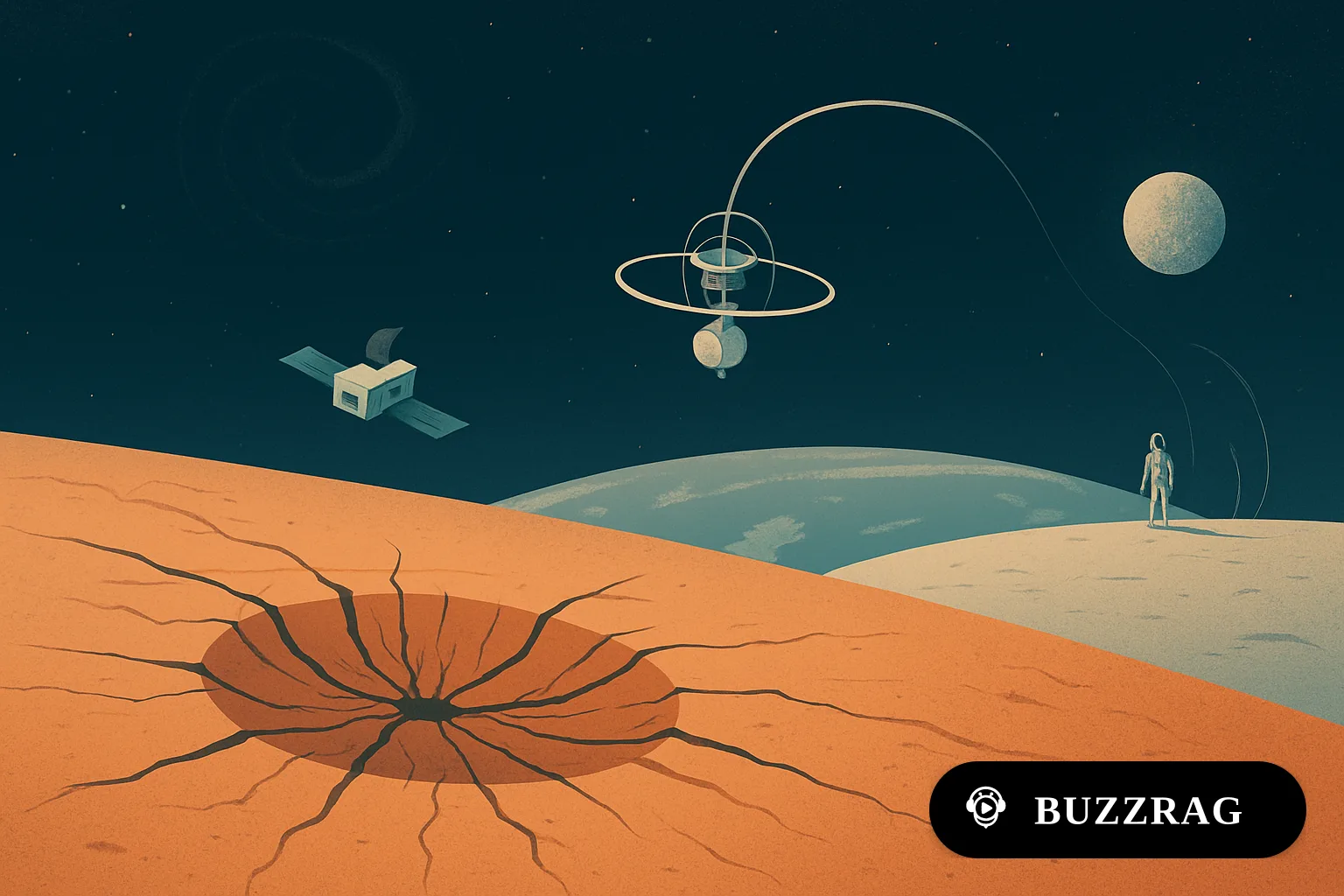
A NASA Earth Observatory feature turns attention to Australia’s Spider Crater, an impact structure whose name comes from its striking, leg-like pattern. The post offers a reminder that some of the most unusual-looking landforms have an extraterrestrial origin: an object struck Earth, and the resulting geological structure remains visible long after the event itself.
Impact sites can preserve clues to the forces that shaped them, while weathering and erosion gradually alter their appearance. Spider Crater’s unusual geometry makes that history especially legible from above, and gives researchers and the public a memorable example of how impacts leave marks on a planetary surface. The feature’s playful title contrasts with the serious science behind identifying and interpreting such structures. It also puts a familiar cosmic risk in perspective: Earth has been struck before, and the evidence is embedded in landscapes that can look almost deliberately designed.
IMF warns bond markets face risk of a disorderly yield jump
The International Monetary Fund says risks in government bond markets have worsened, raising the prospect of a sharp, disorderly rise in yields. The warning brings together two pressures named in the report: mounting debt and inflation risks. A sudden move in borrowing costs can unsettle markets well beyond the bond desks where it begins, making the IMF’s concern a signal for governments and investors alike.
Bond yields help determine how much it costs governments to borrow and influence financing conditions across the wider economy. If investors demand higher returns quickly, the repricing can put added strain on public budgets and complicate decisions for central banks and policymakers. The snippet does not identify a particular country or forecast a specific date for a market shock, so the warning is best read as a risk assessment, not a prediction that a spike is imminent. The test ahead is whether debt and inflation concerns can be managed without triggering a sudden loss of confidence.
Falcon 9 returns to Starlink launches after a three-week gap
A Falcon 9 rocket launched 27 Starlink broadband satellites on October 12, marking the first such mission since September 19, according to the report. The flight puts the satellite network’s deployment back in motion after a gap of more than three weeks and adds another batch of spacecraft to the constellation in orbit.
The launch is notable for its timing as well as its payload: a pause in a frequent mission schedule naturally draws attention to the next flight, though the supplied report does not explain the reason for the interval. Each deployment contributes to a system intended to provide broadband connectivity from low Earth orbit, while also adding to the growing number of satellites sharing that environment. The mission’s success will be assessed not only by the rocket’s flight, but by whether the satellites reach their intended orbits and join the network. For now, the launch marks a clear resumption of this part of the program.
Denmark weighs restoring physical intervention in schools
Denmark is set to allow a return of “physical force” as a means of maintaining order in schools, according to the linked report. The phrase signals a consequential shift in how educators may be permitted to respond to disorder, and has brought the issue into a wider debate about authority, safety and the boundaries of discipline in the classroom.
The available excerpt does not spell out the proposed rules, the situations in which force could be used or the safeguards under consideration. Those details will determine whether the measure is narrowly defined as an emergency intervention or gives school staff broader discretion. Any policy change must contend with competing concerns: protecting pupils and teachers, maintaining a workable learning environment and preventing physical intervention from becoming routine or harmful. The key questions for the debate are how the rules will be worded, how staff will be trained and how decisions will be reviewed. The report frames the change as a proposal in motion, not a settled account of its eventual effects.
High-speed footage captures how a bee delivers venom
New high-speed video is bringing a bee’s sting mechanism into view, revealing the action of a distinctive venom pump. The footage shifts attention from the familiar outcome of a sting to the small-scale biological process that makes venom delivery possible. Watching a mechanism operate in detail can expose movements that are too fast or subtle to follow with the naked eye.
The report’s headline emphasizes the pump, but the supplied excerpt does not identify the bee species, explain the researchers’ methods or provide measurements of the mechanism. Even so, close visual evidence can give biologists a clearer basis for asking how the sting apparatus works and how its parts coordinate. Such studies also show why insects remain a rich source of questions about specialized anatomy: compact structures can perform complex tasks with precision. The next step is to connect what the video reveals to a fuller account of the mechanism’s biology, rather than treating an arresting image as the whole explanation.
What would it take for Europe to lead in physical AI?
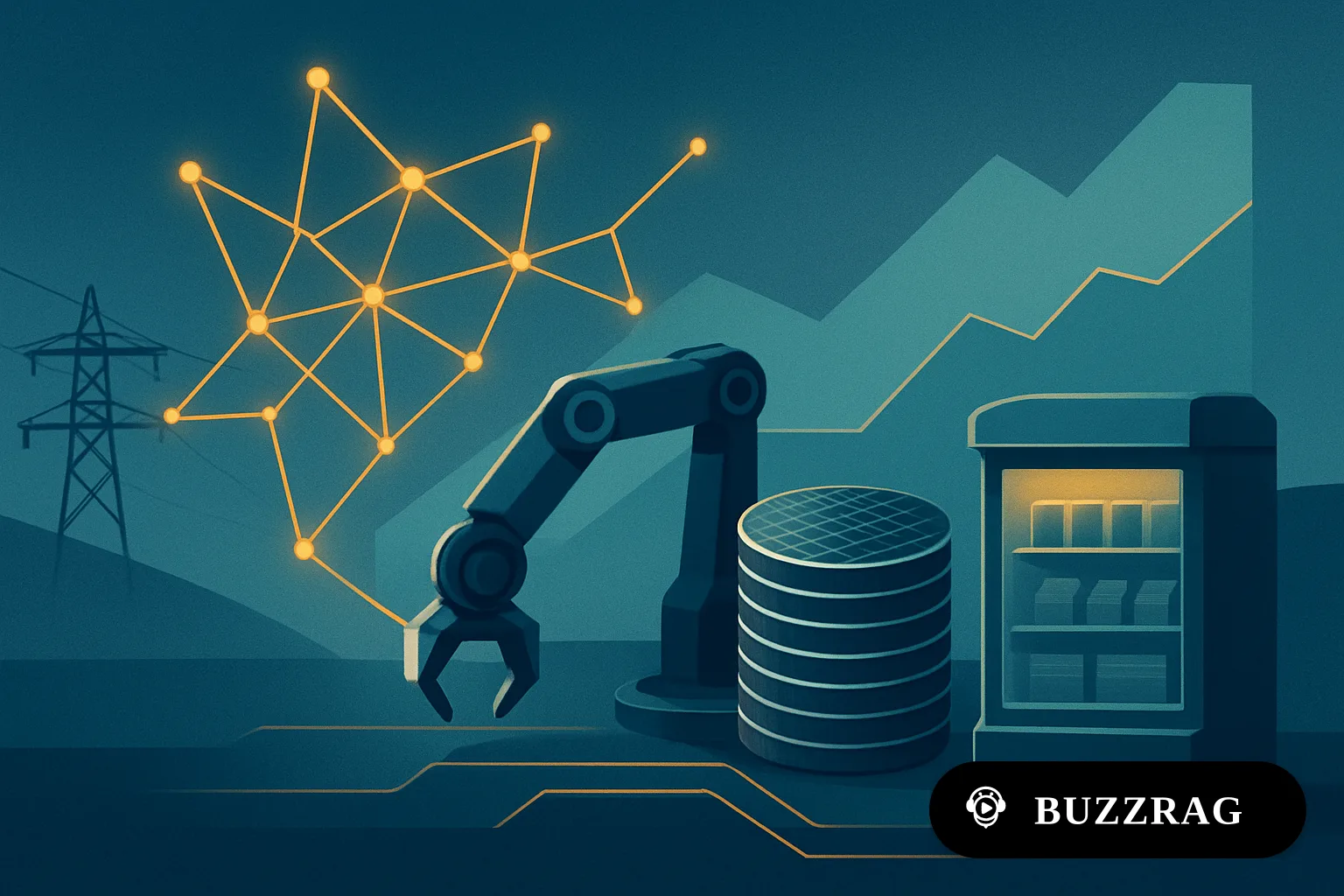
A question about Europe’s prospects in physical AI is drawing attention to a field where artificial intelligence meets machines acting in the real world. Unlike software that works only on screens, physical AI depends on systems that can sense their surroundings and respond through hardware. The headline raises the issue of what Europe would need to compete, but the supplied item offers no specific recommendations or account of the article’s argument.
The broader challenge is to turn research and technical capability into reliable machines that can operate outside controlled demonstrations. That requires more than clever models: hardware, data, manufacturing capacity, investment and rules for safe deployment all shape whether prototypes become useful systems. Europe’s position will also depend on how effectively its institutions and companies connect those ingredients. The article’s framing points toward a strategic question rather than a settled verdict about who is ahead. Its most important test will be whether the discussion identifies practical strengths and bottlenecks, and how they can be addressed across a fragmented market.
A new release from Institut Für Feinmotorik, titled “Öd”
The Quietus listing highlights “Öd,” a release associated with Institut Für Feinmotorik. The title and artist name arrive without further description in the supplied excerpt, leaving the music itself—and the context around its release—open to discovery. What is clear is that the item has surfaced in a publication focused on music and culture, where new work often prompts listeners to look beyond familiar genres and release cycles.
With no details provided about its sound, format or recording, it would be premature to attach a style or interpretation to the release. The name alone cannot tell us whether “Öd” is sparse, experimental, electronic or something else entirely. That absence makes the item less a review than a pointer toward a piece of work that merits listening on its own terms. For readers, the next questions are straightforward: what does the recording sound like, what ideas shape it, and how does it fit into the artist’s wider output? Until those details are available, curiosity is the most accurate guide.
A desert landscape becomes an astronomical picture of the day
The October 13 Astronomy Picture of the Day is titled “Desert Stairway to Heaven,” pairing a terrestrial setting with a phrase that invites the eye upward. The daily feature presents a different image of the cosmos with an explanation written by a professional astronomer, giving the striking title a scientific context as well as a visual one.
The snippet does not include the image or its accompanying explanation, so the precise astronomical subject and location cannot be confirmed from the listing alone. Still, the title suggests the familiar appeal of astrophotography: a landscape can provide a grounded foreground while the sky opens onto a much larger scale. The strongest APOD entries make that connection legible, turning a single photograph into a prompt to think about what lies beyond the frame. Here, the astronomer’s notes are essential to understanding exactly what the picture shows and how it was made.
Keira Knightley discusses surveillance and the stage adaptation of a spy story
Keira Knightley is discussing a hacking nightmare and the paranoia at the heart of a new stage production based on a story of state surveillance. The interview also features co-star Luke Thompson and touches on the experience of performing live, including the rising cost of theatre tickets and the distraction of phones ringing in the auditorium. Its central subject, however, is the uneasy feeling of being watched.
That theme has fresh resonance in an era when personal devices and digital accounts can expose intimate details, even as the production looks back to a different surveillance context. The interview connects the story’s political atmosphere with Knightley’s account of feeling followed, though the excerpt does not provide detail about the hacking incident. Moving a familiar screen story to a theatre stage also changes how audiences encounter tension: each performance unfolds in shared physical space, where silence and interruption matter. The conversation points to a production balancing political unease with very immediate questions about privacy, access and the attention audiences bring into the room.
An AI-designed effects pedal faces the realities of making music hardware
An experiment asked a generative AI system to help build a guitar effects pedal with a stated budget of $1,000. The headline promises a practical test rather than an abstract debate: can an AI assistant turn a creative brief into a working piece of audio equipment, and what happens when the design meets the demands of real components and construction?
The supplied excerpt does not reveal the circuit, the build process or whether the finished pedal worked as intended. Those details matter, because a plausible-looking plan is not the same as a reliable device that can be assembled, powered and used safely. Effects pedals combine electrical engineering with sound design, so success depends on both technical decisions and the character of the result. The experiment sits at the intersection of generative tools and hands-on making, where human judgment remains important for checking instructions and evaluating performance. The most useful measure will be what the finished build can actually do, not simply whether an AI can produce an enticing design.
The stories point toward systems under scrutiny, whether they are bond markets, classrooms, orbital networks or machines designed to act in the physical world. Watch for the details behind the warnings and proposals: those will determine whether today’s headlines become lasting shifts or remain striking moments in a fast-moving news cycle.