BuzzRAG History Desk — 2026-10-13

Curated by AI. Eleanor Vance, History & Ideas Editor
Today’s history stories turn on evidence: what an eyewitness can establish, what an artifact reveals, and how a compelling tale can outrun its proof. From Civil War battlefields and Ice Age artistry to UFO claims and oversized research aircraft, the past is being interpreted as much as recovered.
Belmont: A First Battle, Seen From the Ground
The Battle of Belmont, fought in Missouri on November 7, 1861, was an early Civil War engagement and the first combat command of Union general Ulysses S. Grant. A newly circulating focus on B. F. Sawyer’s eyewitness account offers a reminder that battle history is not made only from commanders’ dispatches: it also depends on what participants saw, remembered and chose to record.
Belmont was a confused opening test for inexperienced soldiers on both sides. Grant’s force attacked Confederate positions near the Mississippi River, then withdrew after the fighting turned against them. Accounts written by witnesses can bring the disorder of a first engagement into view, but they are not transparent windows: memory, allegiance and the moment of writing shape what gets emphasized. Set beside military reports and other testimony, Sawyer’s perspective can help historians reconstruct how the battle was experienced below the level of strategy—and how early combat taught armies lessons they would carry into a much larger war.
A Hampshire Church Labyrinth, and the Questions It Raises
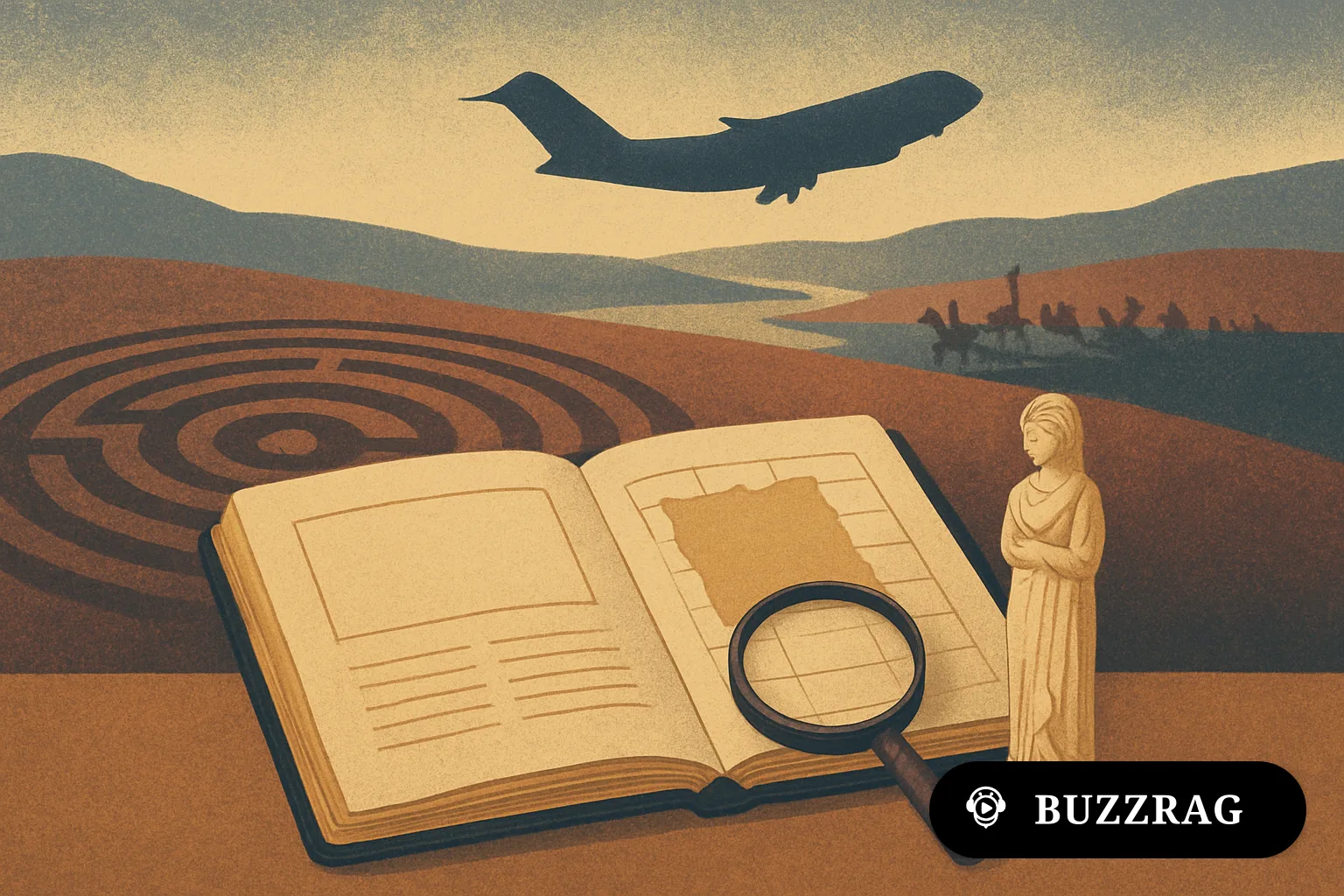
A walkable labyrinth discovered in a redundant church in Hampshire has prompted heritage experts to seek help identifying its history and purpose. The appeal turns an architectural feature into a public investigation: visitors and researchers may notice details that a conventional survey has missed, while the building itself supplies clues in its materials, layout and setting.
Labyrinths have carried religious and symbolic associations across centuries, but resemblance alone cannot date a particular example or establish how it was used. A careful inquiry will need to distinguish what can be observed directly from what is inferred—whether the feature belongs to the church’s original design, a later alteration or another phase of its life. That distinction matters beyond one building. Churches are layered records of changing communities, and when a site becomes redundant, documenting its fabric can preserve knowledge that would otherwise disappear along with everyday use. The next useful evidence may come from architectural analysis, archival records or comparison with securely dated examples.
What Mammoth Ivory Reveals About Ice Age Ornament
Research on 18,000-year-old female figurines from Mizyn, in present-day Ukraine, is offering a new account of how their carved ornaments were made. The study links the forms of those details to the growth patterns of mammoth ivory, suggesting that Ice Age artists worked with the material’s structure rather than treating it as an inert blank surface.
That connection gives the objects a double history: they preserve artistic choices, but also the practical knowledge required to shape a challenging material. Ivory’s internal structure could guide, constrain or inspire a carver, and close analysis may help explain why ornament takes the forms it does. The interpretation does not settle every question about what the figurines meant or how they were used. Instead, it adds a material explanation to the debate, reminding us that prehistoric creativity was grounded in skilled observation. Looking closely at how an object was made can reveal decisions—and expertise—that its finished appearance alone conceals.
Deadwood’s Two Trials: Murder, Memory and a Western Legend
When Jack McCall killed Wild Bill Hickok in Deadwood in 1876, the case became more than a frontier murder. McCall faced a first trial in the mining camp and, after that proceeding was later deemed invalid, a second trial under territorial authority in Yankton. The contrast between the proceedings exposes how fragile law could be in a rapidly growing settlement—and how a famous victim could turn a criminal case into public spectacle.
The story is also bound to the disputed poker hand Hickok was said to be holding when he was shot, a detail that helped transform the killing into Western legend. McCall was acquitted in Deadwood but convicted at the second trial and executed. The sequence invites a useful distinction between courtroom records and the vivid details later retellings preserve. Frontier justice was neither simply lawless nor a tidy march toward modern institutions: it depended on competing jurisdictions, local power and the credibility of witnesses. The legend endures partly because it compresses those tensions into one memorable scene.
Pyramids, Radiation Belts and the Lure of a Cosmic Explanation
A video draws together pyramids, the Van Allen radiation belts, UFO reports and alleged government secrecy to suggest that extraterrestrials influence or protect Earth. The pieces come from very different historical and scientific contexts, but the narrative joins them into a single theory. The account itself does not establish that these claims have been independently verified.
The radiation belts, identified through early space research in the late 1950s, are a real feature of Earth’s environment; that fact does not demonstrate pyramid-generated energy or an alien role in human affairs. This is a familiar pattern in the history of conspiracy thinking: genuine discoveries and unexplained reports are arranged into a story that promises hidden coherence. Such stories can be culturally revealing even when their factual claims fall short, showing how public anxieties about secrecy and new technology find expression. The essential test remains whether claims can be independently checked against reliable evidence, rather than whether they make striking connections.
From Citizen Diplomacy to UFO Claims: A Career Reframed
In an interview about UFO research and a proposed “galactic federation,” Michael Salla recounts earlier work connected with citizen diplomacy and nonviolent resistance in East Timor and Kosovo. He describes a later turn toward extraterrestrial topics, including claims about alleged meetings between President Eisenhower and visitors from space, government secrecy and UFO witnesses. The transcript ends before the conversation is complete, and the claims described are not independently established by the material provided.
The shift is a story about how intellectual careers and public identities can be reshaped by the subjects people pursue—and about how political language travels into speculative history. “Citizen diplomacy” refers to efforts outside formal state channels; claims of secret contact with extraterrestrials demand a different evidentiary standard, including verifiable documents and independent corroboration. Keeping those categories distinct respects the real history of nonviolent organizing while avoiding the presentation of unverified assertions as fact. For viewers, the important question is not only what is claimed, but how the speaker supports it and what evidence could disprove it.
The common thread is not mystery for its own sake, but the work of sorting evidence from interpretation: in a soldier’s account, an ancient carving or a claim about hidden visitors. Watch how new archival, archaeological and scientific checks either sharpen these stories or expose where their certainty exceeds their proof.