BuzzRAG Travel Desk — 2026-10-13

Curated by AI. Mariel Fontaine, Travel Desk Editor
Today’s travel news pulls in opposite directions: demand is strengthening for some airlines, while security concerns are disrupting plans for a new Gulf route. Public transport investment and tourism spending point to longer-term shifts in how visitors move through destinations.
Finnair lifts earnings outlook as demand strengthens
Finnair has raised its full-year profit guidance, citing stronger-than-expected travel demand and opportunities in the market. The updated forecast, issued on October 13, comes with an important caveat: higher fuel prices remain a source of uncertainty. The available report does not provide the complete revised earnings range, so the scale of the change cannot be assessed from the information supplied here.
The stronger outlook signals that demand is supporting airline finances, but it does not remove the cost pressures carriers face. Fuel prices can quickly affect operating expenses, while shifts in travel patterns and capacity influence how much of that demand translates into profit. Finnair’s reference to capitalising on market opportunities also suggests that its performance reflects commercial decisions as well as passenger volumes. The next measures to watch are the company’s full results and whether demand holds up against fuel costs through the rest of the year.
Bern approves tram plan for crowded eastern corridor
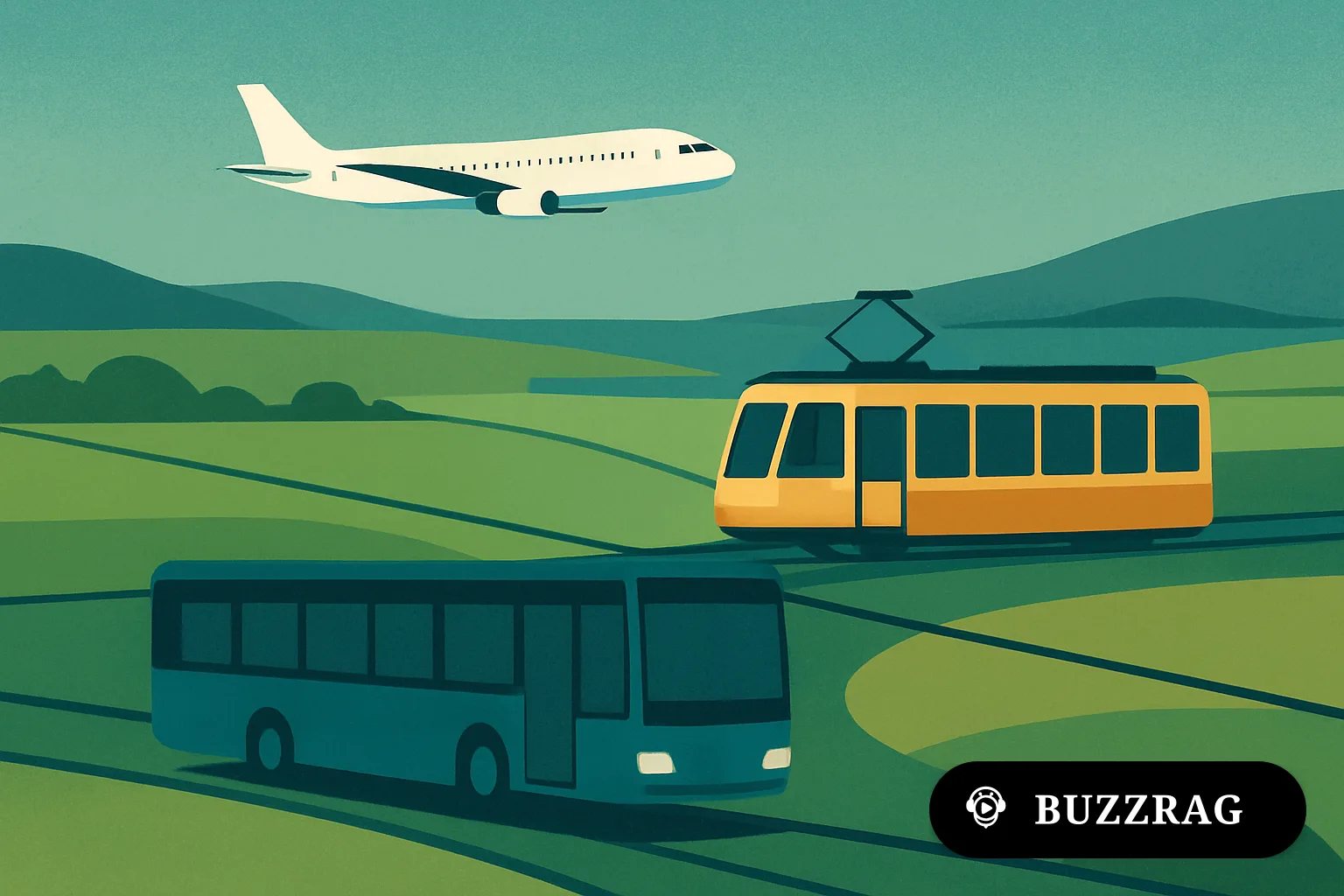
Switzerland’s Federal Office of Transport has granted planning approval for a tram line between Bern and Ostermundigen. The proposed service would replace the eastern branch of Bernmobil bus Route 10, a heavily used corridor carrying more than 8.5 million passengers annually. Voters in the city had already backed the project, according to the report.
The case for changing vehicles is rooted in capacity: a tram can move more people along a busy route than the existing bus service, though construction will bring disruption before any additional capacity arrives. Planning approval is a significant step, not the same as a completed line; the project still has to advance through implementation and construction. For residents and visitors, the eventual value will depend on reliable connections, service frequency and how well the new route links with the wider network. The annual passenger figure underlines that this is core urban transport, not simply a visitor-facing upgrade.
Delta pushes Atlanta–Riyadh launch to March 2027
Delta has delayed its planned Atlanta–Riyadh service until March 2027, following attacks affecting airports, according to the item’s headline. The route had been due to launch in October, and questions about both safety and demand had already surrounded the plan. The delay makes clear that the airline’s timetable is being reshaped by conditions beyond the usual commercial calculations.
For prospective passengers, a postponed launch means fewer near-term options on this city pair and a need to verify any existing bookings directly with the carrier. More broadly, the decision illustrates how quickly security developments can alter airline networks, even when a route has been announced and preparations are underway. The supplied report does not specify the incidents, their locations or the airline’s operational reasoning in detail, so it would be premature to draw conclusions about the wider safety of travel in the region. The revised March date is a target, not a guarantee that circumstances will remain unchanged.
Malaysia earmarks 935 million ringgit for tourism and culture
Malaysia’s 2027 budget allocates 935 million ringgit, reported as about US$222 million, to tourism and culture. Prime Minister Anwar Ibrahim presented the allocation in parliament on October 9. The listed priorities include improving international connectivity, upgrading tourism facilities and supporting events as the Visit Malaysia campaign continues into next year.
The package ties tourism promotion to practical infrastructure and access, but the announcement alone does not show how the money will be divided among projects or where upgrades will take place. Connectivity spending can help widen visitor access, while investment in facilities may also affect local communities that rely on those services beyond peak travel periods. The impact will depend on delivery, the destinations selected and whether the benefits reach local workers and businesses alongside large operators. Further budget details should clarify which measures are funded directly and how success will be measured beyond visitor numbers.
Thuringia makes the case for a car-free autumn trip
A travel feature presents Thuringia, in central Germany, as a region to explore by bus, linking cultural stops with outdoor landscapes. Its snapshot begins in Erfurt, where the morning market at Domplatz sets a local scene, and points to a wider mix that includes forests, spas, medieval towns and Bauhaus history. The pitch is for an autumn break that does not depend on a car.
The appeal of this approach rests on whether public transport makes the different stops practical to combine, not just on the range of attractions. Bus travel can offer an alternative to driving and bring spending to smaller places, but visitors need clear information about routes, service frequency and seasonal timetables to plan realistically. The excerpt does not supply those details, so travellers should check current local schedules before building an itinerary. Thuringia’s cultural and natural attractions also sit within lived-in towns and working landscapes; considerate visits mean treating markets and public spaces as part of local life, not merely scenery.
Repeated attacks test Saudi aviation and visitor confidence
A report describes a succession of strikes over one week, including repeated attacks on the capital, as a major challenge for Saudi Arabia’s travel industry. The account frames the incidents as more than an isolated airport disruption, raising concerns for a sector pursuing ambitious growth in aviation and tourism. The supplied details do not identify the specific incidents or quantify their effects on flights and visitors.
Security conditions can affect airlines, airport operations and travellers’ willingness to book, while the consequences may extend beyond immediate cancellations to insurance, route planning and future investment. Those effects are difficult to measure from a short report, and broad claims about safety should not be inferred from it alone. Travellers with near-term plans should follow official advisories and check directly with airlines and accommodation providers for operational changes. For the industry, the pressure is to communicate clearly and protect passengers while maintaining services; the balance between expansion plans and changing security conditions will be closely watched.
The next signals to watch are whether stronger demand can withstand fuel costs, how quickly Bern’s approved tram moves toward construction, and whether security developments alter airline plans again. Malaysia’s budget and Thuringia’s car-free pitch also put implementation and day-to-day access at the center of the travel story.