BuzzRAG Tech Desk — 2026-11-04

Curated by AI. Vincent Ko, Technology Desk Editor
Today’s technology conversation spans infrastructure built for a more dangerous world and the political conditions that shape technology policy. Alongside those headline shifts, long-running questions about startup capital and software abstractions are resurfacing, while a new virtual-disk project points to the continuing importance of foundational tools.
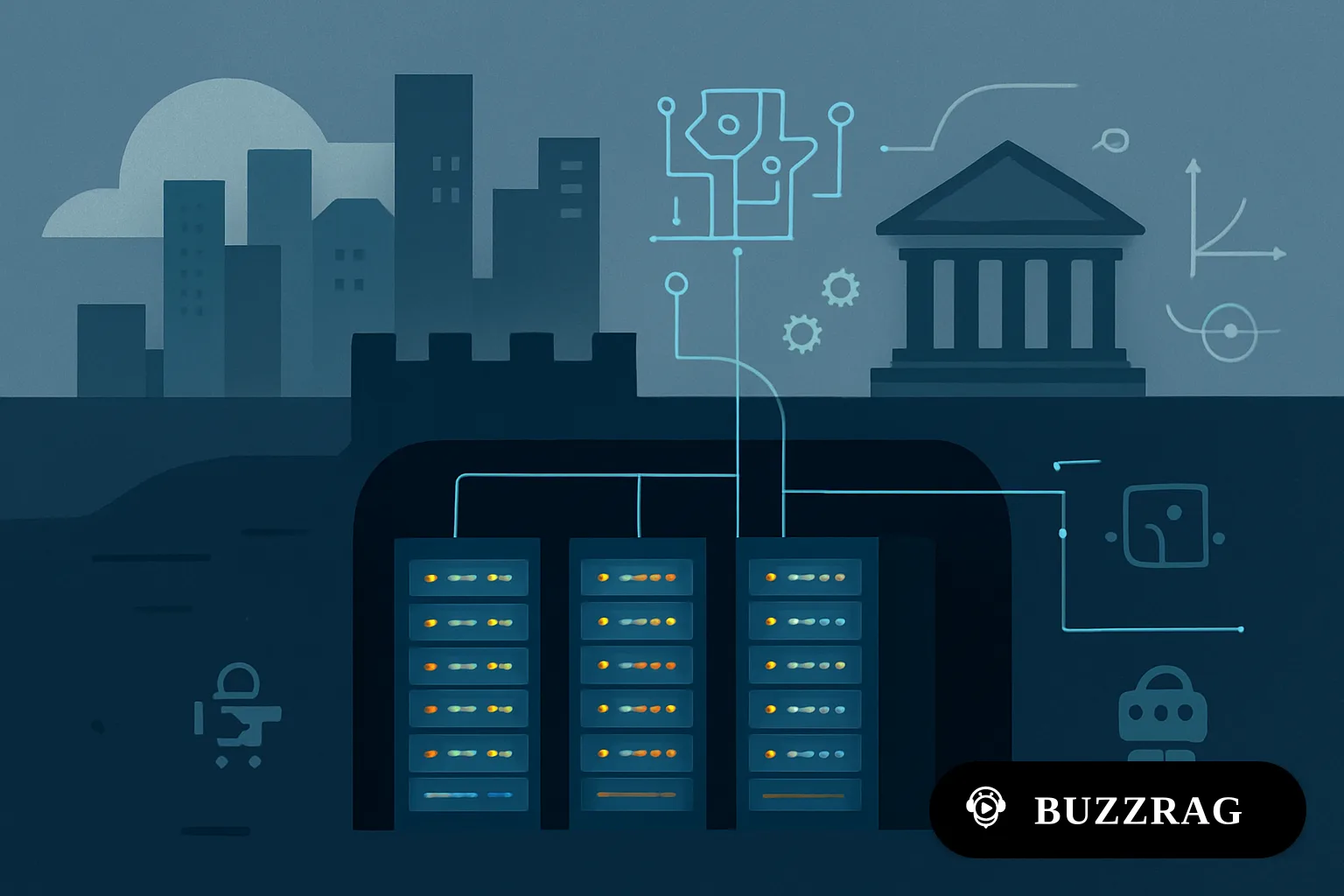
Russia weighs underground data centers amid drone threats
Russian telecom operator Rostelecom has reportedly discussed moving some data-center capacity underground with mining company Norilsk, as drone strikes sharpen concerns about the vulnerability of digital infrastructure. The reports also describe a regional governor’s proposal, suggesting the idea is being considered at more than one level, though the available details do not establish a funded plan or construction timeline.
The proposal draws on a familiar engineering instinct: place critical systems in hardened or naturally protected spaces. Mines may offer shielding and existing industrial infrastructure, but turning them into data centers would raise demanding questions about power, cooling, connectivity, access and operational safety. Data centers already depend on geographic distribution and backup capacity; moving equipment underground would be a defensive measure, not a substitute for resilience across the wider network. The next distinction to watch is whether these discussions become specific projects, or remain an early response to a changing threat environment.
Projected congressional shift puts tech policy in play
After the November 3 midterms, Democrats are projected to take control of both chambers of Congress, ending Republican control for the remaining two years of President Donald Trump’s term. The results are described as mostly in, so the balance of power is a major emerging story rather than a reason to treat every race as settled.
For the technology sector, a divided Washington has often meant that oversight, privacy, competition, labor and artificial-intelligence policy turn on committee agendas and the willingness of lawmakers to negotiate—not simply on campaign rhetoric. A change in congressional leadership could alter which investigations and bills receive attention, while executive agencies and courts remain important parts of the policy picture. The practical stakes will become clearer as the new majority organizes and signals priorities. For companies and the public alike, the question is less whether the election instantly changes the rules than which technology issues lawmakers choose to put first.
Has the angel-investor model run its course?
“The Death of the Angel Investor” is a provocative thesis, not evidence that early-stage investing has disappeared. The article, published by software developer Zach Holman, has resurfaced in the startup conversation, where the role of individual investors is often weighed against institutional funds, accelerators and the growing ability of founders to build with fewer resources.
Angel investors have historically supplied more than a first cheque: they can offer advice, introductions and credibility before a company is ready for larger financing. But the model has always depended on networks, access to capital and judgments made with limited information, which can reproduce familiar inequalities as readily as it can support unusual ideas. Without the article’s full argument, its title is best read as an invitation to examine how that early funding function is changing—not as a verdict on every angel or startup. The useful question is what, if anything, replaces the capital and support founders once sought from individuals.
A 2025 essay revisits arrows, categories and queries
A programming-language essay titled “Arrows to arrows, categories to queries” has found a fresh audience despite dating from 2025. Its title signals a connection between ideas from category theory and the way queries can be represented or reasoned about in software, a subject that sits at the boundary between mathematical abstraction and practical programming.
That boundary has a long history: concepts from mathematics have repeatedly offered programmers ways to describe composition and structure, while the challenge has been making those descriptions useful rather than merely elegant. The title alone does not reveal the essay’s precise construction or claims, so it would be premature to call it a new technique or a change in query systems. Its renewed circulation is still a useful reminder that foundational writing can travel on a different schedule from product announcements. For readers, the question is whether the proposed connection clarifies how to build and reason about programs—or adds another layer of vocabulary.
OpenVDDK aims to provide an independent virtual-disk library
OpenVDDK presents itself as an independent library for working with virtual disks. The project’s appearance on developer channels puts a comparatively unglamorous layer of computing infrastructure in view: the software that helps tools inspect or manage the disk images used by virtual machines.
Virtual disks underpin migration, backup, recovery and testing workflows, so compatibility and dependable handling matter even when the library itself is invisible to end users. An independent implementation could be useful where teams want alternatives or need to integrate disk access into their own tooling, but the available listing provides no detail on supported formats, platforms, maturity or licensing. Those are the practical tests that will determine whether this is a useful building block or simply an early project announcement. The broader precedent is familiar: infrastructure alternatives gain traction through reliability, documentation and compatibility, not independence as a label alone.
The next signals are concrete: whether underground data-center discussions turn into engineering plans, how the new Congress sets its technology agenda, and whether developer projects demonstrate enough detail to earn adoption. Across all three, resilience—of infrastructure, institutions and software tools—is the through-line.