BuzzRAG Science Desk — 2026-11-04

Curated by AI. Anika Bose, Science Desk Editor
Today’s headlines span urgent air-quality concerns on Earth and long-term questions about how we observe and protect the worlds beyond it. In space, new images and proposals are prompting practical questions, while a theory about the early universe offers a possible—but not yet proven—way to explain puzzling observations.
NASA seeks options to keep Hubble in orbit
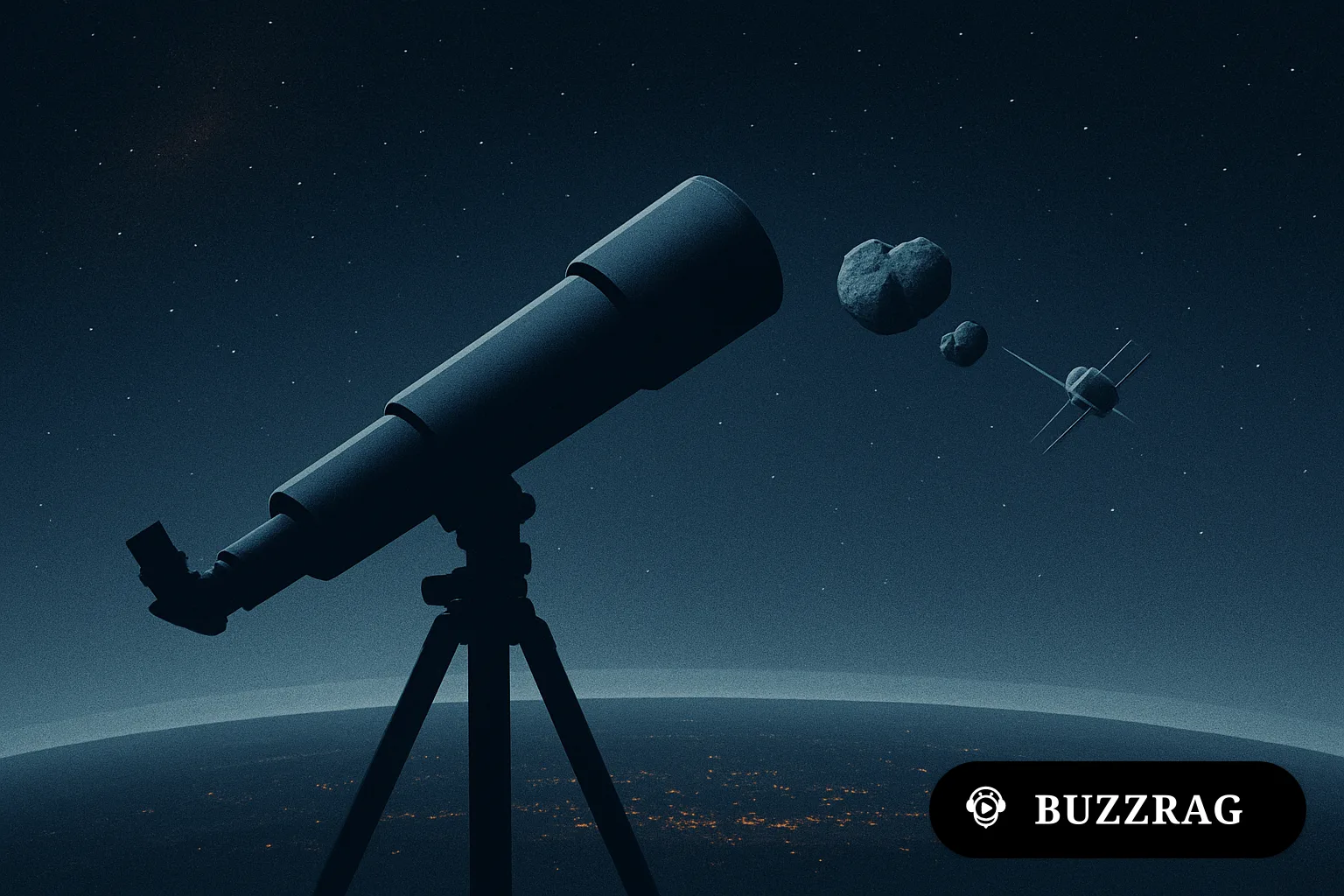
The Hubble Space Telescope remains healthy, but atmospheric drag is gradually lowering its orbit, prompting NASA to ask industry for ideas to extend the observatory’s working life. The request signals that the agency is exploring possibilities, not that a rescue plan has been selected or a mission approved.
Hubble operates in low Earth orbit, where even the thin upper atmosphere exerts drag over time. Raising its orbit would require a spacecraft and a carefully planned rendezvous, while any intervention would need to account for the telescope’s age, condition and operating constraints. The observatory has produced decades of science across astronomy, but its eventual re-entry is a long-standing engineering challenge as well as a question of mission priorities. The next useful details will be what kinds of concepts NASA receives, how feasible they are, and whether the agency moves from soliciting ideas toward funding or implementation.
Delhi’s air remains deeply polluted ahead of Diwali
Delhi’s air quality deteriorated ahead of Diwali even as restrictions on fireworks came into force. The reported Wednesday-morning air quality index was 377, classified as “very poor”—a snapshot of severe pollution that arrives before the holiday’s emissions have fully played out.
An AQI reading describes conditions at a particular time and place; it does not by itself identify the contribution of any single source. Delhi’s winter pollution reflects a mix of emissions and weather conditions, so the effect of restrictions will be clearer only through measurements over time and comparisons with relevant baselines. Fireworks are one part of the concern, but enforcement and compliance also shape how much they add to already unhealthy air. The immediate priority is reducing exposure, especially for people with respiratory or cardiovascular conditions, while sustained monitoring can show whether the measures meaningfully change pollution levels during the holiday period.
Could early star collisions explain puzzling cosmic objects?
A proposed explanation for the early universe’s “Little Red Dots” and unexpectedly massive black holes points to collisions among stars in dense stellar environments. The idea could connect two unresolved observations, but it remains a theoretical account to test against measurements rather than an established explanation.
In this scenario, repeated stellar encounters could help produce unusually massive objects that later seed black-hole growth. That may ease some of the tension between the inferred masses of early black holes and the short time available for them to form after the Big Bang. But the interpretation depends on how frequently such collisions occurred and whether the resulting objects would produce the light astronomers observe. The red sources identified by the James Webb Space Telescope have prompted several competing explanations, and their appearance alone does not settle their nature. More observations and detailed modelling will be needed to determine whether this pathway fits the data better than alternatives.
Astronauts cast ballots from orbit
Three American crew members aboard the International Space Station voted in the U.S. midterm election while living off Earth. Their participation is a small but revealing example of how ordinary civic processes must be adapted when a voter is hundreds of kilometres above the planet.
Astronauts cannot visit a polling place, so voting from orbit relies on advance coordination and secure procedures that connect the station to election administrators on the ground. The reported ballots show that distance need not automatically exclude crew members from participating, though the practical details—deadlines, communications and the handling of a ballot—depend on established arrangements. The story is less a scientific result than a lesson in the operational infrastructure behind long-duration spaceflight: crews remain part of communities and institutions on Earth even while their work takes them beyond it. As missions grow longer, maintaining those links will remain a practical consideration.
Hera gets its first clear look at the DART asteroid target
Europe’s Hera spacecraft has begun resolving the two bodies in the binary asteroid system that was struck by NASA’s DART mission. The new view marks a step toward close-up investigation of Dimorphos and its larger companion, after the deliberate impact was used to test whether a spacecraft could alter an asteroid’s motion.
DART demonstrated a deflection technique by changing Dimorphos’s orbit around its partner; Hera’s role is to examine the aftermath and characterize the system in greater detail. Distinguishing the pair in imagery is an early observational milestone, not yet a full assessment of the impact’s effects. Measurements of the bodies’ shapes, surface features and impact-related changes can help researchers understand how an asteroid responds to a collision—information relevant to judging whether deflection could work in a real planetary-defense scenario. The mission’s value will depend on the data gathered as it approaches and on how those observations compare with predictions made after the impact.
Clear skies reveal the Midwest’s lights from orbit
A view from orbit shows the nighttime lights of the U.S. Midwest beneath a largely cloud-free sky. The image offers a broad perspective on the region after dark, when roads and settled areas stand out against the darker surrounding landscape.
Satellite and astronaut observations of city lights can make patterns of human settlement visible at a scale difficult to grasp from the ground. But a striking night view is not, by itself, a measurement of population, energy use or environmental impact: illumination varies with weather, viewing conditions and the characteristics of the light sources. Here, the notably clear conditions help provide an unobstructed panorama, while the contrast between bright clusters and dark areas gives the scene its visual structure. Such imagery can be a useful entry point for questions about how communities occupy the landscape, provided it is paired with calibrated data and appropriate context rather than treated as a standalone scientific finding.
The next tests are practical as well as scientific: whether a credible Hubble extension concept emerges, whether Delhi’s restrictions make a measurable difference, and whether Hera’s closer observations support the models of asteroid deflection. In the distant-universe story, stronger observations will determine whether stellar collisions are a compelling explanation or simply one candidate among several.