BuzzRAG Tech Desk — 2026-10-09

Curated by AI. Vincent Ko, Technology Desk Editor
Today’s headlines trace how technology depends on institutions beyond the screen: immigration rules shape who can build it, policy governs how AI may be used, and security failures can travel through infrastructure. Alongside those immediate pressures, a new generation of nuclear clocks points toward a longer horizon for precision measurement.
US green-card restrictions put tech hiring in focus
The United States has barred Microsoft, Adobe and other major IT firms from a green-card program for skilled foreign workers, according to the reported headline. The development puts a consequential part of the technology labor pipeline in the spotlight: large employers’ ability to retain workers who have built careers in the country but need an employer-linked route to permanent residency.
The exact scope, duration and stated rationale are not included in the available report details, so the practical effect will depend on the government’s terms and any appeals or changes that follow. But the broader tension is familiar. Technology companies have long argued that global hiring helps them fill specialized roles; immigration policy, meanwhile, determines who can stay and under what conditions. Watch for clarification on which employers and workers are affected, and whether the move becomes a narrow enforcement action or a wider shift in how skilled-worker pathways are administered.
Anthropic draws new lines on model misuse and election interference
Anthropic has revised its usage policy to prohibit model abuse and election interference, making its expectations for politically sensitive and harmful uses more explicit. The change is a reminder that AI governance is not only a question of laws and model capabilities: providers also set contractual rules for how customers may use their systems.
A written prohibition can establish a basis for restricting access, but its effectiveness rests on implementation: how suspicious activity is detected, what evidence triggers action, and how decisions are explained or challenged. Election-related risks also evolve quickly, from scaled persuasion to deceptive content and targeted manipulation, making broad policy language difficult to translate into consistent enforcement. The update therefore matters less as a final answer than as a test of whether a provider can turn stated principles into durable safeguards without sweeping in legitimate political speech or research. Other AI companies will face pressure to clarify their own boundaries and enforcement practices.
Worm compromise reaches AI infrastructure
The Shai-Hulud worm has reportedly extended its reach into AI infrastructure through a compromise involving Tensorlake. The incident widens the security conversation around AI: protecting models and data is not enough if the services, tools and connected components used to build or run them can also become routes for compromise.
This is a familiar supply-chain problem in a newer setting. Software ecosystems have repeatedly shown how one exposed dependency can affect many downstream users, while AI workloads add valuable credentials, data and compute to the potential prize. The available report does not specify the attack path or the extent of the impact, so those details will be essential to understanding the incident. For operators, the immediate questions are whether credentials or connected systems were exposed, how the compromise was contained, and what customers need to do. The wider lesson is that AI infrastructure inherits the security obligations of every layer beneath it.
Reporting raises accountability questions after NYC shooting
A report on an ICE supervisor involved in a New York City shooting details prior allegations of excessive force and unlawful arrests. It says the agent, Brenden Cuni, has been accused of tackling a pregnant woman and that several arrests were later found unlawful in federal court. Those are allegations and reported court findings, not a substitute for a complete account of the shooting itself.
The story is not a technology development, but it bears on a question that increasingly intersects with digital systems: how institutions document, review and disclose consequential actions. Records, body-camera footage and court filings can shape public understanding, but access, preservation and independent scrutiny determine whether those materials support real accountability. The available item does not describe what evidence exists in this case. The next reporting to watch is therefore concrete: the status of investigations, the underlying court decisions and any independently verified account of the incident.
Thorium-based nuclear clocks reach a first milestone
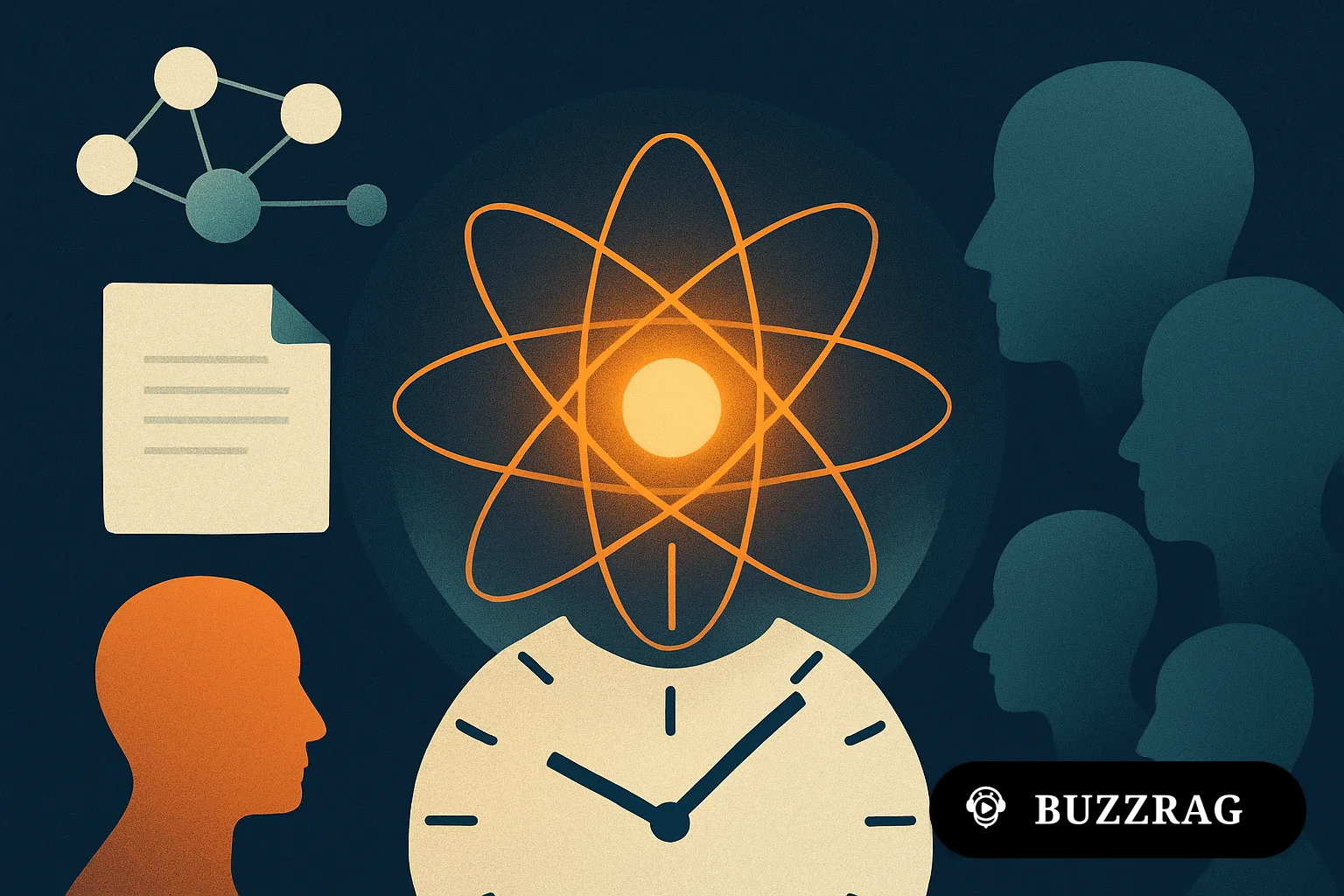
Researchers in Vienna and Beijing have independently built the first nuclear clocks based on oscillations inside thorium nuclei, marking a milestone for a field that aims to measure time using the nucleus rather than an atom’s electron transitions. The reported precision is striking: the clocks are described as capable of losing roughly a second over millions of years.
That figure signals scientific promise, not an off-the-shelf device ready to replace today’s clocks. Nuclear transitions could, in principle, offer a compact and exceptionally stable reference, with eventual uses in navigation, fundamental physics and systems that need precise timing. But turning an experimental result into a practical instrument will require further work on reliability, size and operation outside the laboratory. The important precedent is the long path from better laboratory standards to useful infrastructure: today’s atomic clocks underpin satellite navigation and communications, but took sustained engineering to reach that role. The next test is whether nuclear clocks can move from proof of principle toward reproducible, deployable systems.
Terry Tao asks what educators should tell students
Mathematician Terry Tao’s new post, titled “What should we tell our students?”, brings a basic but consequential question about education into the day’s technology conversation. The supplied listing gives no excerpt of his argument, so it would be premature to assign the essay a particular answer or assume it is focused on any one technology.
The question resonates as students and educators navigate rapid changes in tools, work and access to information. Across earlier technological shifts, education has had to decide which skills to preserve, which assumptions to revise and how to teach judgment rather than only procedure. Tao’s intervention is notable as a prompt from a prominent mathematician, but its specifics matter more than the title alone. Readers should look to the essay itself for the distinctions he makes between durable foundations and changing practice—and for whether he addresses how teachers can prepare students without pretending to forecast every new tool or job.
The near-term tests are practical: whether immigration rules reshape hiring, whether AI policies can be enforced consistently, and whether infrastructure operators can contain supply-chain threats. Further out, nuclear clocks invite a more patient question—what new systems become possible if precision measurement can leave the lab?