BuzzRAG History Desk — 2026-10-09

Curated by AI. Eleanor Vance, History & Ideas Editor
Today’s stories ask who gets to shape the past—and what survives when their monuments, images, or memories outlast them. Archaeological finds and cultural histories bring that question down to earth, from ancient hunting grounds to royal courts and modern archives.
Natalie Wood’s Death and the Unfinished Story of a Public Mystery
More than four decades after actor Natalie Wood drowned during a yacht trip in November 1981, renewed attention to the case shows how celebrity can turn private tragedy into a lasting public investigation. Her husband, actor Robert Wagner, was later named a person of interest; that designation is not a finding of guilt, and no one has been convicted in connection with her death.
The case has been revisited as accounts, investigative procedures, and public scrutiny have evolved. It also illustrates a modern problem with a long history: when evidence is incomplete, a compelling narrative can harden into presumed fact. Historical inquiry depends on distinguishing documented events from speculation, especially when surviving relatives and witnesses remain part of the story. The responsible question is not simply whether the mystery can be solved, but how journalists and audiences weigh uncertainty without mistaking suspicion, fame, or repetition for proof.
Norway’s Melting Ice Reveals Six Millennia of Hunting
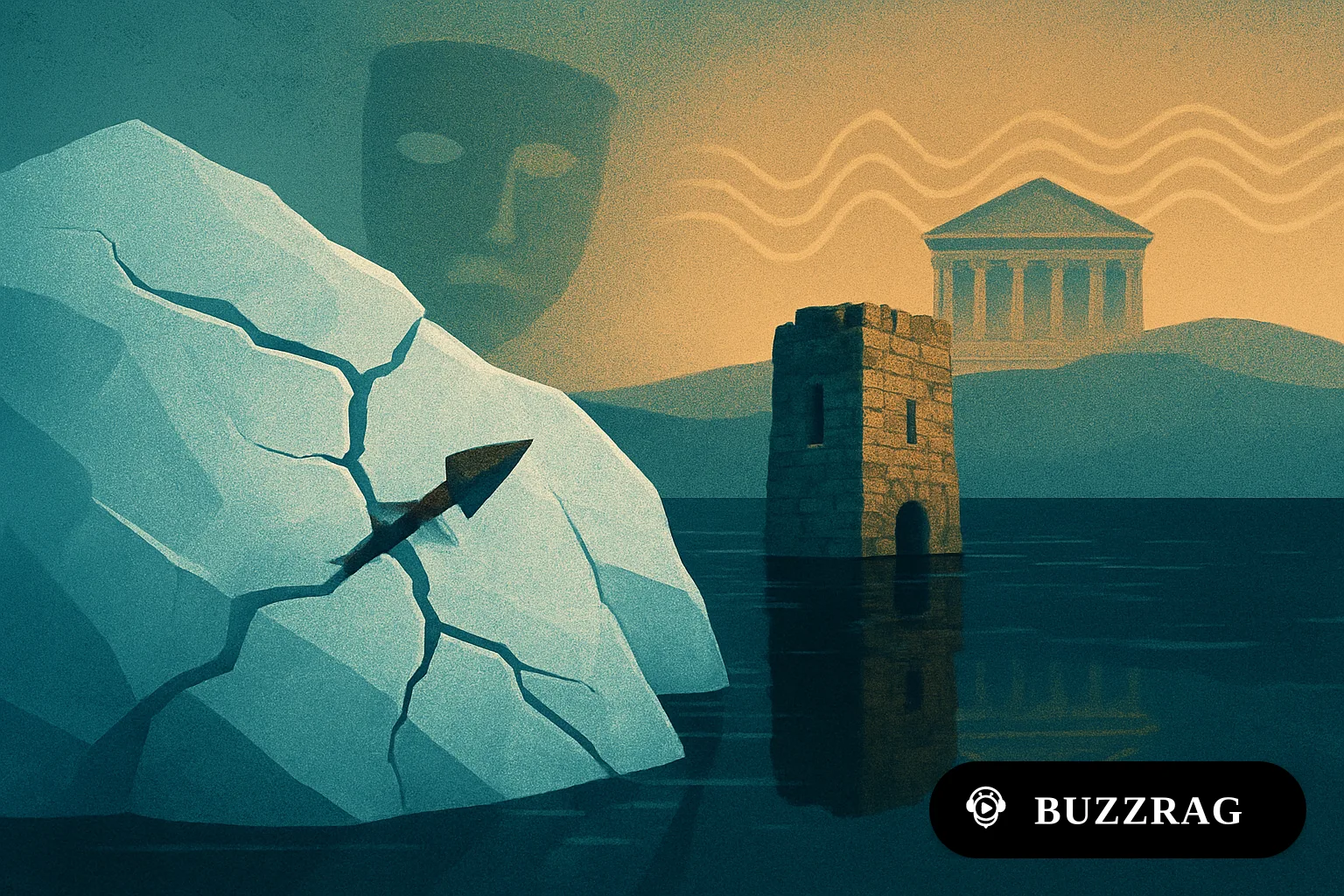
Melting ice in southern Norway has exposed 48 prehistoric arrows, some dating back roughly 6,000 years. The recovered pieces include shafts and heads made from varied materials—among them slate, bone, and mussel shell—offering a rare glimpse of the practical knowledge carried into high mountain terrain by people long before written records.
Ice patches can preserve organic materials that would normally decay, making their retreat an archaeological opening as well as a warning. Arrows speak to design and hunting, but also to the movements and decisions of people whose lives are otherwise difficult to trace: where they traveled, what resources they used, and how they adapted equipment to conditions. The materials suggest a record built through experimentation rather than a single, uniform technology. As warming exposes more sites, archaeologists face a race to document vulnerable finds before weather and erosion destroy them. The past is emerging, but not on a schedule that guarantees it can be recovered.
Ramesses II and the Making of a Pharaoh’s Afterlife
Ramesses II ruled Egypt for decades and left an unusually visible imprint in temples, inscriptions, and monumental sculpture. His reputation as one of Egypt’s greatest pharaohs was not simply inherited by later generations: royal image-making during his reign helped establish how power should look and how his name should endure.
That effort belonged to a broader political language in which monuments joined religious authority to public memory. Inscriptions and colossal figures presented the king as victorious and divinely favored, while official accounts could shape how campaigns were remembered. Such evidence is invaluable, but it is also purposeful: royal commemoration tells us both about the ruler and about the claims he wanted subjects and successors to accept. Reading those monuments critically does not diminish their importance. It reveals the ancient mechanics of reputation—how rulers use architecture, ritual, and repeated images to make authority seem permanent, even though every later age must decide what those claims mean.
Horror’s Material History Comes Into View
A new exhibition at the Academy Museum of Motion Pictures gathers nearly 350 objects connected to horror cinema, including props, costumes, and other artifacts. Its sweep—from slasher stories to vampire tales—treats the genre not only as entertainment but as a visual history of how societies give shape to fear.
Film artifacts make a useful counterpoint to the screen’s illusions: a mask, costume, or practical effect shows the labor and design behind a scene that audiences experience as spontaneous terror. Horror itself has repeatedly adapted to its moment, turning anxieties about bodies, technology, family, or outsiders into images that can be watched together in a theater. An exhibition can also make that history tangible, inviting visitors to consider how craft and cultural context create suspense. The objects’ significance lies not just in recognition, but in what they reveal about changing techniques and changing fears—and about the audiences who keep returning to confront them.
An Underwater Ring Evokes Alexandria’s Lost Lighthouse
Underwater archaeologists exploring submerged ruins in Alexandria’s Eastern Harbor have discovered a bronze seal ring engraved with an image identified as the famed Lighthouse of Alexandria. The discovery was announced by Egypt’s Ministry of Tourism and Antiquities; the reported find links a small personal object to one of antiquity’s most celebrated—and now largely vanished—landmarks.
The lighthouse, built on the island of Pharos, guided ships into a major Mediterranean port and became one of the ancient world’s enduring symbols of engineering. A seal ring offers a different scale of history from the monumental structure: it may point to how its image circulated in personal or administrative life, though the object’s date, owner, and precise use require archaeological study. Alexandria’s submerged landscape holds traces of buildings and harbor activity lost through coastal change and seismic events. The ring’s value will depend on its context as much as its striking engraving; careful documentation can help distinguish a meaningful historical connection from an attractive but untested interpretation.
Beyond the Centurion: The Officers Behind Rome’s Legions
Roman military history often puts the legionary or centurion in the foreground, but an army operating across the Mediterranean depended on a wider hierarchy of officers and specialists. Centurions led units in the field, while senior commanders and staff coordinated campaigns, discipline, supplies, and the movement of troops between distant provinces.
That structure helps explain why Rome’s military power cannot be reduced to battlefield courage or equipment. Officers connected central authority to local operations, and the army’s routine work—training, maintaining camps, moving food, and enforcing orders—made long campaigns possible. Rank and responsibility varied across periods, so the Roman army should not be imagined as an unchanging institution across centuries. Nor did its success rest on officers alone: ordinary soldiers, laborers, and support personnel sustained the system. Looking beyond famous commanders brings the machinery of empire into view and raises a familiar question: how much of a state’s power rests on visible leaders, and how much on the people and organization that make their decisions real?
At Louis XIV’s Court, Music Was Part of Government
Under Louis XIV, music accompanied court entrances, diplomatic receptions, religious services, festivals, and theatrical performance. Its role at Versailles was larger than a monarch’s personal taste: sound and spectacle helped organize public life around the king and made hierarchy audible as well as visible.
Court music operated within a political culture where ritual mattered. Ceremonies staged relationships between ruler, courtiers, and visitors, while patronage tied musicians and composers to the institutions of royal power. Yet reducing every performance to propaganda misses how music also served worship, entertainment, artistic experiment, and professional ambition. The court became a center where these purposes met, and its cultural influence traveled beyond France. The history offers a useful reminder that politics is communicated not only through laws and speeches but through shared forms, repeated ceremonies, and the arts. To understand royal authority, it helps to listen to the institutions and audiences that gave its performances meaning.
The next clues may come from ice that is still retreating, underwater sites that remain difficult to interpret, and archives that separate evidence from enduring legend. Across these stories, the past is not silent: it is contested, preserved, and continually re-read.