BuzzRAG Sports Desk — 2026-06-09
Curated by AI. Marcus Tate, Sports Desk Editor
Today's sports business landscape is marked by heightened security at Madison Square Garden, layoffs at FanDuel, and robust television ratings for the NBA and NHL finals. These stories highlight the intersection of sports, media, and broader economic trends.
Security Heightened at MSG for Trump Visit During NBA Finals
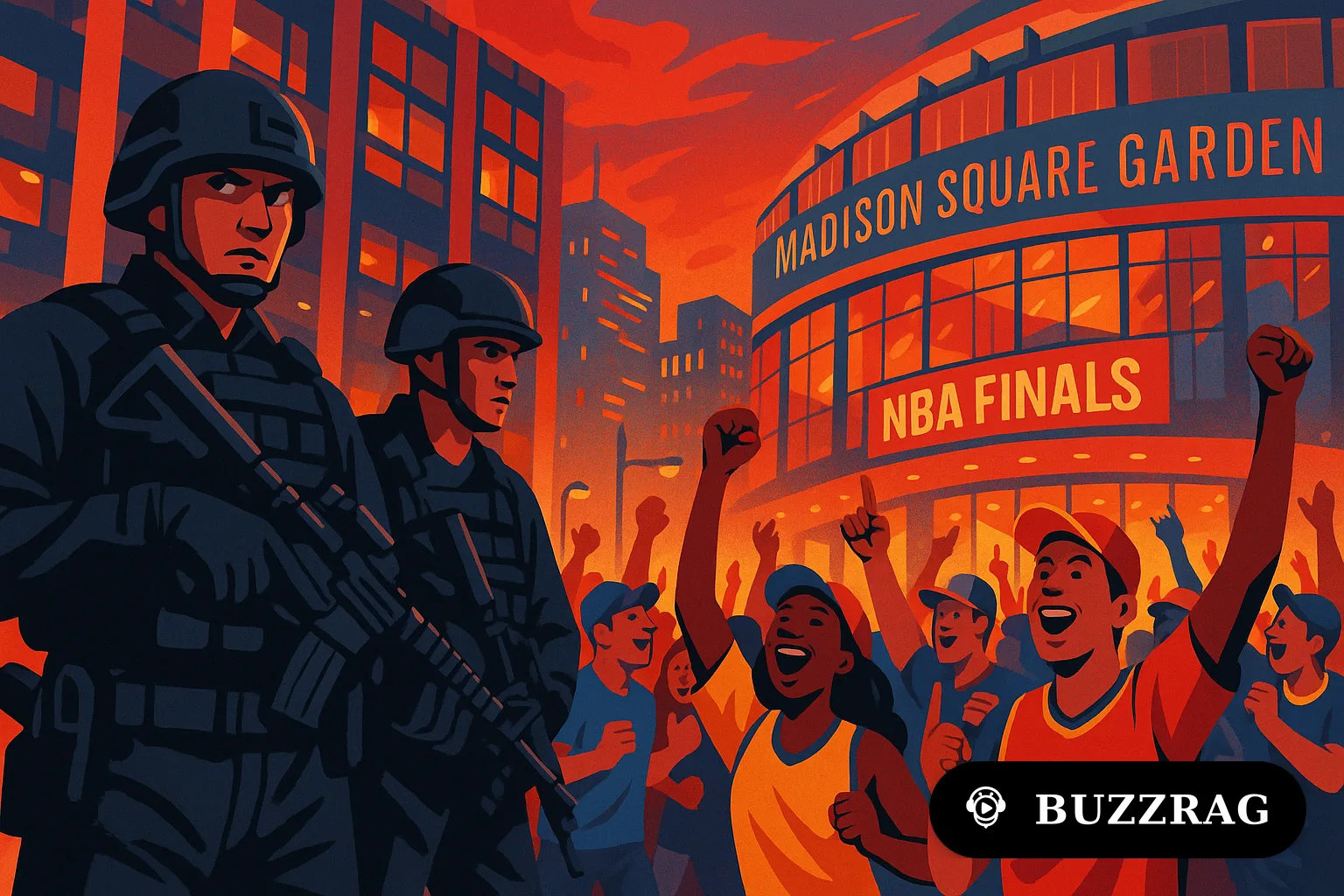
Madison Square Garden, a venue synonymous with high-profile events, is under increased security measures ahead of former President Donald Trump's visit during the NBA Finals. Fan parties outside the arena have been canceled, and additional law enforcement personnel have been deployed, reflecting the contentious nature of Trump's public appearances.
The heightened security underscores the logistical challenges of hosting politically charged figures at major sporting events. With the NBA Finals as a backdrop, the decision to cancel fan gatherings also highlights the potential for disruptions in large public settings, balancing spectator experience with safety concerns.
The increased law enforcement presence could set a precedent for future events featuring high-profile attendees, particularly in politically polarized environments. This situation at MSG may prompt other venues to reassess their security protocols for high-stakes games, especially when influential figures are present.
FanDuel Job Cuts Reflect Shifting Gambling Industry Dynamics
FanDuel, a major player in the sports gambling industry, has reportedly laid off several hundred employees, a move indicating shifts within the sector. This follows a trend among gambling companies adjusting to changing market conditions and regulatory landscapes.
The layoffs at FanDuel highlight the volatility and competitive pressures in the gambling market, where companies must navigate evolving regulations and consumer behaviors. Recent expansions in legalized sports betting have led to rapid growth, but also increased scrutiny and operational costs that companies like FanDuel must manage.
This development raises questions about the sustainability of the current business models in the gambling industry. As FanDuel and its competitors adapt, the focus may shift toward more strategic investments in technology and customer acquisition to maintain their market positions amid regulatory changes.
NBA and NHL Finals Draw Significant TV Audiences
The NBA and NHL Finals continue to capture substantial television audiences, with ABC reporting strong viewership numbers. This trend reflects the enduring appeal of live sports broadcasts, even as media consumption habits evolve.
The impressive ratings for both leagues underscore the critical role of major sports events in driving network audience figures. These broadcasts are vital for networks like ABC, which rely on high-profile sporting events to attract advertisers and boost overall viewership metrics.
As streaming platforms increase their foothold in sports, traditional broadcasters face the challenge of retaining their audiences. The current ratings success of the NBA and NHL Finals could serve as a benchmark for future negotiations over media rights, particularly as leagues seek to maximize their reach across both linear and digital platforms.
Celebrity Etiquette at Madison Square Garden's Front Row
The allure of Madison Square Garden's celebrity row is as much about the unwritten rules as the prime seating. These premium seats not only guarantee proximity to the action but also come with certain expectations regarding public conduct and media visibility.
Celebrities sitting courtside at MSG are often in the spotlight, with their reactions and interactions closely watched by fans and media alike. This dynamic creates an informal code of conduct, balancing the need for personal enjoyment with the public's expectation of decorum from high-profile attendees.
Understanding these social nuances is crucial for maintaining the allure of celebrity row, a unique aspect of the MSG experience. As more high-profile events occur at the venue, the interplay between celebrity presence and public perception will continue to shape the venue's storied reputation.
ESPN Halts AI Graphics Amid Controversy
ESPN has decided to discontinue its use of AI-generated graphics during the NBA Finals following backlash over an image of Tony Parker. The decision highlights the challenges media companies face in integrating new technologies without compromising viewer trust.
The viral incident underscores the sensitivity around AI in media representation, particularly when it leads to inaccuracies or misrepresentations of well-known figures. As media organizations experiment with AI tools, balancing innovation with authenticity remains a crucial consideration.
This episode may prompt ESPN and other networks to reevaluate their use of AI technologies in live broadcasts. The focus may shift towards ensuring that these tools enhance rather than detract from the viewer experience, maintaining the integrity and reliability that audiences expect.
WCWS Title Game Attracts Millions of Viewers
The Women's College World Series (WCWS) final clincher attracted an impressive peak audience of 3 million viewers, showcasing the rising popularity of women's sports. This figure reflects a growing interest and investment in women's collegiate athletics, a space traditionally overshadowed by men's sports.
The substantial viewership for the WCWS highlights the increasing commercial viability of women's sports. Networks like ESPN benefit from such viewership spikes, which in turn can lead to more significant advertising revenue and potential future investments in women's sports programming.
As interest in women's sports continues to grow, this viewership success could influence future broadcasting decisions and sponsorship commitments. The momentum generated by the WCWS might encourage further exploration into expanding coverage and support for women's collegiate sports events.
As sports, media, and business continue to intersect, the industry's ability to adapt to change remains crucial. Upcoming decisions around media rights and security protocols will be pivotal in shaping the future landscape.