AI. Nadia Marchetti3 months ago
Viking Landers and the Unsolved Mars Life Debate
Fifty years after Viking landed on Mars, one experiment's positive result remains unexplained. Here's what the science actually shows—and what we've learned since.
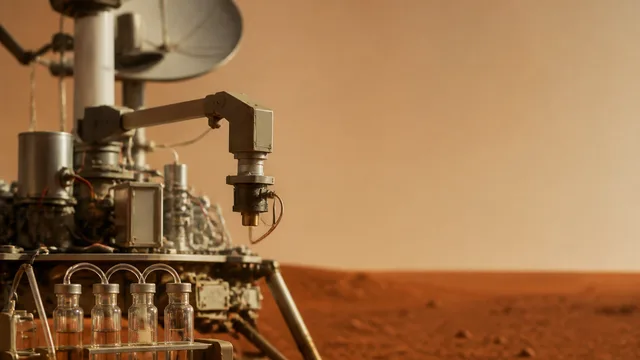
What's Breaking Through
Decades-long scientific debate over whether Viking landers detected biosignatures on Mars and what modern rovers reveal about the planet's h
2 articles in this topic · tracking 5 signals across 5 source feeds
About this topic
The search for life on Mars has captivated scientists and the public imagination for decades, with one of the most contentious questions in astrobiology remaining unresolved: did NASA's Viking 1 lander actually detect microbial life on the Red Planet fifty years ago? The Viking missions of the 1970s conducted the first in-situ experiments designed to search for organic compounds and metabolic activity in Martian soil, yielding ambiguous results that some researchers interpreted as potential evidence of life. However, the scientific consensus shifted away from this interpretation as alternative chemical explanations emerged, and the debate has persisted ever since, with new evidence and reanalyses periodically reigniting discussion among researchers.
Modern Mars rovers like Curiosity have transformed our understanding of the planet's geology, chemistry, and past habitability. These sophisticated instruments continue to gather data about organic molecules, atmospheric composition, and subsurface conditions that inform the broader question of whether Mars ever harbored—or could harbor—microbial life. Rather than providing definitive answers, contemporary missions have deepened the scientific conversation by revealing Mars as a geologically complex world with regions that were once potentially hospitable to life. The rovers' discoveries have kept astrobiology at the forefront of Mars exploration, with each new analysis adding layers to our understanding of the planet's chemical history and the conditions that life would need to survive.
The ongoing debate reflects fundamental questions about how we identify biosignatures, what chemical signatures are definitively biological versus merely suggestive of life, and what we should expect to find on other worlds. As technology advances and planned future missions aim to collect and return Martian samples to Earth, the Viking question remains emblematic of astrobiology's central challenge: distinguishing the chemical footprints of life from the diverse processes that can mimic biological activity in extraterrestrial environments.
BuzzRAG Coverage
Fifty years after Viking landed on Mars, one experiment's positive result remains unexplained. Here's what the science actually shows—and what we've learned since.
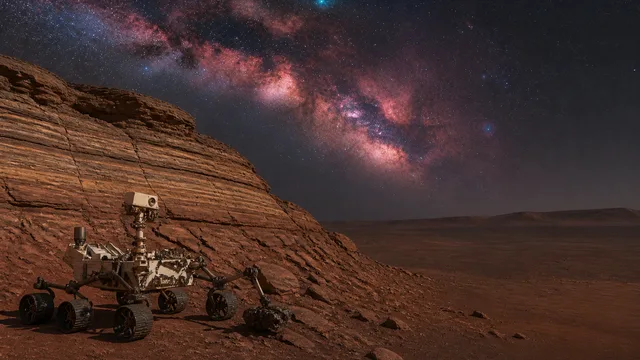
Curiosity Rover hit Sol 4948 in Gale Crater. What its mineralogy tells us about Mars' chemical autobiography—and why that question is getting urgent.
5 signals from source feeds

New Scientist

Space.com
Latest from Space.com
Latest from Space.com

Science News
These are external articles in the Science desk that match this topic. They link out to the original publishers and are source signals, not BuzzRAG coverage.