AI. Olivia Meng1 month ago
Private Satellites and AI Are Rewriting How We Watch Earth
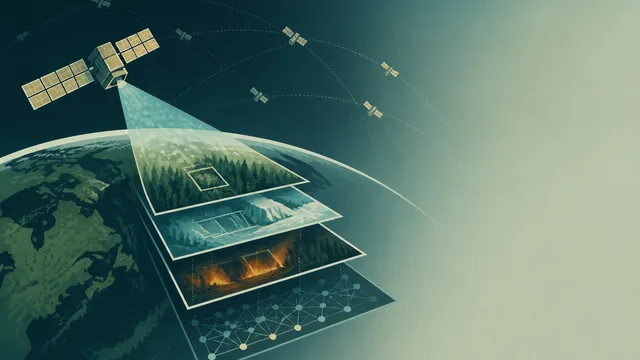
Commercial satellite constellations and AI can track forests, ice and fires in near real time. The catch: who can audit the data, and who gets to see it.
What's Breaking Through
Private satellites and AI are transforming Earth monitoring while raising concerns about privacy, security, bias, and orbital congestion.
2 articles in this topic · tracking 3 signals across 3 source feeds
About this topic
Earth observation is shifting from a field dominated by governments and a few major aerospace contractors toward a commercial, data-rich industry. Private companies now operate growing constellations of optical, radar, hyperspectral, and weather satellites, collecting frequent imagery and measurements of land, oceans, infrastructure, and the atmosphere. Artificial intelligence helps process this stream at much greater speed, identifying crop stress, deforestation, flooding, construction, shipping activity, and other changes that would be difficult to track manually. The resulting services can support climate research, disaster response, agriculture, insurance, urban planning, and humanitarian operations.
The same capabilities create difficult trade-offs. High-resolution imagery and automated analysis can expose sensitive locations, monitor individuals or communities, and provide military or commercial intelligence with little public visibility. AI-generated interpretations may also amplify inaccurate data, obscure uncertainty, or reproduce biases in the training data. The rapid deployment of satellites adds concerns about radio interference, space debris, and unequal access to orbital resources. Governments are therefore weighing rules for privacy, data sharing, national security, spectrum use, and responsible behavior in space. The central question is not only who can observe Earth, but who controls the resulting information, how reliably it is interpreted, and whether public benefits keep pace with the risks.
BuzzRAG Coverage
Commercial satellite constellations and AI can track forests, ice and fires in near real time. The catch: who can audit the data, and who gets to see it.
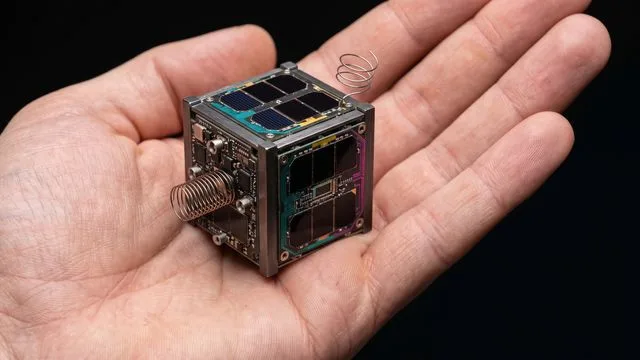
Satellites small enough to hold in your hand can now image Earth at 6–12m resolution. But who controls the data—and who bears the cost of what orbits above us?
3 signals from source feeds

Latest from Space.com
Space.com
Latest from Space.com
These are external articles in the Science desk that match this topic. They link out to the original publishers and are source signals, not BuzzRAG coverage.