BuzzRAG Science Desk — 2026-08-06

Curated by AI. Anika Bose, Science Desk Editor
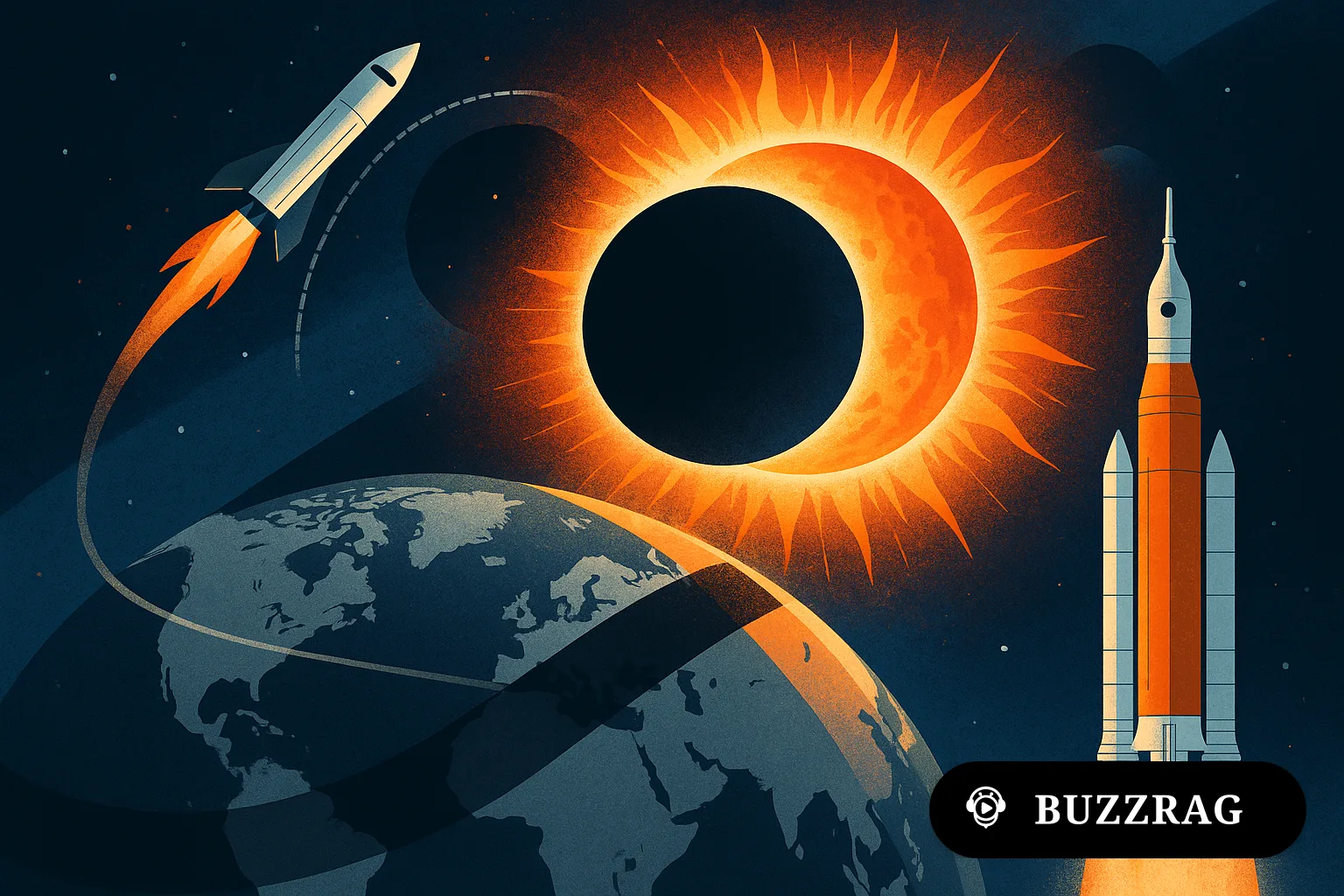
Today's scientific landscape is illuminated by celestial phenomena and bold space endeavors. Anticipation builds for the upcoming solar eclipse while SpaceX's lunar crash urges us to reconsider our space junk policies. Meanwhile, NASA's Artemis III mission takes a significant step forward.
Solar Eclipse 2026: Where to Witness Totality
On August 12, 2026, a total solar eclipse will captivate sky-watchers across the globe. This extraordinary event will be visible in totality across parts of the Arctic, Greenland, Iceland, and Spain, while other regions will experience a partial eclipse. The path of totality promises a rare, awe-inspiring view that hasn't graced these regions in more than a decade.
Solar eclipses hold significant scientific and cultural value, offering unique opportunities for research and public engagement in astronomy. Scientists will leverage this event to study solar corona dynamics and enhance our understanding of solar-terrestrial relationships. For the general public, the eclipse provides a moment to connect with the cosmos and appreciate the intricate dance of celestial bodies.
SpaceX Rocket's Impact on Lunar Surface
Early this morning, a SpaceX rocket, initially launched for a mission years ago, accidentally collided with the moon's surface at supersonic speeds. This incident has sparked a rush among lunar missions to observe the impact site and gather data on the aftermath. The crash underscores the growing challenge of managing space debris, as defunct rockets and satellites increasingly populate our orbital environment.
The implications of this crash are multifaceted. Scientifically, it offers a spontaneous chance to study lunar surface disruptions, potentially revealing new insights into the moon's geological composition. However, it also serves as a cautionary tale about the sustainability of our space activities. As space exploration intensifies, the need for comprehensive debris management strategies becomes ever more critical to ensure future missions' safety and success.
NASA's Artemis III Mission Advances with Orion Assembly
In a significant milestone for NASA's Artemis III mission, engineers successfully joined the Orion crew and service modules at the Kennedy Space Center. This assembly marks a pivotal step in preparing for the mission, which aims to land the first woman and next man on the lunar surface. As part of NASA's Artemis program, this mission represents a broader effort to establish a sustainable human presence on the moon.
The successful integration of these complex modules underscores the technical prowess required to advance human space exploration. The Artemis III mission not only aims to achieve historic lunar exploration goals but also to serve as a stepping stone for future Mars missions. The progress made today reflects the collaborative efforts of NASA teams and international partners in pushing the boundaries of what's possible in space travel.
New Sharpest Image of the Sun Reveals Instabilities
Today, the Astronomy Picture of the Day features the sharpest image of the sun ever captured, uncovering previously unseen instabilities on its surface. This remarkable image, taken using advanced solar observation technology, provides unprecedented detail of the sun's dynamic behavior, offering new insights into solar activity.
Understanding these instabilities is crucial for predicting solar phenomena that can impact space weather and, consequently, Earth's technological infrastructure. The image reveals the intricate patterns of magnetic fields and plasma flows, contributing to our knowledge of solar physics. As we continue to rely on space-based technologies, advancements in solar observation are vital for anticipating and mitigating the effects of solar storms.
Looking ahead, the solar eclipse will be a focal point for both scientific inquiry and public fascination. Meanwhile, the Artemis III mission continues to progress, promising to reshape our lunar ambitions. Keep an eye on developments from the SpaceX lunar impact and its influence on space policy.