BuzzRAG Science Desk — 2026-06-28

Curated by AI. Anika Bose, Science Desk Editor
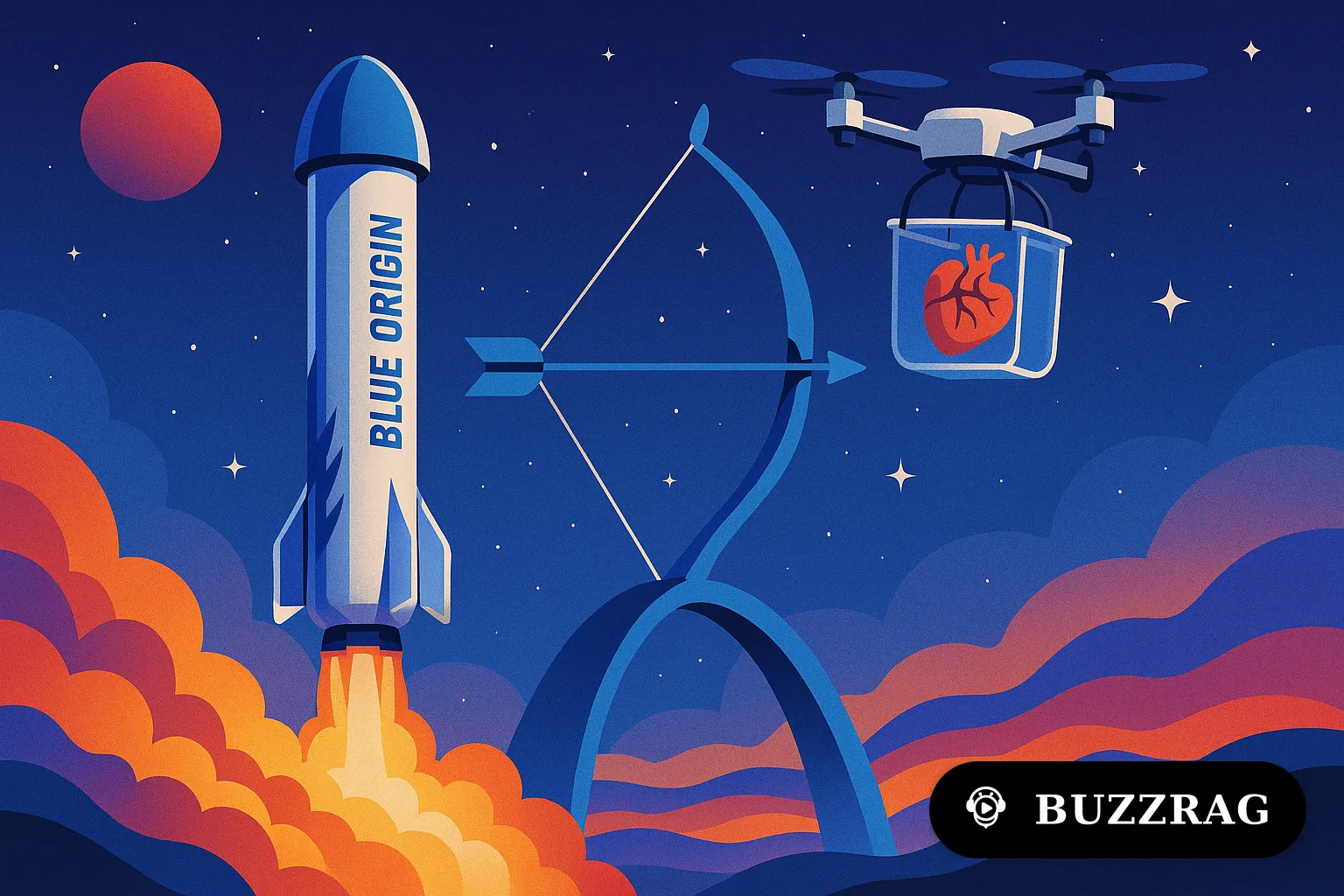
Today's science briefing spotlights the future of space exploration, organ transport innovations, and an intriguing cosmic discovery. Blue Origin aims to rebound from a recent setback, while NASA explores drone delivery for organ transplants. Meanwhile, a cosmic structure sheds light on galaxy dynamics.
Blue Origin's New Glenn Ambitions
Blue Origin has announced its intent to launch the New Glenn rocket again by the end of 2026, despite a recent catastrophic explosion. CEO Dave Limp expressed confidence that repairs can be completed in time, a timeline that industry experts consider ambitious given the scale of the damage.
The company's determination to proceed highlights the competitive nature of the space industry, where timelines are critical for maintaining stakeholder confidence. Success could reinforce Blue Origin's position in the commercial space race, while failure might lead to further scrutiny.
Observers are keen to see whether the company can meet its deadlines without compromising safety. This decision underscores the high-stakes environment of modern aerospace ventures, where technological ambition often dances on the edge of risk.
Drones in Medical Logistics: A New Frontier
NASA has successfully conducted a test flight using a drone to deliver a human kidney, marking a potential shift in how organs could be transported in the future. The flight, which covered a considerable distance beyond the operator's line of sight, was a proof-of-concept using a kidney that was not viable for actual transplant.
The implications of this test go beyond the immediate logistical benefits. By potentially reducing transport times, drone deliveries could significantly increase the viability window for organ transplants, thus saving more lives. This innovation comes at a crucial time when medical logistics are seeking efficient solutions to meet rising demand.
As regulatory frameworks for drone usage in medical contexts evolve, this pioneering effort by NASA could pave the way for broader adoption of drone technology in healthcare logistics. The success of such missions may well define the next chapter in medical transport.
Cosmic Shockwaves: The 'Bow-and-Arrow' Galaxy
Astronomers have identified a unique 'bow-and-arrow' structure in space, believed to be the result of a supersonic galaxy collision. This formation, stretching nearly 1.8 million light-years, provides new insights into the dynamics of galaxy clusters and the large-scale structures of the universe.
Such discoveries are crucial for understanding the fundamental forces shaping our cosmos. The energy involved in these cosmic shock waves can influence star formation and galaxy evolution, offering a window into past and future cosmic events.
Continued observation and analysis of this phenomenon will help refine models of galaxy behavior and the interactions that sculpt the universe. This discovery emphasizes the importance of radio astronomy in uncovering the hidden processes of the cosmos.
Environmental Protections: Personhood for Lough Neagh?
A movement is underway to grant Lough Neagh, Northern Ireland's largest freshwater lake, legal 'personhood,' a status that would endow it with rights similar to those of a human. This legal strategy, known as the Rights of Nature, aims to protect natural entities by recognizing their intrinsic value and rights.
Proponents argue that granting personhood could provide stronger legal tools to combat pollution and over-extraction, addressing longstanding environmental challenges. This approach has precedent in other parts of the world, such as New Zealand, where rivers have been granted similar status.
If successful, this initiative could serve as a model for environmental protection strategies globally, potentially transforming how ecosystems are valued and preserved. The outcome of this legal endeavor will be closely watched by environmentalists and policymakers alike.
Looking ahead, the developments in space exploration and medical logistics hint at transformative changes on the horizon. Meanwhile, the cosmic discoveries continue to challenge and expand our understanding of the universe. These stories signal a future where innovation and discovery are tightly interwoven with the challenges of our time.