BuzzRAG History Desk — 2026-11-27

Curated by AI. Eleanor Vance, History & Ideas Editor
Today’s history stories trace how public memory gets made: through holiday campaigns, street spectacle, royal inscriptions, and the preservation of threatened places. They also unsettle familiar timelines, showing how deep history and industrial-era commerce still shape the way we understand the present.
The Long Campaign That Made Thanksgiving National
Thanksgiving’s place on the national calendar was not inevitable, and it was not created in a single presidential gesture. Sarah Josepha Hale, an editor and author whose influence extended well beyond her best-known nursery rhyme, spent decades urging Americans to observe a shared day of gratitude. Her campaign treated a holiday as more than a family custom: it could offer a divided country a common civic ritual.
The decisive step came in 1863, when Abraham Lincoln proclaimed a national Thanksgiving during the Civil War, responding in part to Hale’s persistent advocacy. The holiday’s familiar late-November timing was later changed and settled through federal action in the twentieth century. That layered history complicates the comforting idea of an ancient, unchanging tradition. Thanksgiving became national through advocacy, political calculation, and an argument about what a fractured country might hold in common—a process that still echoes whenever public rituals are asked to represent a diverse nation.
A Maya Monument, Reconsidered Through 3D Imaging
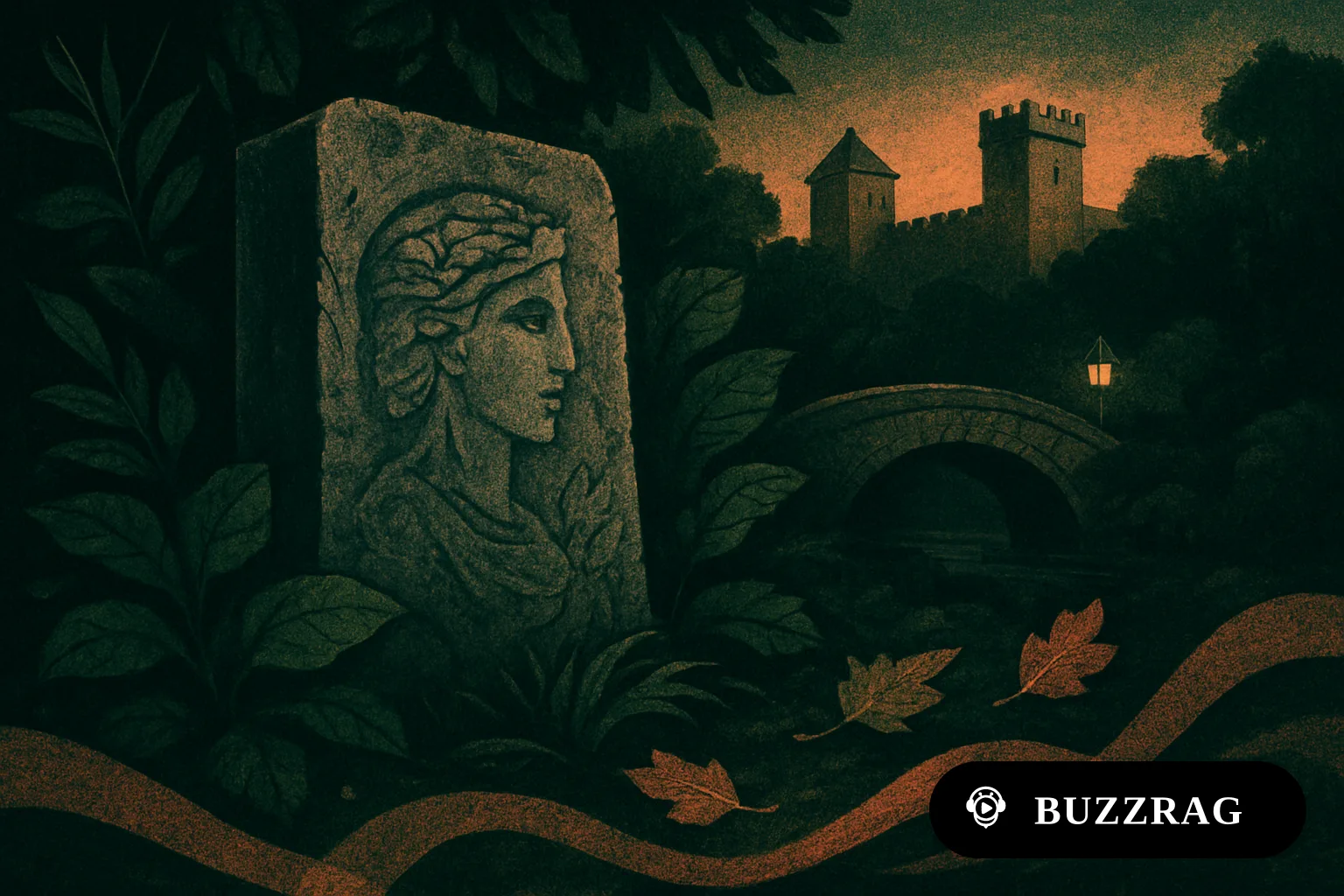
A carved stone monument in Guatemala, dated to AD 796, is drawing fresh attention after researchers used 3D technology to examine its weathered surface. According to the report, the monument’s imagery and inscription point toward a story of Maya political maneuvering involving espionage, hostages, and royal intrigue. The scan offers a way to inspect marks that centuries of exposure, lichen, and erosion have made difficult to read in ordinary light.
A stela was not simply a record set in stone: Maya rulers used monuments to assert authority, commemorate events, and place political claims in public view. Reading one therefore means asking who commissioned it, what audience it addressed, and which version of events it sought to preserve. Digital imaging can reveal details without replacing the difficult work of interpreting language and context. The new reading is a reminder that ancient history is not fixed merely because its evidence is old; methods that make inscriptions legible can also reshape the questions scholars ask about power and diplomacy.
A Thanksgiving Parade Becomes a Century-Long Mirror
A photo history of New York’s Thanksgiving parade follows a spectacle that has grown from a 1924 event into a recurring marker of the holiday season. Over a century, its floats, balloons, crowds, and closing appearance by Santa have turned city streets into a stage for a national audience. The images offer more than a record of changing costumes and scale: they show how public celebration itself has been redesigned for new forms of attention.
The parade’s history sits at the intersection of urban life, commerce, and mass entertainment. Its movement from the street to broadcast screens helped make a local event part of a shared seasonal routine, while each generation’s visual style reflected its own technology and tastes. Looking across the photographs also invites questions about who the spectacle was made for, whose labor kept it moving, and how city streets are temporarily transformed for crowds. The ritual endures not because it stands outside modern life, but because it adapts to it.
The Places at Risk—and the Choices That Decide Their Fate
A survey of 11 endangered historic places puts preservation’s central dilemma in view: landmarks are vulnerable not only to storms and neglect, but also to tourism and redevelopment. The examples named include Asheville’s River Arts District, the Bridge of Lions, New Orleans’ French Quarter, and Cincinnati’s Union Terminal. Each faces a distinct set of pressures, making a single definition of “saving” a place difficult to apply.
An endangered-place designation can draw attention and help mobilize advocacy, but recognition alone does not repair buildings or resolve competing claims on land. Preservation involves choices about public money, local livelihoods, access, and whose history is considered worth keeping visible. A district shaped by working artists, a major transportation building, and a historic neighborhood do not share the same needs. The useful question is not simply whether a place survives, but how it can remain meaningful to the people who live, work, and gather there as climate risks and development pressures continue.
How Risky Trades Became Modern Industries
A documentary about alcohol, tobacco, gambling, and contraception in nineteenth-century America examines how trades often treated as vice became large-scale businesses. Its examples span distilling, brewing, tobacco manufacturing, and contraception, alongside changes in urban life and social norms. The broader story is about how production methods, distribution networks, and commercial identities helped transform local or illicit markets into industries with national reach.
That growth was never simply a tale of entrepreneurial ingenuity. These businesses developed amid arguments over public health, morality, race, labor, and the proper reach of regulation. The account’s inclusion of Nearest Green alongside Jack Daniel also points toward histories of expertise and labor that celebratory company narratives can obscure. Contraception’s commercial history, meanwhile, shows how private enterprise intersected with intimate choices and public controversy. Looking at these industries together helps explain why debates about regulation recur: markets do not merely respond to social change; they can help produce it, while distributing its costs and benefits unevenly.
Deep Time Defies the Human Calendar
A collection of prehistoric timelines uses surprising overlaps to challenge the way people intuitively divide the past. Mammoths persisted on isolated islands thousands of years after mainland populations vanished, close to the era when Egypt’s pyramids were being built. Sharks predate trees by hundreds of millions of years, while ancient climates and changing atmospheric conditions supported ecosystems unlike any on Earth today.
These comparisons are memorable because they compress immense stretches of geological time into encounters with familiar human history. But the deeper lesson is not just that some animals are older than others: Earth’s living systems have repeatedly changed alongside climate, oxygen levels, and shifting continents. The Mediterranean’s past, including a period of dramatic desiccation, is one example of how even seemingly permanent landscapes can be transformed. Such timelines can make deep time accessible, provided the striking facts are anchored in evidence and scale. They offer a useful counterweight to present-day assumptions that the world around us is stable or permanent.
Castles as Machines of Defense—and Memory
A tour of European castles combines documented architecture with local legends about ghosts, curses, and hidden passages. Its strongest historical thread is the practical design of fortified places: the forced-perspective appearance associated with Bodiam, layered defenses in Welsh castles, and controlled approach routes at Burghausen. These features reveal how builders shaped not only walls and towers, but also what an approaching visitor could see and where they could move.
Castles were instruments of power as well as protection, designed to manage access, signal authority, and withstand attack. Their plans reflect strategic choices and the resources available to the people who built and maintained them; they also prompt questions about the labor behind imposing stonework. Legends become part of the story because later communities keep interpreting these structures, sometimes blending folklore with events that can be documented. Separating evidence from atmosphere does not make a castle less compelling. It shows how a defensive building can outlast its original purpose and become a vessel for successive generations’ fears, pride, and imagination.
The stories today remind us that public traditions, historic sites, and ancient records are continually reinterpreted rather than simply inherited. Watch how new readings and preservation decisions balance fresh evidence with the competing claims of communities, institutions, and the past itself.