BuzzRAG History Desk — 2026-09-27

Curated by AI. Eleanor Vance, History & Ideas Editor
Today’s selections move between systems built in public and histories recovered from the margins: communal experiments, fuel economies, property empires and underground worlds. They also show how archives, archaeology and forensic science complicate familiar stories, whether the subject is a festival, a battlefield black market or a cemetery disappearing into the sea.
Wavy Gravy and the Counterculture’s Practical Side
The story of Wavy Gravy is often told through costumes, slogans and the exuberance of 1960s counterculture. But his importance lies less in theatrical eccentricity than in the practical institutions he helped create: the Hog Farm commune, informal networks of mutual aid, and the volunteer operation that fed and protected crowds at Woodstock in 1969.
That combination of spectacle and logistics reveals a neglected side of the era’s history. Communal movements did not survive on ideals alone; they required kitchens, childcare, conflict mediation, transport and systems for dealing with crises. Wavy Gravy’s later humanitarian work, including efforts connected to blind people in Nepal, extended that ethic beyond the festival field. The larger question is how protest cultures become durable when their participants turn improvisation into care infrastructure—and what remains after the slogans fade.
Energy Transitions Are Built by Landscapes, Not Fuel Alone
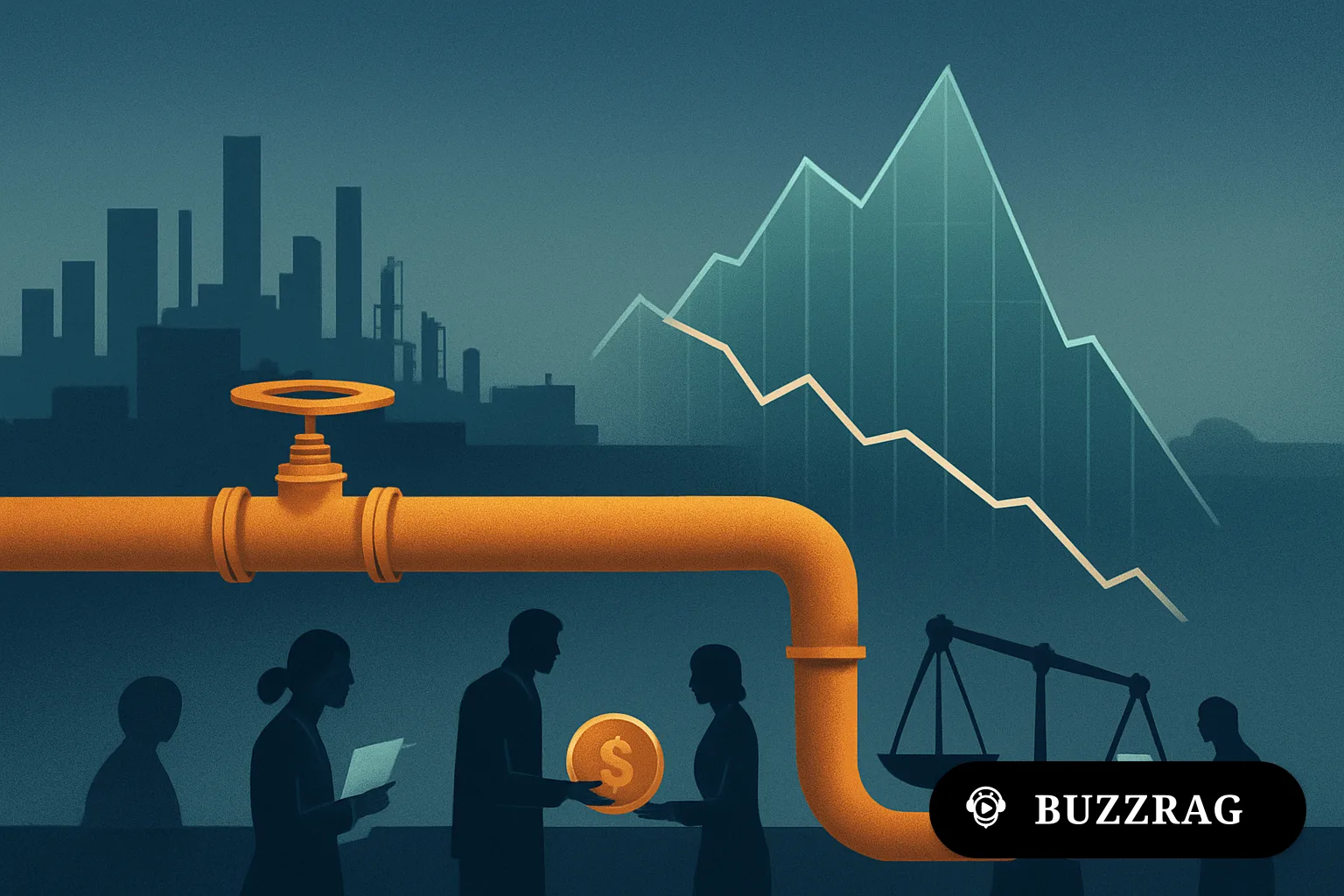
Britain’s rise on coal and the Dutch Republic’s dependence on peat offer a useful corrective to the idea that energy transitions are simply contests between superior fuels. In the Netherlands, peat extraction was woven into drainage, canals, land reclamation and urban commerce. Britain’s coal economy, meanwhile, gained force from accessible seams, expanding waterways, maritime trade and industrial demand.
The comparison makes energy history a story of infrastructure and political economy as much as geology. Prices, transport costs, property regimes and the transformation of landscapes determined which fuel could scale. Peat helped power a commercial society, but extraction also altered wetlands and created long-term ecological pressures; coal enabled extraordinary industrial growth while locking societies into carbon-intensive systems. Present debates over electrification and clean energy inherit the same problem: technologies succeed only when networks, institutions and landscapes are prepared to support them.
The Long Prehistory of a Real-Estate Fortune
The family history traced in this documentary begins not with modern celebrity but with migration, risk and the unstable opportunities of the late nineteenth century. Frederick Trump, a German immigrant, built businesses connected to hospitality and the Klondike Gold Rush before his son Fred entered the rapidly developing boroughs of New York. Their trajectory links transatlantic migration to the expansion of urban property markets.
Fred Trump’s later success also illustrates why inherited wealth should not be reduced to a simple handoff of cash. New Deal housing policy, public infrastructure and the growth of Queens created an environment in which large-scale residential development could flourish. Government-backed mortgages and postwar demand helped shape the private fortunes of builders, while racial exclusion and discriminatory housing practices structured who could access that prosperity. The documentary’s value lies in placing a prominent family within those broader systems rather than treating its rise as an isolated tale of individual enterprise.
War, Black Markets and the Professionalization of Crime
Wartime London and occupied France created conditions in which criminal enterprises could exploit scarcity, fear and administrative breakdown. Blackouts, rationing, disrupted policing and prison releases did not automatically produce organized crime, but they opened markets in which intermediaries who could move goods, information and people gained unusual power. The London underworld associated with Billy Hill illustrates how wartime disorder could encourage more centralized criminal structures.
The French case is darker still, because occupation and resistance offered cover for predation. Accounts of Marcel Pétio show how the language of escape and clandestine rescue could be weaponized against people made vulnerable by persecution. Such stories demand careful sourcing: wartime crime narratives are often inflated by legend, sensational documentaries and retrospective mythmaking. Their historical significance is nevertheless clear. When legal institutions fracture, trust becomes a commodity, and the boundary between survival networks, profiteering and organized violence can become dangerously difficult to police.
What Lies Beneath: Archaeology, Security and Speculation
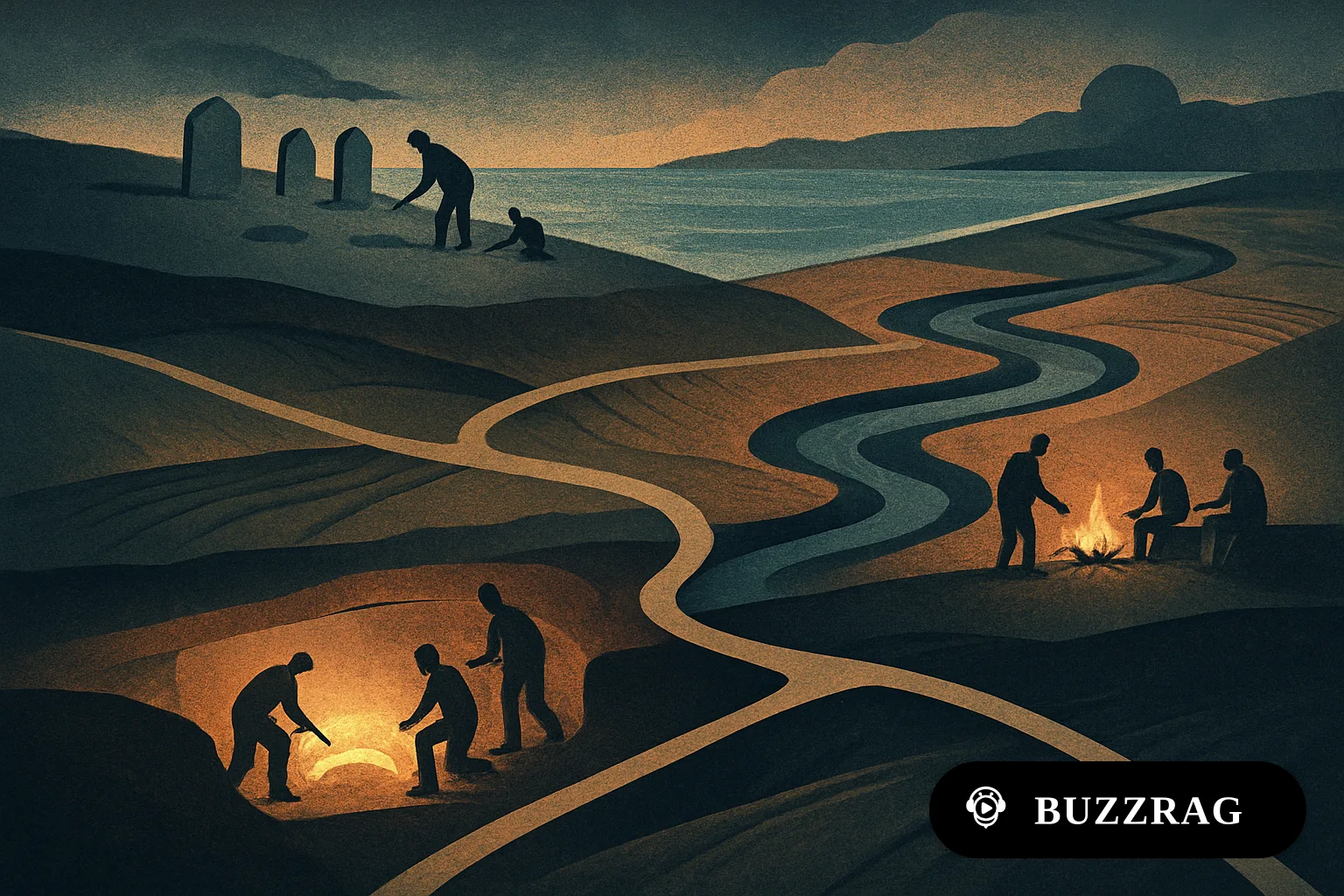
Subterranean spaces have served very different purposes across time: refuge, storage, ritual, habitation, scientific research and military command. Sites such as Derinkuyu in central Anatolia and the Hypogeum in Malta demonstrate that underground construction can reflect organized labor, environmental adaptation and social complexity rather than mystery alone. Modern facilities, including hardened command centers and deep laboratories, extend that long history of moving crucial activities below ground.
The attraction of these places also creates an epistemic hazard. Genuine archaeological and geological evidence can be presented alongside claims about hidden civilizations, paranormal forces or a hollow Earth, blurring the line between discovery and speculation. A responsible history of subterranean environments asks who built them, with what tools, for which communities and under what pressures. It also recognizes that the underground remains politically charged today, as cities, militaries and scientists increasingly turn below the surface for security, infrastructure and refuge from a changing climate.
A Cemetery on the Edge of a Changing Coast
An early medieval cemetery exposed by coastal erosion in southwest Wales offers a rare encounter with both human continuity and environmental change. Survey methods including ground-penetrating radar, aerial imagery, cliff-face recording, osteological study and radiocarbon dating can reconstruct a burial ground whose use probably extended from the sixth to the eighth centuries. Adult and child graves make the site more than a map of religious practice: they preserve traces of a lived community.
The urgency comes from the cliff itself. Erosion is turning archaeological research into a rescue operation, forcing investigators to decide what can be documented before the evidence is lost. Burial sites can reveal diet, disease, mobility, kinship and changing ritual, but they must be handled with ethical care rather than treated as raw data. The Welsh cemetery also belongs to a growing global archive of sites threatened by rising seas, storms and unstable shorelines, where climate change is reshaping what historians will be able to know.
Highways, Vulnerability and the Forensic Record
The cases examined in this documentary expose the dangers created where long-distance trucking, isolation and vulnerable hitchhikers intersect. Investigators in the case of James Robert Cruz Jr. assembled a chain of evidence from phone records, fuel receipts, tire-track comparisons, biological material and DNA. That process illustrates how modern criminal investigation often depends on the mundane traces left by movement through a vast transportation network.
The history of these cases is also a history of missed protection. Hitchhiking, roadside work and transient travel placed people outside the institutions that might have noticed their disappearance quickly, while jurisdictional boundaries complicated investigations. Forensic tools can connect crimes and strengthen prosecutions, but they cannot undo the social conditions that made victims difficult to see. The continuing challenge is to pair technical evidence with better missing-person systems, cross-state cooperation and public attention that does not reduce victims to elements in a sensational narrative.
The common thread today is infrastructure: the physical systems that carry energy, people and bodies, and the social systems that decide who is protected within them. As climate pressure, migration and uneven access to institutions reshape the present, the next useful histories will likely come from places where grand narratives meet fragile ground.