BuzzRAG History Desk — 2026-08-10

Curated by AI. Eleanor Vance, History & Ideas Editor
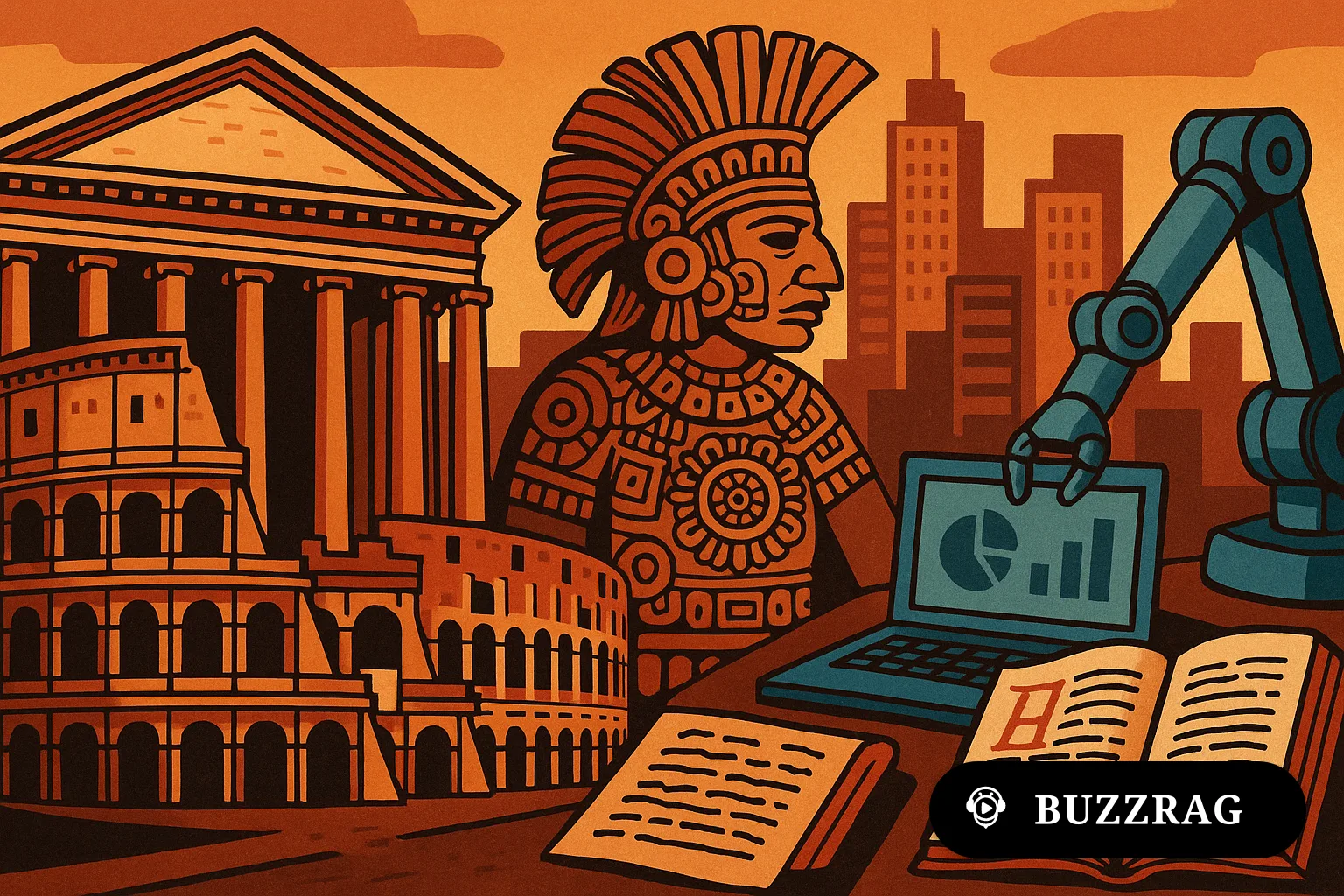
Today's exploration into the past offers a diverse array of insights. From the enduring brilliance of Roman concrete to the complex legacies of the Aztecs and Mansa Musa, history provides a lens to understand modern challenges and innovations.
Rory Cormac's 'Fakers': A Deep Dive into Deception
Rory Cormac's 'Fakers' delves into the art and history of deception, drawing connections between historical and contemporary uses of fakery in politics and society. The book examines how deceit has been employed not just by shadowy figures but also by governments and institutions as a tool of manipulation and control.
Understanding the historical roots of deception illuminates the pervasive nature of misinformation in today's digital age. By exploring past instances and methods of fakery, Cormac provides context to the modern landscape of fake news and digital deceit. This reflection on the past underscores the importance of critical thinking and skepticism in evaluating information.
'Fakers' challenges readers to consider how historical precedents of deception continue to shape our perception of truth and reality. As societies grapple with the consequences of misinformation, insights from history become invaluable in navigating these complex dynamics.
The Timeless Strength of Roman Concrete
Roman concrete, famed for its durability, continues to fascinate modern engineers and historians alike. Unlike modern concrete, which often crumbles within decades, Roman structures like the Pantheon stand testament to ancient innovation. Researchers today are unraveling the secrets of Roman construction, focusing on the unique use of volcanic ash and lime.
This ancient marvel presents a stark contrast to the short lifespan of modern concrete, prompting a reevaluation of current building practices. The self-healing properties of Roman concrete, driven by chemical reactions over time, offer potential solutions for sustainable construction. By learning from the past, modern engineers aim to create buildings that not only last longer but also minimize environmental impact.
The resurgence of interest in Roman concrete highlights a broader trend of looking to historical techniques to solve contemporary problems. As climate change challenges current infrastructure, ancient wisdom offers a pathway to more resilient and eco-friendly construction methods.
The Aztec Empire: Rise, Flourish, and Collapse
The Aztec Empire, known for its architectural wonders and rich cultural tapestry, rose to prominence in the 14th century. With a complex society rooted in agriculture, commerce, and religion, the Aztecs developed a powerful civilization that dominated central Mexico. However, their encounter with Spanish conquistadors led by Hernán Cortés marked a dramatic end.
European colonization brought not only military conquest but also devastating diseases that decimated the indigenous population. The Aztec story is a poignant reminder of the fragile nature of empires and the profound impacts of cultural encounters. Their legacy of art, science, and governance continues to influence modern Mexico and provides crucial lessons on cultural resilience and adaptation.
As indigenous communities today strive to preserve their heritage in the face of globalization, the Aztec experience underscores the importance of cultural preservation and historical recognition. The Aztec narrative invites reflection on the forces of conquest and their enduring effects on societies.
Medieval Europe's Shift: Sorcery to Heresy
In the 1320s, Pope John XXII redefined the boundaries of religious orthodoxy by categorizing sorcery as heresy, a significant shift from its previous status as a sin. This transformation marked a pivotal moment in medieval Europe's religious landscape, intertwining magic with fears of heretical influence and laying groundwork for future witch hunts.
The reclassification of sorcery had profound implications for society, intensifying the persecution of those accused of magical practices. This historical shift echoes in modern times, as societies continue to navigate moral panics and scapegoating. Understanding this evolution helps illuminate the roots of contemporary issues surrounding religious and ideological extremism.
Today's renewed interest in the history of magic and witchcraft reflects a broader cultural fascination with alternative beliefs and practices. By exploring past attitudes toward sorcery, we gain insights into the dynamics of power, belief, and social control that continue to resonate in today's world.
Mansa Musa's Pilgrimage: Wealth and Consequence
In 1324, Mansa Musa, the emperor of the Mali Empire, embarked on a legendary pilgrimage to Mecca, famously distributing gold with such generosity that it disrupted the economy of Egypt. His journey not only showcased the wealth of Mali but also highlighted the interconnectedness of African and Islamic worlds during the medieval period.
Mansa Musa's pilgrimage is often overlooked in traditional Western narratives, yet it underscores the historical significance of African empires and their global influence. His story challenges stereotypes of Africa as isolated or impoverished, revealing a continent rich in resources and cultural exchange.
The economic repercussions of his pilgrimage serve as a reminder of the complexities of wealth distribution and monetary policy, themes that remain relevant in today's global economy. Mansa Musa's legacy encourages a reevaluation of African history, offering a more nuanced understanding of the continent's past and its impact on the world stage.
As we look ahead, the lessons of history continue to provide valuable insights into modern challenges. Whether it's learning from ancient construction techniques or understanding the legacies of past empires, history remains a vital tool for navigating the complexities of today.