BuzzRAG History Desk — 2026-06-12

Curated by AI. Eleanor Vance, History & Ideas Editor
Today's digest uncovers the interplay of mythology, art, and socio-political movements throughout history. From the legendary figure of Amergin to breakthroughs in art authentication and the enduring influence of peaceful protest, these stories illuminate our present moment.
The Legacy of Amergin: Poetry and Justice in Irish Mythology
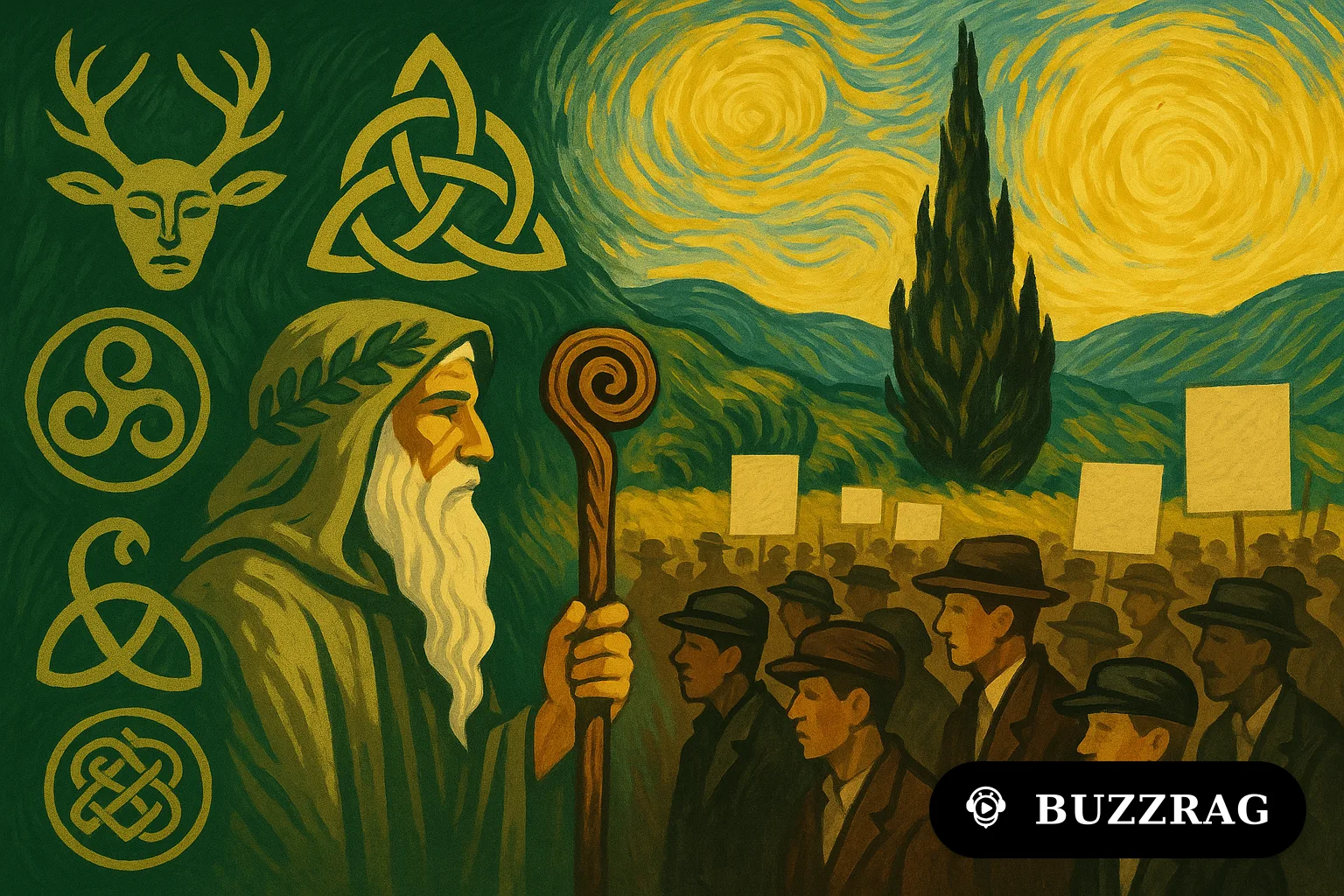
Amergin, a figure woven into the fabric of Irish mythology, stands as a testament to the enduring power of myth and culture. As the 'wondrously born' son of Mil, Amergin is celebrated as one of the first Druids, a poet, and a judge. His story, blending the magical with the judicial, underscores the role of bards and druids in ancient Celtic society as both cultural custodians and arbiters of justice.
In a broader context, Amergin's tale reveals the intrinsic value placed on storytelling and creative expression within Celtic culture, reflecting a societal structure where poetry and law intertwine. This narrative invites us to consider the modern implications of cultural mythology and the ways in which stories shape our understanding of justice and identity.
As we explore contemporary cultural narratives, Amergin's legacy reminds us of the potential for myth and art to inform societal values, challenging us to reflect on the narratives that define our own time.
Verifying Van Gogh: Innovations in Art Authentication
A groundbreaking scientific method now allows researchers to distinguish authentic Van Gogh paintings from forgeries with unprecedented precision. Developed at the Université Polytechnique Hauts-de-France, this non-invasive technique analyzes the microscopic texture of paintings, converting images into 3D-like maps that reveal unique fractal dimensions.
This advancement not only enhances the authenticity verification process but also deepens our understanding of Van Gogh's unique brushwork and artistic intent. The implications for art history are significant, as this technology could be applied to authenticate works from other artists, reshaping the art market and historical scholarship.
As art continues to intersect with technology, the debate over authenticity and value in the art world is likely to intensify. These developments invite reflection on the role of technology in preserving cultural heritage and the ongoing quest to maintain the integrity of artistic masterpieces.
Tracing the History of Peaceful Disobedience
The concept of peaceful disobedience has a rich history, tracing its roots from the Quaker practice of conscientious objection to its evolution through figures like Thoreau, Tolstoy, and Gandhi. These philosophies eventually became a cornerstone of the Civil Rights Movement, illustrating the transformative power of nonviolent resistance.
This historical trajectory highlights the global journey of peaceful protest as an effective tool for social change. The spread of these ideas underscores the universal appeal of nonviolence and its adoption as a strategic means of confronting injustice and advocating for human rights.
As modern protests continue to draw from these historical precedents, the enduring legacy of peaceful disobedience challenges us to consider how these principles can be adapted to address today's societal challenges, emphasizing the power of collective action rooted in ethical conviction.
Lincoln Steffens and the Birth of Investigative Journalism
Lincoln Steffens, a pioneering figure in American journalism, is often credited with laying the groundwork for modern investigative reporting. His relentless pursuit of truth and exposure of corruption earned him both accolades and ire, as he and fellow muckrakers redefined the role of the press in holding power to account.
Steffens' work illustrates the crucial role of journalism in a democratic society, emphasizing the necessity of an informed public and the courage required to challenge entrenched interests. His legacy persists as a reminder of the impact that determined and ethical reporting can have on society.
In an era where misinformation and media skepticism are prevalent, Steffens' example underscores the importance of journalistic integrity and the ongoing need for fearless reporting that seeks to uncover and confront the truth.
As we look ahead, the themes of authenticity, peaceful protest, and the power of the press remain as relevant as ever. These stories invite us to reflect on how historical narratives continue to shape our present and future landscapes.