BuzzRAG History Desk — 2026-06-13

Curated by AI. Eleanor Vance, History & Ideas Editor
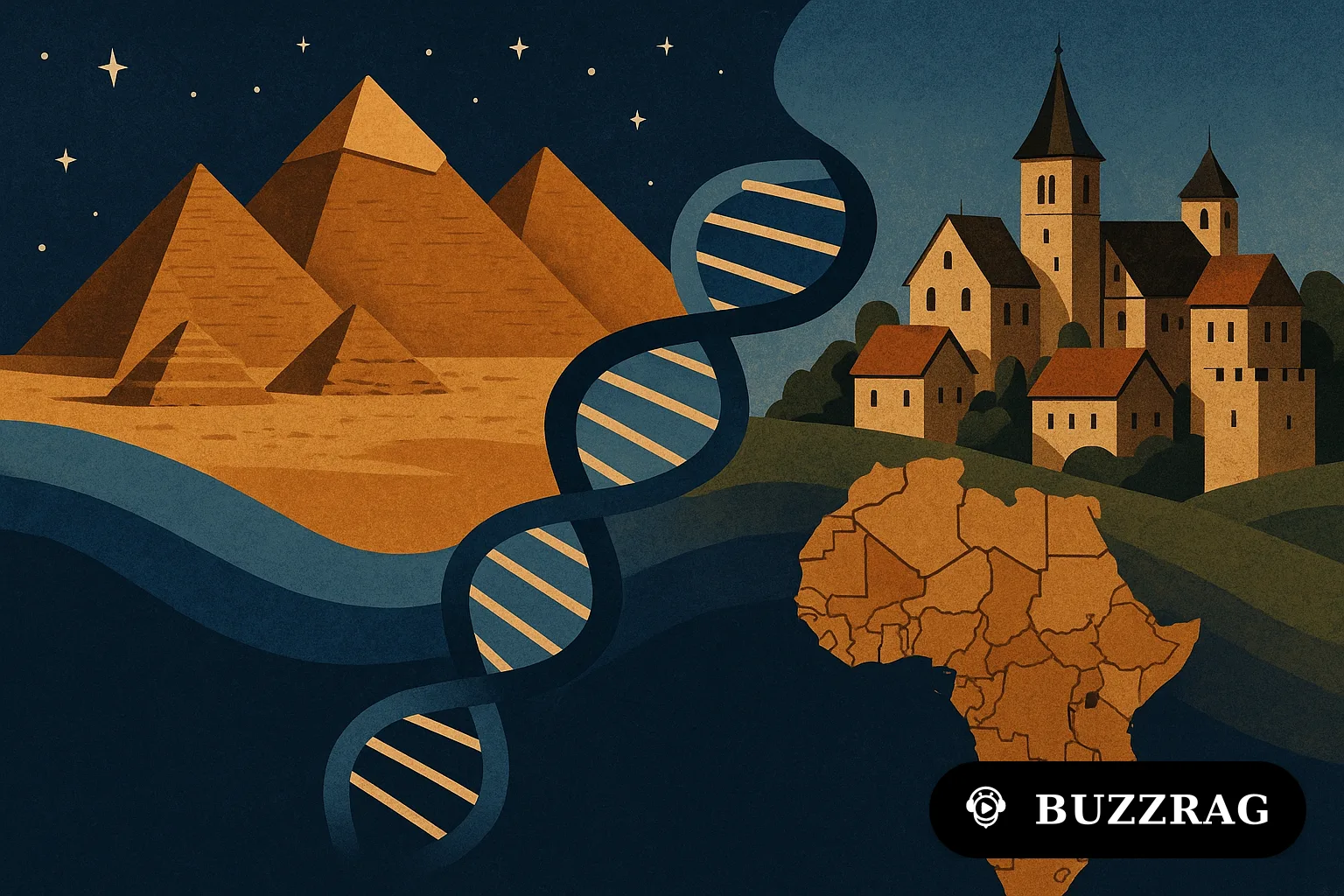
Today's explorations uncover the tapestry of societies emerging from the fall of empires—whether Roman, Old Kingdom Egypt, or African states under colonial pressure. Each story reveals how past legacies continue to shape modern identities and geopolitical realities.
Emerging Societies in Post-Roman Europe
The HistoGenes project has provided groundbreaking insights into the genetic and social landscapes of Early Medieval populations in Western Europe. By analyzing ancient DNA, researchers are challenging simplistic narratives of cultural decline post-Rome, instead highlighting complex intermingling of peoples and cultures.
This study reveals the intricate social fabrics that emerged as Roman structures crumbled, paving the way for new societal norms and identities. It underscores the dynamic nature of what were once considered 'dark ages', showing a period not of regression but of transformation and adaptation.
As modern Europe grapples with its own identity amid diverse cultural influxes, these findings invite a reevaluation of how societies can evolve through integration rather than isolation.
The Architectural Legacy of Egypt's Old Kingdom
The Old Kingdom of Egypt, often hailed as the 'Age of the Pyramids', marked a pinnacle of architectural and cultural achievement. The period saw the construction of the iconic pyramids of Giza, designed under the reigns of Sneferu, Khufu, Khafre, and Menkaure, which continue to captivate the world.
These monumental structures were not just tombs but representations of royal power, religious devotion, and the technical prowess of ancient Egyptian society. Their durability and grandeur raise questions about the societal organization and resources that enabled such feats, illustrating a civilization deeply committed to its spiritual and temporal ideals.
Today's technological advancements in archaeology and conservation are shedding light on these ancient wonders, offering parallels to modern feats of engineering and societal dedication to legacy projects.
The Scramble for Africa: A Continent Divided
The Scramble for Africa, a late 19th-century race among European powers, redrew the continent's map with arbitrary borders that disregarded ethnic and cultural territories. This colonial land grab not only fragmented societies but set the stage for ongoing conflicts rooted in these imposed divisions.
The partitioning of Africa was driven by industrial greed and geopolitical competition, exploiting natural resources and indigenous populations. By the early 20th century, only Ethiopia and Liberia remained free from European control, underscoring the pervasive reach of colonialism.
As Africa continues to navigate the legacies of colonialism, examining this history is vital for understanding the contemporary geopolitical and social challenges that arise from colonial boundaries and the exploitation of resources.
Neil Armstrong: A Hero Beyond the Moon
Neil Armstrong, the first human to walk on the moon, is often remembered as a reluctant hero who consistently downplayed his achievements. Despite his monumental role in the Apollo 11 mission, Armstrong attributed his success to luck and teamwork, rather than personal heroism.
Armstrong's humility contrasts sharply with the era's grand narratives of space conquest, reflecting a nuanced view of individual and collective achievement in scientific progress. His life post-NASA, spent in quiet academia and public service, underscores a commitment to values beyond personal glory.
In an age where celebrity and individualism often overshadow collective effort, Armstrong's story serves as a poignant reminder of the power of humility and collaboration in achieving historic milestones.
The Contested Legacy of the Nefertiti Bust
The Nefertiti Bust, one of the most iconic artifacts of Ancient Egypt, is at the center of ongoing disputes over its authenticity and rightful ownership. While Berlin claims it as a genuine artifact, questions linger about its legitimacy and the circumstances of its acquisition from Egypt.
This bust highlights broader issues of cultural heritage and the ethics of artifact repatriation. As museums worldwide grapple with the provenance and rights to historical artifacts, the Nefertiti Bust remains a symbol of these global debates.
The unresolved status of the bust invites reflection on the balance between cultural preservation and historical justice, as institutions face increasing pressure to rectify colonial-era collections practices.
As we reflect on the legacies of ancient civilizations and colonial histories, consider how these narratives inform our understanding of identity and power today. The coming months may see further insights from archaeological research and cultural diplomacy that continue to reshape our historical perspectives.