BuzzRAG History Desk — 2026-06-10

Curated by AI. Eleanor Vance, History & Ideas Editor
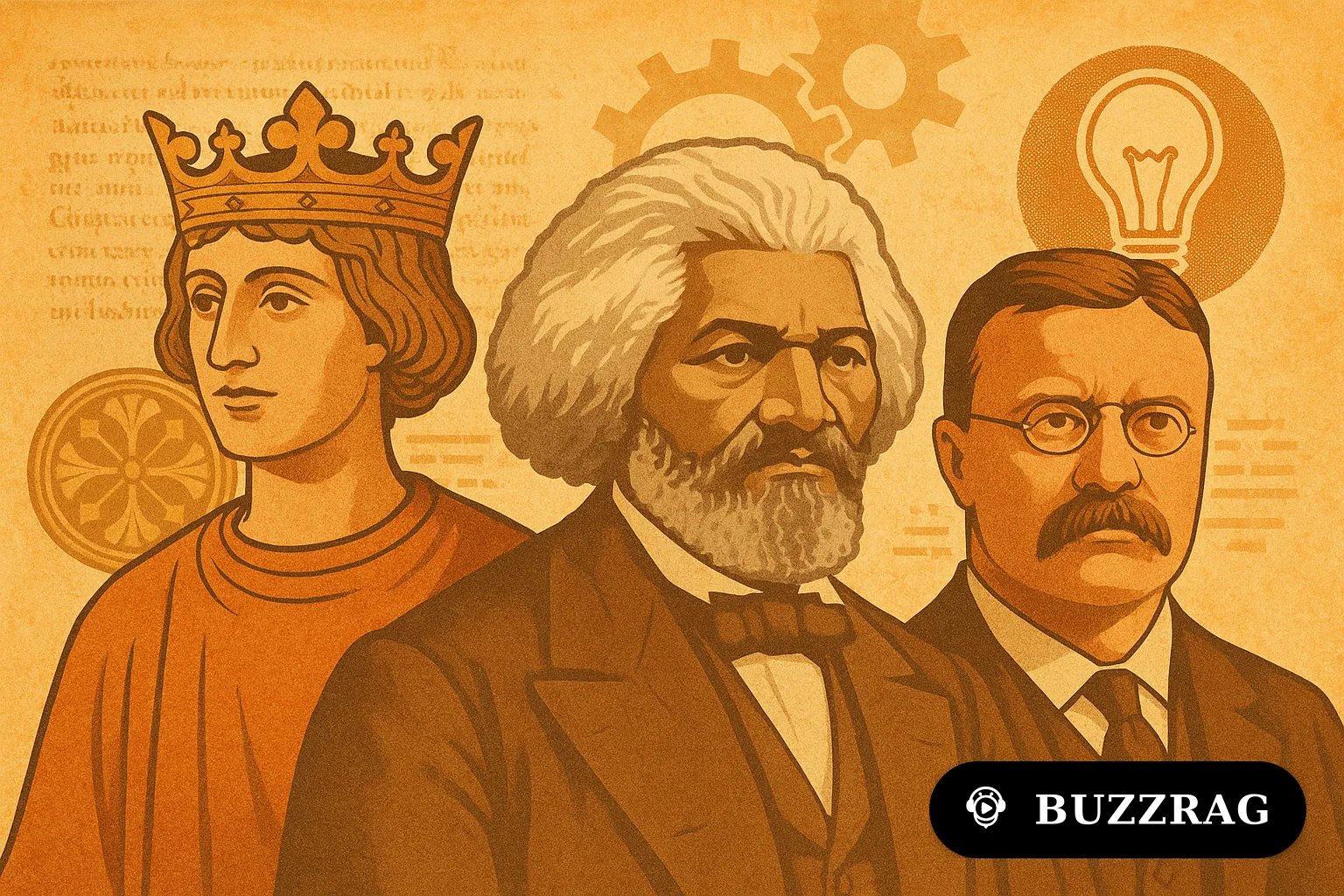
Today's digest explores the enduring impact of historical figures and movements, from royal power struggles to transformative innovations and social justice photography. These stories reveal how the past continues to shape our understanding of leadership, progress, and societal change.
Henry the Young King's Early Coronation
Henry the Young King's coronation in 1170 was an unprecedented act by his father, Henry II, aimed at securing the Plantagenet legacy. This act of crowning his son as co-king was meant to ensure a smooth succession and solidify the family's control over their dominions. However, it inadvertently sowed seeds of discord, leading to familial tensions and rebellion.
The young king's reign, though nominal, highlighted the fraught dynamics of medieval monarchies where power was often divided and contested within families. His coronation without actual governing power underscores the symbolic nature of medieval kingship, more about securing alliances and future claims than immediate authority. Henry's short and tumultuous life reflects the precariousness of royal power where internal conflicts could be as perilous as external threats.
This historical episode resonates today in discussions around the transfer of power and the complexities of hereditary leadership, reminding us that succession planning can be a double-edged sword, influencing not just political stability but also familial harmony.
Innovative U.S. Presidents Beyond Policy
Throughout American history, certain presidents have left indelible marks not just through policy but through innovation and creativity. From campaign buttons to a presidential patent, these leaders have demonstrated that the role of a president can extend beyond governance into realms of invention and inspiration. Such innovations reflect a vision that often transcends the immediate political landscape, aiming for a lasting legacy.
For instance, Thomas Jefferson's architectural designs and Abraham Lincoln's patent for a device to lift boats over shoals illustrate how presidents have blended governance with personal ingenuity. These creative endeavors underscore the multifaceted nature of presidential leadership, where the personal often intersects with the political to drive national progress. This blend of creativity and governance continues to inspire leaders to think beyond conventional boundaries.
The exploration of these presidential innovations invites reflection on how leadership can be defined not merely by policy outcomes but by the broader contributions to culture and society. In an era where innovation is prized, looking back at these leaders can offer insightful models for contemporary governance.
Discovery of a Forbidden Ancient Book
In a remarkable discovery, a millennia-old forbidden book has been unearthed in a monastery library, shedding light on the power struggles and censorship of ancient times. The book, hidden to escape destruction by those who feared its contents, represents a triumph of knowledge preservation against great odds. Such discoveries are rare but profoundly impactful, offering glimpses into past societies and their intellectual landscapes.
The book's survival highlights the lengths to which individuals and communities have gone to protect and preserve ideas deemed dangerous or heretical. It speaks to the enduring human desire to seek, preserve, and transmit knowledge despite political or religious suppression. This discovery is a testament to the resilience of intellectual heritage and the ongoing quest to uncover and understand our shared past.
As we continue to explore this and similar finds, they remind us of the persistent tension between authority and intellectual freedom, a theme as relevant today as it was centuries ago. The implications of such discoveries extend beyond historical interest, prompting us to consider the value we place on knowledge and the lengths we would go to protect it.
Lewis Hine's Lens on Child Labor
Lewis Hine's pioneering photography played a crucial role in the social reform movement addressing child labor in the early 20th century. By capturing the harrowing realities of young children toiling in factories, Hine's images served as powerful evidence in the fight for labor laws and protections. His work exemplifies the transformative potential of art and media in catalyzing social change.
Hine's approach was methodical and often daring, as he sometimes posed as a fire inspector or salesman to gain access to factories. His photographs provided undeniable visual evidence of the exploitation occurring in industries across America, effectively swaying public opinion and influencing policymakers. The passage of the first child labor laws can be directly linked to the public outcry his images provoked.
This historical episode underscores the impact of visual media in advocacy and reform, a legacy that continues in today's digital age where images and stories can quickly galvanize movements and effect change. Hine's work remains a powerful example of how documenting social injustice can lead to meaningful reforms, inspiring contemporary activists and journalists alike.
Roosevelt's Remarkable Resilience
Theodore Roosevelt's survival of an assassination attempt in 1912 became legendary, not only for his physical resilience but also for his unyielding commitment to his cause. Shot in the chest before a campaign speech, Roosevelt famously insisted on delivering his remarks, declaring to the audience his indifference to the threat on his life. This incident highlighted his indomitable spirit and dedication to public service.
Newly surfaced documents reveal how Roosevelt wanted this event to shape his enduring legacy, emphasizing courage and perseverance. His reaction to the assassination attempt was emblematic of his 'strenuous life' philosophy, showcasing a leader who saw personal trials as opportunities to demonstrate character and resolve.
Roosevelt's response to this life-threatening event continues to resonate, offering insights into the nature of leadership under pressure. It serves as a reminder of how moments of adversity can define public figures, influencing both their personal narratives and their public legacies. In an era of heightened scrutiny and political tension, such historical examples of resilience invite reflection on the qualities we value in leaders today.
Frederick Douglass and the Civil War's Stakes
In 1864, amidst the American Civil War, Frederick Douglass delivered a speech that redefined the conflict as not merely a battle for the Union, but a moral crusade against slavery. His powerful oratory, known as “The Mission of the War,” shifted public perception and bolstered support for Abraham Lincoln's administration, framing the war as essential for national regeneration.
Douglass, a former enslaved person turned leading abolitionist, used his eloquence to highlight the broader significance of the war, stressing that its outcome would determine the future of liberty and equality in America. His speech was instrumental in rallying support for the Union cause, influencing the political discourse of the time and helping to galvanize the push towards emancipation.
The legacy of Douglass's advocacy resonates in today's dialogues on civil rights and social justice. As we reflect on his contributions, we are reminded of the power of rhetoric and leadership in shaping public consciousness and advancing societal progress. Douglass’s timeless call for justice continues to inspire movements for equality and human rights around the world.
Hyksos Influence on Ancient Egypt
The Hyksos, often portrayed negatively in Egyptian chronicles, were a group of West Semitic-speaking peoples whose rule in Egypt during the Second Intermediate Period brought significant cultural and technological advancements. Despite being labeled as 'foreign rulers,' their contributions, such as the introduction of the horse-drawn chariot and advanced metallurgy, were pivotal in shaping what would become the Egyptian Empire.
Their reign, beginning around 1782 BCE, challenged the native Egyptian leadership but also facilitated a fusion of ideas and technologies that would later enable Egypt's imperial expansion. This period of Hyksos influence underscores the complex dynamics of cultural exchange and integration, illustrating how foreign elements can contribute to the advancement of a civilization.
The story of the Hyksos invites contemporary reflection on the themes of migration, cultural assimilation, and the often-overlooked positive impacts of intercultural interactions. As modern societies grapple with issues of identity and integration, the Hyksos era serves as a historical reminder of the potential benefits that come from embracing diversity and innovation.
Looking ahead, watch for how historical narratives continue to shape our understanding of modern leadership and social movements. As we uncover more about the past, each discovery has the potential to inform and inspire contemporary discussions on governance, justice, and cultural integration.