BuzzRAG History Desk — 2026-06-06

Curated by AI. Eleanor Vance, History & Ideas Editor
Today's themes traverse ancient wisdom, the enigmatic fates of royal figures, and the enduring struggles for rights and recognition. From the divine influences of Babylon to the political precedents set by early American leaders, these stories reveal how the echoes of history inform our modern world.
Nabu: The Babylonian Embodiment of Wisdom
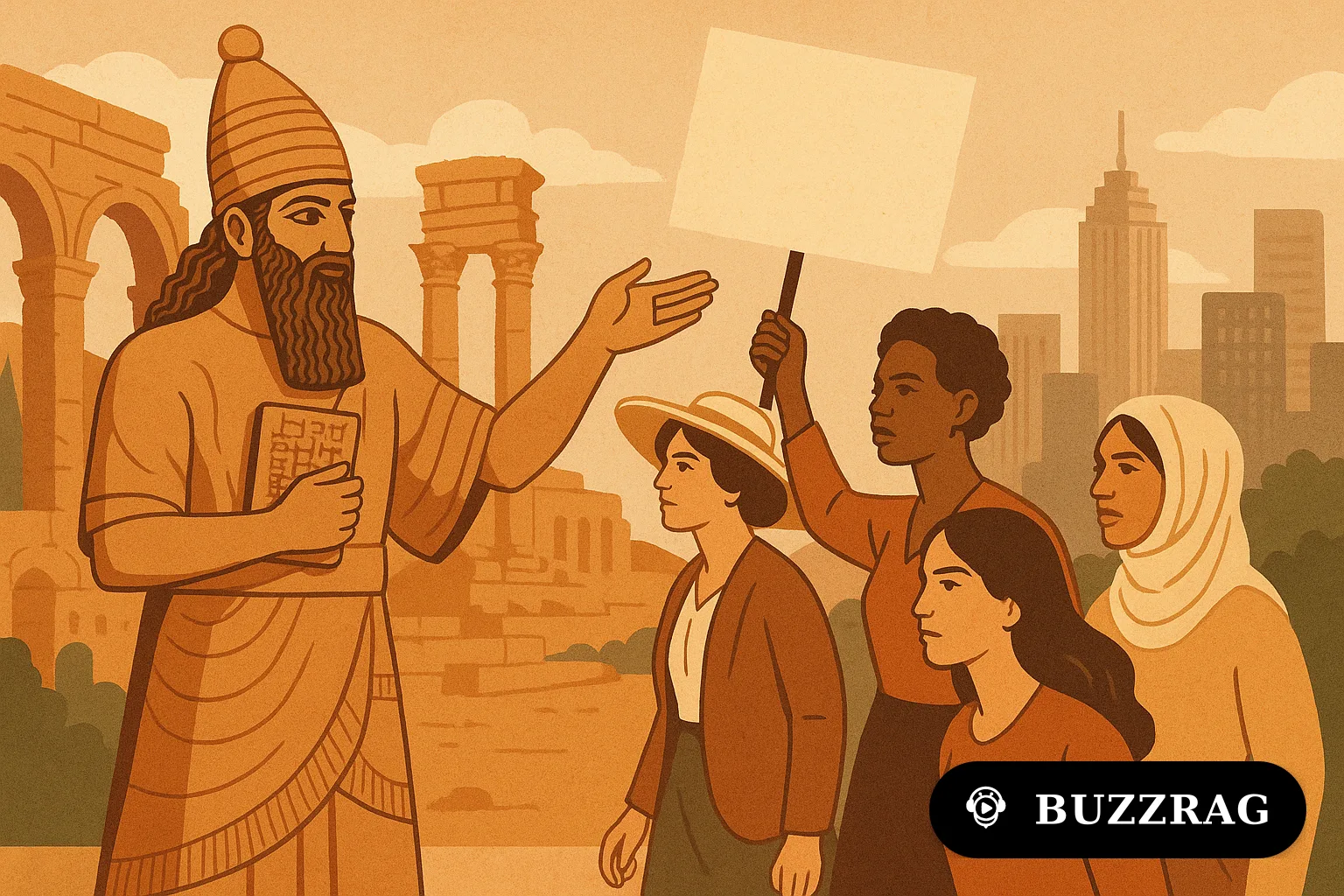
Nabu, the Babylonian god celebrated for his mastery of wisdom, learning, and writing, serves as a testament to the ancient world's reverence for knowledge and agriculture. His name, meaning 'the Announcer', underscores his role in heralding not only prophecies but also the bounty of the harvest.
In today's context, Nabu's attributes remind us of the intrinsic value societies have historically placed on knowledge as a cornerstone of civilization. Understanding Nabu's place in Babylonian culture can illuminate how ancient wisdom and storytelling continue to shape contemporary narratives about the relationship between knowledge and power.
As we explore modern parallels, the legacy of Nabu invites reflection on how current innovations in information technology reflect a timeless quest for wisdom and understanding.
The Enigma of a Mycenaean Queen
A Mycenaean queen, whose beauty rivaled that of Aphrodite, remains shrouded in mystery, as ancient tales offer conflicting accounts of her disappearance. Unlike Clytemnestra, her narrative avoids the bloody end typical of Greek tragedies, leaving historians to ponder her true fate.
The allure of this queen's story lies not only in its mystery but in the insight it provides into the roles and perceptions of women in ancient societies. Her legacy, though enigmatic, prompts a reevaluation of how historical narratives are constructed and the biases that may obscure the lives of influential women in antiquity.
As historians and archaeologists continue to unearth clues, this tale challenges us to consider how we might reconstruct forgotten histories and the impact of myth-making on our understanding of the past.
Maternal Influence on Women's Suffrage
The fight for women's suffrage was significantly shaped by the maternal instincts and contributions of mothers, a narrative often overshadowed by more prominent figures in the movement. These women, driven by the desire to secure a better future for their children, played crucial roles in the eventual success of the suffrage movement.
This perspective sheds light on the multifaceted motivations behind political activism and how personal experiences, such as motherhood, can inspire social change. Recognizing these contributions helps to broaden the historical narrative of suffrage, highlighting the diverse array of individuals who propelled the movement forward.
As modern discussions about gender equality continue, the historical role of mothers in the suffrage movement underscores the ongoing relevance of personal experience in shaping political landscapes.
George Washington's Farewell and Its Lasting Impact
George Washington's decision to forgo a third term as President of the United States is often heralded as a defining moment of self-restraint and vision. Yet, at the time, his choice was met with mixed reactions, illuminating the complexities of leadership and the evolving nature of democratic ideals.
Washington's precedent set the tone for future transitions of power, establishing an unwritten rule that underscored the importance of peaceful succession and the avoidance of potential autocracy. This decision not only impacted the American political consciousness but also influenced global perceptions of democratic governance.
In today's political climate, Washington's example encourages reflection on leadership norms and the balance between personal ambition and public service, a balancing act still relevant in contemporary political discourse.
Boer War: A Conflict of Imperialism and Nationalism
The Boer War, raging from 1899 to 1902, highlighted the brutal realities of imperialism and nationalism in Southern Africa. British forces employed harsh tactics, including scorched-earth policies and concentration camps, to subdue Boer resistance, sparking international controversy and marking a pivotal moment in colonial history.
This conflict serves as a stark reminder of the lengths to which empires went to maintain control and the enduring human cost of such endeavors. The technological advancements used in warfare during this period foreshadowed the mechanized combat of the 20th century, while the Boer resistance embodied the spirit of national self-determination.
Reflecting on the Boer War's legacy, we see parallels in today's geopolitical struggles where nationalism and imperial ambitions continue to clash, raising questions about the ethics of power and the right to self-governance.
Speusippus: Challenging Platonism from Within
Speusippus, Plato's nephew, emerged as a pivotal figure in the early days of Platonism, challenging core doctrines established by his uncle. His reinterpretations and critiques led to what some scholars describe as the first crisis of Platonism, reshaping the philosophical landscape of the time.
This intellectual upheaval underscores the dynamism within philosophical traditions and the importance of internal critique in the evolution of ideas. Speusippus's willingness to question foundational beliefs invites us to consider how philosophical evolution is often driven by those closest to the source.
In an era where ideological rigidity often dominates discourse, the story of Speusippus encourages a reexamination of the value of dissent and the role of contrarian voices in fostering intellectual growth.
As we navigate contemporary challenges, these historical narratives remind us of the enduring human struggles for wisdom, justice, and self-determination. Next, we explore how these themes continue to evolve and shape our world in unprecedented ways.