BuzzRAG Gaming Desk — 2026-09-15

Curated by AI. Kai Tanaka, Gaming Desk Editor
Today’s gaming conversation is split between hardware that wants to reshape how players access PC games and an industry increasingly comfortable with uncertainty. A VR headset review, a delayed console port, a speculative new action game, and a major esports venue announcement all point to the same pressure: platforms and publishers are still testing how much patience their audiences have. Cross-media fandom remains part of the picture, too, from post-credits storytelling to major television awards and bestselling fantasy fiction.
Steam Frame Tests the Case for Flexible VR
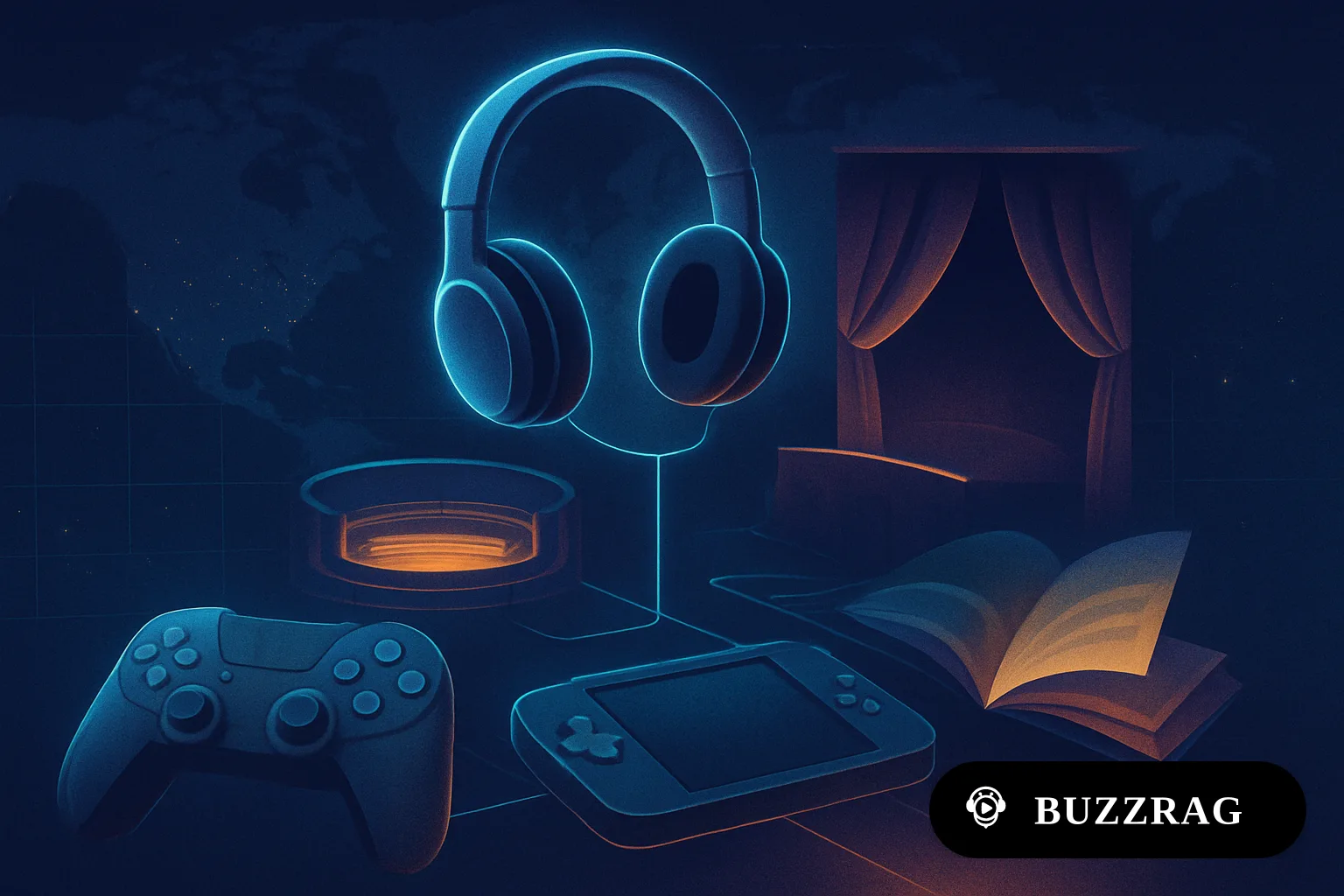
Valve’s second in-house VR headset is being met with unusually strong early enthusiasm. The Steam Frame reportedly combines a lightweight design with upgraded specifications, PC-to-headset streaming, and standalone functionality, positioning it as more than a conventional tethered accessory. That hybrid pitch addresses one of virtual reality’s oldest frustrations: choosing between the convenience of a self-contained device and the performance of a gaming PC.
The important question is whether the hardware’s flexibility can overcome VR’s broader barriers, including cost, software availability, comfort over long sessions, and the friction of maintaining another platform. A good headset can make existing games feel more accessible, but it cannot single-handedly solve the medium’s library and audience problems. Valve’s approach will be worth watching because it treats VR less as a separate destination and more as another way to reach a PC games ecosystem. That could be the more durable path for the technology, provided the company supports it beyond the launch window.
Wolverine’s Post-Credits Scene Keeps the Sequel Machine Running
The post-credits scene attached to the upcoming superhero action game is drawing attention because it appears designed to extend the story beyond the main campaign. That tradition is now so embedded in blockbuster entertainment that players approach the credits not as an endpoint, but as another piece of the marketing and narrative pipeline. The scene’s details are best discussed carefully, since explaining its function risks spoiling an experience built around delayed information.
Its presence still raises a broader design question: when does a satisfying tease become an obligation to buy into the next installment? Post-credits material can reward committed players and create useful connective tissue, but it can also make a complete game feel like one chapter in an always-expanding corporate plan. For a major licensed release, the pressure to seed sequels, spin-offs, and adaptations is especially strong. The real test will be whether the scene enriches the game’s themes or simply turns the closing minutes into a promise of more content.
Fourth Wing’s Return Shows How Fast Fandom Cycles Move
A new entry in Rebecca Yarros’s dragon-rider romantasy series is scheduled to arrive in two weeks, putting one of contemporary publishing’s most visible fan communities back in the spotlight. The announcement is framed with a catch, though the supplied report does not establish what that limitation or complication involves. That uncertainty is enough to generate conversation in a fandom trained to track release windows, editions, adaptations, and every hint of continuity.
For gaming, the development matters less as a direct industry story than as a reminder of how modern intellectual properties are built across communities and formats. Romantasy fandom operates with the same intensity seen around live-service games: theories circulate quickly, release timing becomes an event, and audience expectations can shape the commercial strategy around a work. If this series continues moving toward interactive or screen adaptations, the size and organization of its audience will be a significant asset—and a source of pressure. The immediate thing to watch is whether the “catch” changes access, timing, or the shape of the new story.
Switch 2 Port of 007 First Light Slips Behind
Players on Nintendo’s new handheld-console platform will have to wait longer for the upcoming spy action game, according to reporting corroborated by Nintendo-focused and industry outlets. The delay separates the Switch 2 version from the broader release conversation and leaves owners with another reminder that platform parity is often a launch-window ambition rather than a guarantee.
Delays can protect a game from shipping in poor condition, especially on hardware with different performance targets and certification requirements. They can also make a port feel like an afterthought if the publisher does not clearly explain what needs additional time. For players, the practical stakes are simple: a later version may arrive more polished, but the gap can weaken community momentum and push consumers toward another platform. The publisher’s next communication should clarify whether the delay is technical, strategic, or tied to a revised release plan. Until then, Switch 2 owners are being asked to wait without much insight into what that wait will buy them.
A Trademark Points Toward Neowiz’s Next Fairytale Experiment
Neowiz has filed a trademark for “Wonders of O,” prompting speculation that the studio behind a recent gothic action RPG may be preparing a project inspired by the world of Oz. A trademark is evidence of a name being protected, not confirmation of a shipped game—or even proof that development has advanced beyond early planning. Still, the filing fits a recognizable creative pattern: taking a familiar public-facing mythology and rebuilding it through darker, combat-focused genre conventions.
That approach can work when the new interpretation has something substantive to say, rather than relying on recognition alone. Neowiz’s previous success has made any adjacent project worth tracking, but fans should resist treating an evocative title as a formal announcement. The key evidence will be the game’s premise, team, platform plans, and whether the studio can distinguish its version from the many existing adaptations. For now, this is a signal, not a reveal—and the gap between those two categories is where rumor-driven hype usually gets ahead of the facts.
The Emmys Put Interactive Entertainment’s Crossover Power in View
The 2026 Emmy winners are being tracked live, turning the awards into another major data point for the entertainment landscape surrounding games. The supplied item does not identify individual winners, so the useful story here is not a speculative roll call but the continuing overlap between television, game development, streaming, and fandom. Projects now compete for attention across screens, and audiences increasingly move between a show, its licensed games, its online communities, and the creators behind it.
Awards recognition can help legitimize interactive storytelling when game-related work crosses into television, animation, performance, or production categories. It can also flatten important differences between mediums if executives treat an Emmy nomination as proof that a transmedia strategy is working. The gaming industry should pay attention to which kinds of craft are being rewarded: writing, acting, animation, production design, or the ability to turn an existing audience into a durable franchise. As the live results settle, the meaningful question will be whether the ceremony reflects genuine creative exchange or simply the entertainment business consolidating around familiar properties.
Shanghai Lands a 2027 Major as Esports Builds Its Event Map
Perfect World has confirmed Shanghai as the host city for its second Major in 2027. The announcement places one of the world’s largest gaming markets at the center of a future international competition and signals continued investment in large-scale esports events, even as the sector works through questions about sustainability, player welfare, and audience growth.
A host city is more than a backdrop: it shapes travel costs, broadcast scheduling, local fan access, sponsor relationships, and the working conditions of teams and event staff. Shanghai’s selection can strengthen the regional esports calendar and give local audiences a high-profile in-person event, but the value will depend on how the organizer distributes that opportunity. Competitive gaming majors should be judged not only by spectacle and viewership, but also by venue accessibility, transparent qualification systems, and support for the players whose labor makes the event possible. The long lead time gives Perfect World room to publish those details before 2027 rather than treating them as afterthoughts.
The next useful signals will be concrete ones: Steam Frame’s long-term software support, a firm explanation for the delayed handheld release, and evidence that the rumored fairytale project is more than a trademark. Esports organizers and cross-media producers face a similar test—turning audience momentum into sustainable systems rather than another burst of hype.