BuzzRAG Culture Desk — 2026-10-17

Curated by AI. Mateo Ruiz, Arts & Culture Editor
Today’s culture mix moves between endurance on the open road and the institutions that give art and music room to travel. A landmark basketball final and a busy television slate add a reminder that culture is also live, communal and sometimes decided in real time.
A cyclist searches for freedom on the long road
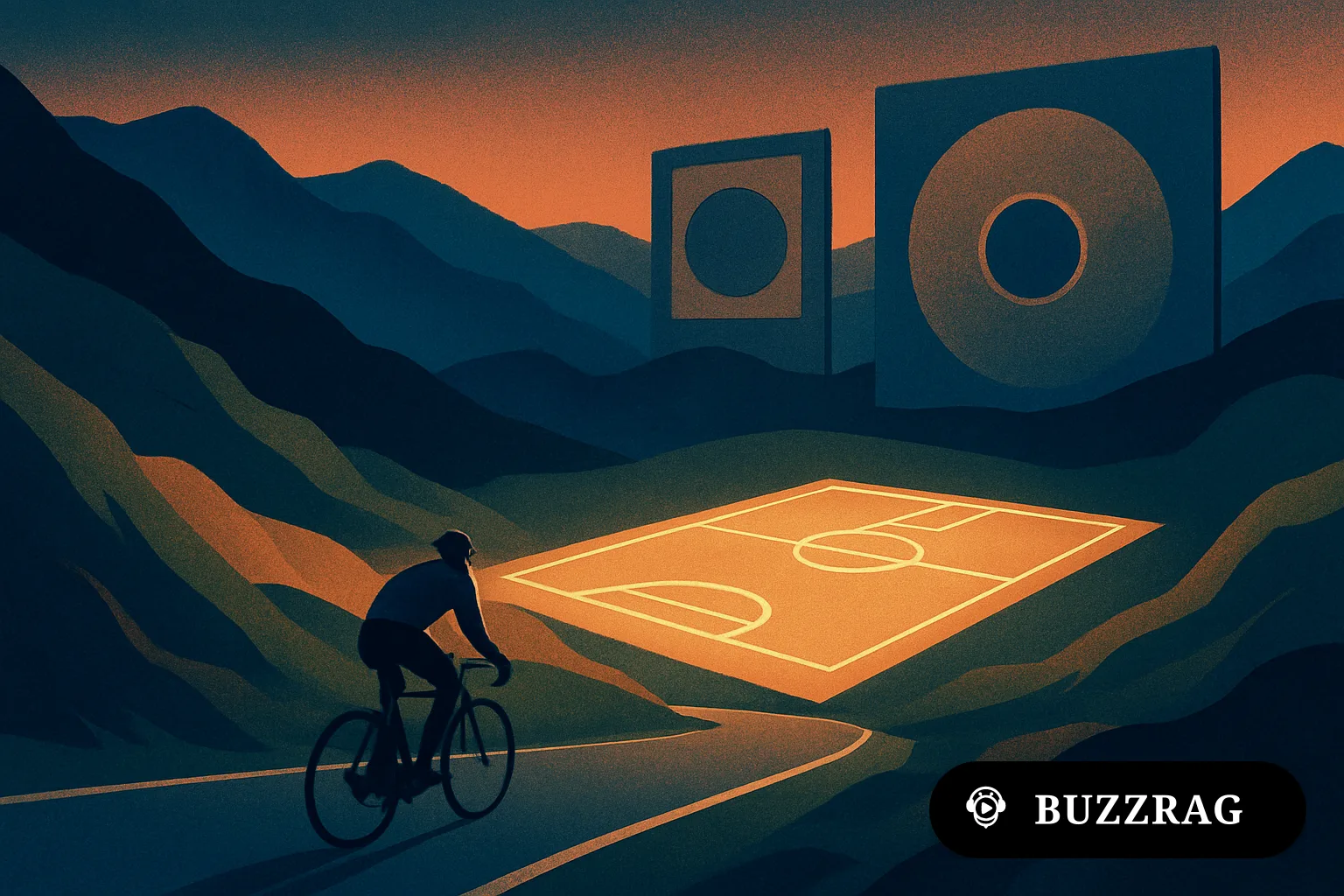
Adam and Christian Bonke’s documentary “Perfect Road,” screening at the London Film Festival, follows a nomadic cyclist drawn to punishing challenges and the promise of freedom. The film’s appeal seems to lie as much in its landscapes as in its central character: mountain passes and open country become a moving backdrop for questions that don’t have easy finish lines.
The setup puts an old adventure-film pleasure—the journey into the unknown—beside a more unsettled character study. Why choose hardship? What does freedom look like when it demands constant movement? Those questions give the scenery a purpose beyond spectacle, while the cyclist’s pursuit offers a way to think about the costs and attractions of living outside settled routines. Festival audiences will see whether the film can hold both the physical ordeal and the inner life in view. In a crowded field of travel stories, its most compelling destination may be the uncertainty the journey leaves behind.
A Saturday of finals, comfort viewing and true crime
Saturday’s television lineup brings together three different kinds of appointment viewing: Game 1 of the WNBA Finals, a new holiday romance, and a fresh “48 Hours” premiere. The mixture spans live sport, seasonal fiction and true crime—formats that ask audiences to gather around very different kinds of suspense.
The Finals opener is the day’s clearest shared cultural event: a first game can set the emotional temperature of a series, even before anyone knows how it will end. “Holiday Touchdown: A Bears Love Story,” led by Lyndsy Fonseca and Robert Buckley, offers the familiar pleasures of a seasonal romance, while “48 Hours” serves viewers who prefer their weekend mysteries drawn from real cases. A listings roundup is not a verdict on what deserves attention, but this spread shows how broadcast television still builds a single evening from live competition, escapism and investigation. The question is which of those viewing rituals will command the room.
A guide to eight galleries shaping contemporary art in India
A new guide spotlights eight galleries in India, presenting them as influential spaces with cutting-edge programs. The selection offers readers a starting point for navigating a diverse art landscape, where galleries do more than hang work: they connect artists, audiences, collectors and ideas, and help determine which practices receive sustained attention.
A list can never stand in for the full range of a country’s scenes, and the value of this one will depend on the choices behind it. Still, bringing the galleries into view pushes against the habit of treating contemporary art as if its essential conversation happens in only a handful of global capitals. For artists, curators and curious visitors, the guide is an invitation to look beyond familiar circuits and ask how local institutions support new work. The more useful follow-up is not simply which spaces are named, but what kinds of artists and perspectives their programs make possible—and who gets access to them.
The independent-label spirit behind Stiff Records
A look back at the beginnings of Stiff Records revisits a British label that made irreverence part of its identity. Its promise to be “the world’s most flexible record label” was more than a joke: it signaled a willingness to challenge the formality of the record business and give distinctive artists a platform on their own terms.
Independent labels matter not only for the records they release, but for the alternatives they model—different routes to audiences, different ideas of what a career can look like, and a stronger sense of personality in how music is presented. Stiff’s story belongs to a wider history in which small operations could make a disproportionate cultural impact by spotting energy that larger systems overlooked. Revisiting that history now also raises a live question: can the same unruly, artist-first spirit thrive in a music economy shaped by streaming platforms and concentrated ownership? The label’s origin story is a reminder that attitude can be infrastructure, too.
The nerves behind a guitar tribute
A retrospective story recalls that David Gilmour was asked in 2020 to honour one of his guitar heroes, but initially felt too intimidated to accept. He eventually got past the hesitation. The small drama is familiar even at the highest levels of music: admiration can make an invitation feel less like an opportunity than a test.
The anecdote offers a glimpse of a musician’s relationship with the players who helped shape his own artistic life. A tribute asks for more than technical ability; it requires deciding how to acknowledge an influence without disappearing beneath it. Gilmour’s initial reluctance makes that tension vivid, while his eventual yes suggests that respect need not become paralysis. The account also nudges listeners to hear virtuosity as something built through lineage rather than conjured in isolation. Without more detail about the tribute itself, the story’s strongest note is human: even a celebrated player can feel small in the presence of a hero, and still choose to step forward.
Why record labels still move music forward
A reader-and-writer survey of favourite record labels—from Motown to Flying Nun—puts the label itself at the centre of music culture. The premise is a useful corrective to the idea that artists and songs alone explain how scenes emerge: labels create identities, take chances on sounds and give listeners a way to follow a musical point of view.
The examples suggest how wide that role can be. A label might build a lasting artistic ecosystem, capture a particular community’s sound or help a listener find unexpected connections across releases. That influence persists even as streaming has weakened the old gatekeeping power of the record company. Curation still matters; it has simply moved across more channels, from playlists and online communities to revived interest in independent catalogs. Celebrating labels is not nostalgia for a vanished industry so much as a way to ask who is doing the work of discovery now—and whether today’s systems can offer artists the same room to experiment.
Kenneth Branagh’s unlikely 1987 audition
A story from 1987 recalls Kenneth Branagh auditioning for an iconic British film role despite believing he had “no chance.” The premise has the neat shape of a career footnote, but it captures the uncertainty behind casting: even a performer who goes on to build a major career must first walk into rooms where the odds may seem settled against him.
The role is left unnamed in the supplied account, so the anecdote’s interest rests less on guessing the part than on the gap between ambition and expectation. Auditions turn a cultural institution—the screen role audiences eventually treat as inevitable—back into a human process of choices, nerves and near-misses. That perspective is especially valuable when familiar films are discussed as if their casts were always predetermined. Branagh’s willingness to try, despite his own low estimate of his chances, makes the story a compact reminder that artistic history is shaped by attempts as well as outcomes. The intriguing question is how that early encounter looked from the other side of the casting decision.
The coming days will show whether the WNBA Finals opener sets a series-defining tone, while festival audiences continue weighing intimate journeys against grand landscapes. Beyond the headlines, keep an eye on which galleries and independent music institutions are making space for the next generation of artists.