BuzzRAG Culture Desk — 2026-10-16

Curated by AI. Mateo Ruiz, Arts & Culture Editor
Today’s culture stories keep returning to who gets to tell a story, and what happens when art meets institutions with real power: from films about violence and family intervention to books entering prisons. Alongside them, musicians are building new routes across genre and geography, while a health writer takes aim at wellness certainty.
When perpetrators become the storytellers
A new documentary about the mass killing of civilians in Gaza enters a difficult tradition: films that give the people who carry out atrocities room to speak. Its subject is not only what happened, but how viewers respond when perpetrators narrate or account for their actions. The film’s approach places audiences in an uneasy position between listening for explanation and resisting the pull of a story that might make violence seem ordinary or inevitable.
That tension reaches beyond documentary form. Giving perpetrators a voice can expose systems, habits and self-justifications that a distant account might miss; it can also risk granting them control over the frame. The film therefore invites a sharper question than whether evil looks banal: who is directing the encounter, whose testimony is absent, and what responsibilities come with watching? Those questions make the documentary’s method as consequential as its subject, especially when images and testimony compete with the public’s desire for a simple moral verdict.
A family drama caught between two ideas of care
Cristian Mungiu’s Cannes-winning drama Fjord arrives at the London film festival carrying a live dispute across borders. Its story echoes a Romanian couple’s experience after Norwegian authorities took their children, setting ideas of parental authority and child protection against one another. The film has already touched nerves in Norway and Romania, where its conflict lands differently depending on which institutions and cultural assumptions a viewer trusts.
The film’s force, as its competing readings suggest, lies in refusing a comfortable clash between supposedly enlightened Nordic liberalism and supposedly traditional eastern family values. Each position can conceal its own hypocrisies, and the people caught in the middle are more than symbols in a national argument. By turning a contentious real-world story into drama, Mungiu invites audiences to consider how governments define harm, how families understand care, and whose account is treated as credible. The London screenings will test whether the debate travels intact—or changes when a new audience enters the room.
A doctor takes the shine off wellness promises
In Make Me Well, television doctor Xand van Tulleken examines the claims powering the modern wellness market, from collagen to turmeric. The book sets out to test persuasive health advice against evidence, beginning with a deceptively familiar subject: vitamin D. Even a supplement that appears uncontroversial can reveal how difficult it is to separate sound guidance from confident claims repeated across shelves and social feeds.
The appeal of the book is its invitation to be curious without becoming credulous. Wellness culture often sells personal control in a world where health can feel uncertain, and its language can make expensive or weakly supported remedies sound like common sense. Van Tulleken’s scepticism matters most when it clarifies what evidence can—and cannot—tell us, rather than simply replacing one certainty with another. As health advice continues to circulate through influencers, retailers and public institutions, the book offers readers a practical reason to ask who benefits from a claim and what would count as proof.
Iran’s modular music, beyond the usual map
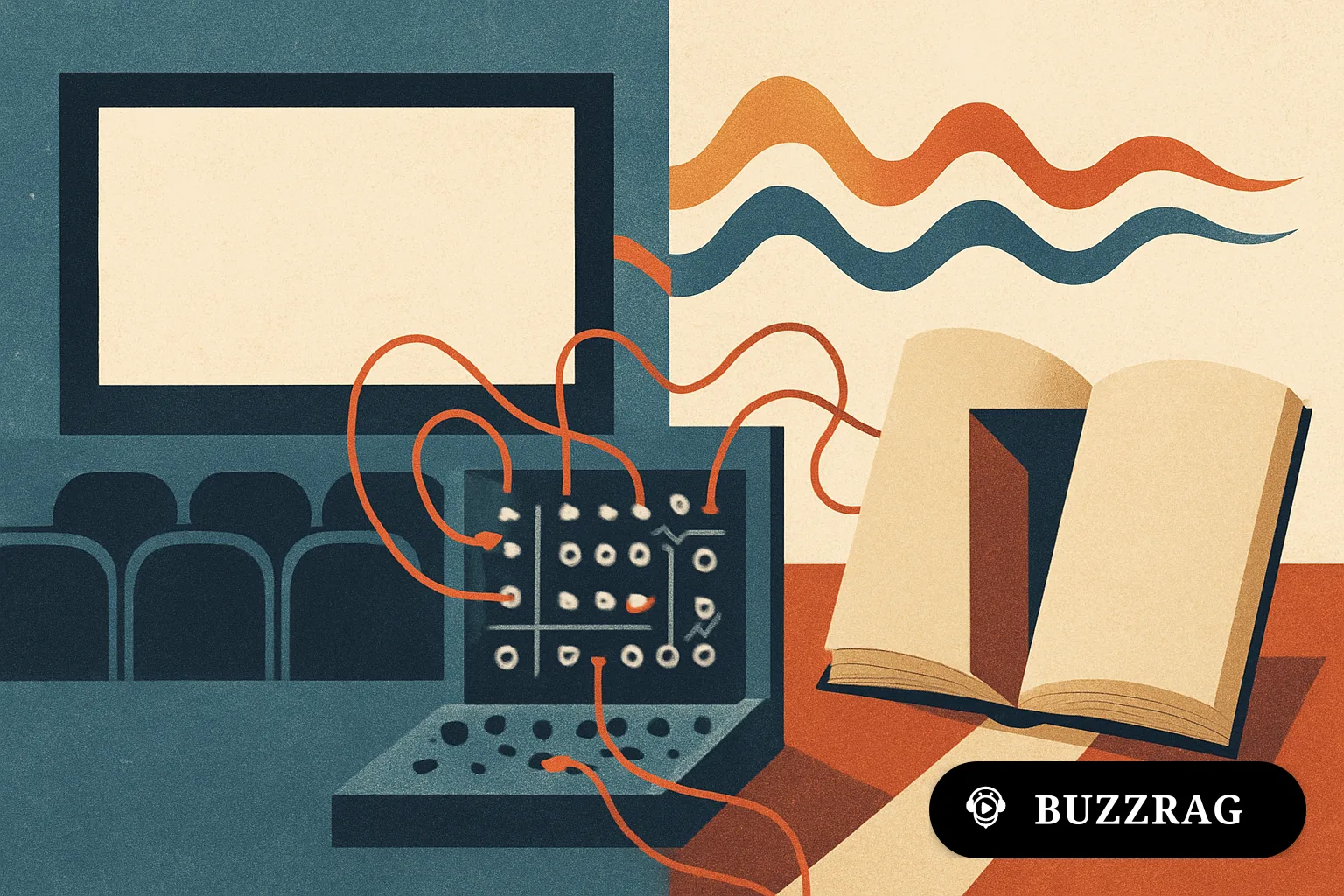
The Quietus’s Organic Intelligence series turns its attention to modular music from Iran, bringing a scene often encountered through broad geographic labels into focus as a field of musical practice. The feature’s subject—sound built through modular electronic systems—offers a way to think about composition as a conversation between performer, circuitry and chance, rather than as a fixed arrangement alone.
That shift in attention matters in a music press where artists outside familiar Western circuits can be reduced to national identity or treated as exceptions. A focus on the tools and ideas of making music encourages a more specific kind of listening: not simply asking where a sound comes from, but how it is assembled and what choices shape it. With the series format creating room for discovery, this installment can widen the map of experimental electronic music without pretending one feature can stand for an entire country or scene.
The Avalanches return to the language of memory
The Avalanches are back in the culture conversation with No Bad Memories, a title that puts recollection and its complications front and centre. The item’s appearance across music outlets signals renewed attention to a group whose work is closely associated with collage and the transformation of fragments into something newly expressive. Even before the specifics of the record come into view, the title suggests a productive tension: memory can comfort, distort and edit as much as it preserves.
That makes the project’s return an opening to think about how contemporary music handles the past—not as a sealed archive, but as material that can be sampled, rearranged and heard differently. The most interesting question is how the record’s own choices give shape to that idea: whether nostalgia becomes a refuge, a provocation or something more unsettled. Listeners will have the chance to judge the work on its details, while the conversation around its title offers a useful reminder that remembering is never quite a neutral act.
Shygirl turns ambition into a family story
Shygirl’s rise is framed not as overnight discovery but as hard-won work shaped by a working-class upbringing and a determination to make her family’s sacrifices count. The profile follows an artist admired by major pop figures as she moves toward a broader mainstream audience and begins branching into rock. It also makes room for a personal life newly buoyed by love, without suggesting that success has arrived by luck alone.
Her account complicates the familiar pop narrative in which confidence appears effortless and ambition is treated as a personality trait. Here, fearlessness has a history: preparation, pressure and the expectation that opportunity must be made to justify what came before. Moving across genre can be an artistic choice and a way to reach new listeners, but it also raises the question of how an artist keeps control while entering larger rooms. Shygirl’s own perspective gives the story its centre, shifting the focus from celebrity endorsements to the labour and values behind the ascent.
A national prison reading drive puts books within reach
A new scheme backed by author Lee Child aims to distribute nearly half a million books across prisons in England, Wales, Scotland and Northern Ireland this autumn. Child, named the UK’s first prison reading laureate, argues that improving literacy is a practical part of rehabilitation and a way to address reoffending. The scale of the initiative makes access—not just the abstract value of reading—the central question.
Books can offer pleasure, knowledge and a route into language for people whose opportunities to read may have been limited, but distribution alone cannot guarantee those benefits. The programme’s longer-term significance will depend on whether people can find books that interest them, get support with reading where needed, and keep access to reading beyond the initial push. Treating prisons as places where cultural life still matters challenges the idea that learning and imagination are privileges reserved for people outside. The scheme makes a substantial promise; its impact will be measured in the conditions that help readers make those books their own.
The next test is whether these stories can move beyond the headline: whether films make room for accountable witnessing, whether artists’ cross-border and cross-genre work finds attentive audiences, and whether access to books becomes lasting practice. Watch for the conversations that follow the screenings, the listening, and the first books opened.