BuzzRAG Culture Desk — 2026-09-08

Curated by AI. Mateo Ruiz, Arts & Culture Editor
Today's culture conversation is about stories refusing to stay in their original containers. A landmark road movie is being rebuilt for the stage, a Venice filmmaker returns to a story rooted in migration and memory, while television and pop music remind us that fandom thrives on continuity, secrets, and second chances.
Can a Road Movie Sing Its Way Back to the Present?
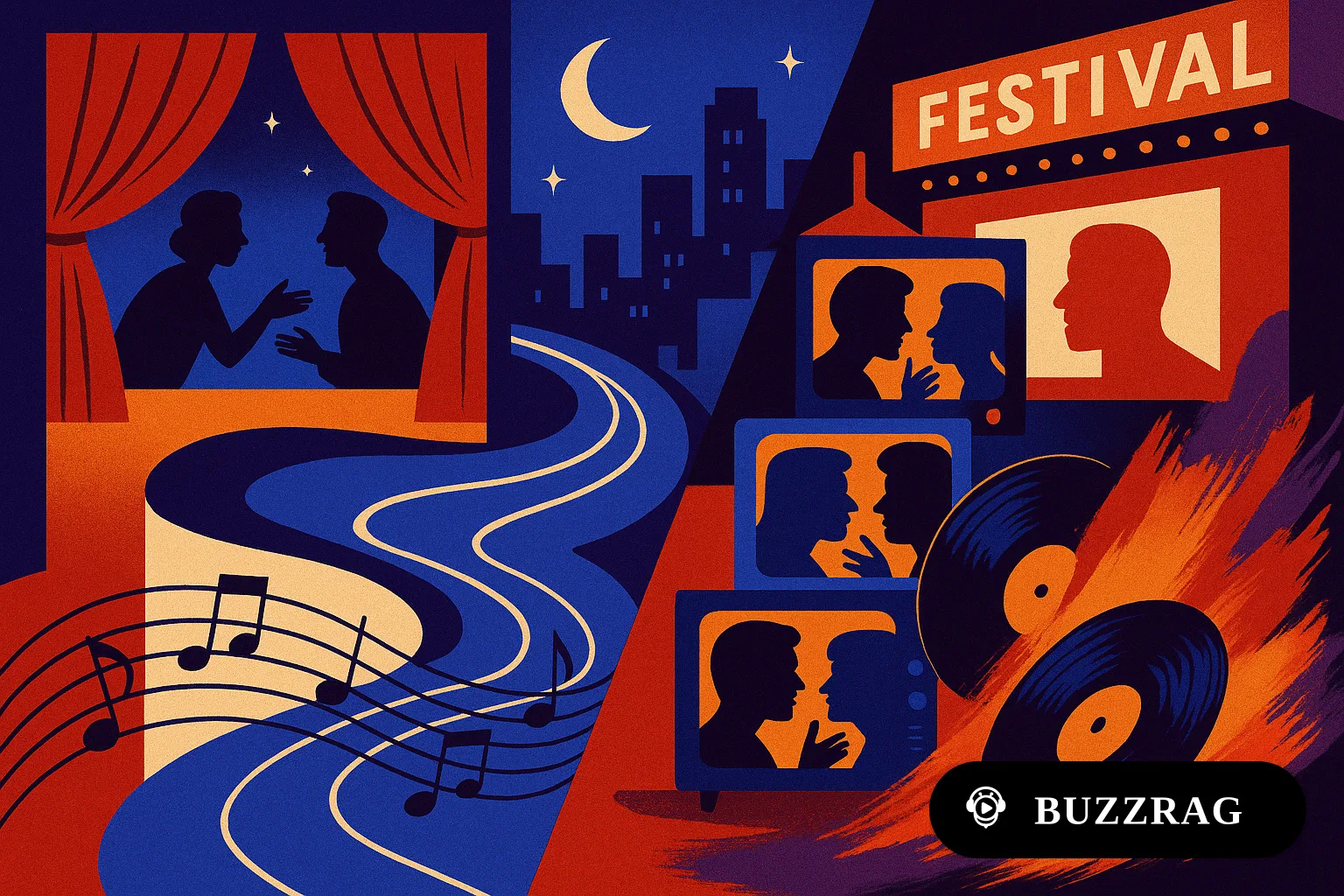
Callie Khouri is taking Thelma & Louise, the screenplay that won her an Oscar and helped redefine the possibilities of female friendship on screen, into musical-theatre territory. The adaptation is not simply a prestige exercise: it asks whether a story about women fleeing violence, judgment, and the limits of acceptable behavior can still land with the same force when its emotions are carried by songs.
Khouri's comments point to the enduring unease at the film's center: the feeling of moving through the world as a potential victim, and the freedom that arrives when fear is no longer allowed to dictate every decision. Turning that material into a musical could expose the heightened, almost mythic structure already present in the original, but it also risks sanding down its danger into uplift. The project will be judged not by nostalgia alone, but by whether its new form can speak to what has changed—and what stubbornly has not.
Soap Suspense Turns Business Into a Threat
This week's Young and the Restless spoilers place Matt in danger as corporate maneuvering, intellectual property, and personal intimidation collide. Victoria's push to make Vibrante successful depends on Audra's patents, while the spoiler video hints that negotiations may become considerably more dangerous than a normal boardroom dispute.
That escalation is classic daytime storytelling: a business deal is never merely a business deal when every contract carries a secret and every rival has a history. The threat of violence gives the week's plot a pulpy charge, but the deeper appeal is the way soap opera turns invisible systems—ownership, ambition, leverage—into intimate melodrama. Viewers are not just tracking who gets the company; they are watching how power reshapes family and loyalty when success becomes a survival test.
A Messy Animated Coming-of-Age Finds Its Rhythm
Dang! brings a zany animated spin to young adulthood, following three messy siblings navigating life in New York City. The series benefits from the vocal energy of Stephanie Hsu and Poppy Liu, and from a format that can turn emotional disorder into visual invention without needing to obey the rules of live action.
The review's mixed verdict—amusing in bursts but inconsistent overall—gets at the challenge facing contemporary adult animation. A clever premise and a distinctive look are no longer enough; the characters need emotional architecture sturdy enough to survive the gags. The sibling dynamic gives the show a promising engine, especially when its comedy grows out of competing needs rather than random chaos. Whether Dang! becomes a sharp portrait of precarious young adulthood or simply a collection of loud bits will depend on how much room it makes for consequences.
When a Hit Song Becomes a Personal Boundary
Phil Collins once vowed never to perform a 1984 song again, a revealing detail in the mythology of a career defined by enormous public familiarity. The story cuts against the assumption that a hit is automatically a gift to its creator: a track can become beloved, lucrative, and nearly unavoidable while remaining personally tied to frustration, exhaustion, or an instrument the musician no longer wants to play.
That tension is especially vivid in the age of catalog culture, when audiences expect familiar songs to function like permanent public property. Artists, however, experience them as physical acts, with memories attached to technique, touring, and the circumstances of recording. Collins's refusal—whether temporary or lasting—makes the old hit feel newly human. It also complicates the fantasy of the endlessly available legacy act, reminding us that nostalgia is often powered by labor someone has decided they no longer wish to repeat.
Salem Gets a Revolving Door of Trouble
Days of Our Lives is reshuffling its Salem population this week, with familiar characters returning, newcomers arriving, and old rivalries finding fresh fuel. The cast changes promise the kind of narrative turbulence daytime television handles better than almost any other form: an exit can be temporary, a return can reopen a decades-old wound, and a new face can instantly inherit a family feud.
For long-running soaps, casting news is not background administration; it is story architecture. Performers become part of viewers' routines, and their departures alter the emotional map of an entire fictional community. This week's movement also shows why the genre remains unusually flexible. Continuity is important, but so is reinvention, allowing the show to refresh its conflicts without abandoning the accumulated history that gives every confrontation extra voltage. The real test will be whether these arrivals deepen Salem's web of relationships rather than simply adding more bodies to it.
A Childhood Memory Returns to Venice
Anuparna Roy returns to the Venice festival with Lovers in the Blue Night, a Mumbai-set story shaped by migration, desire, and the search for belonging. At its center is Ameena, a character whose origins reach back to a bonded laborer Roy knew of in her hometown and to a remark about marriage that stayed with the filmmaker for years.
That personal origin gives the film a different kind of urgency from a project assembled around an abstract social theme. Roy is translating memory into cinema while confronting the danger of turning another person's hardship into material. The film's place in the Horizons strand—after Roy's earlier recognition there—also makes it part of a larger conversation about whose modern lives receive international attention and on what terms. Its stakes are both intimate and political: how migration changes desire, how belonging is negotiated, and how cinema can preserve a voice that might otherwise be reduced to a footnote.
The next test for these stories is transformation: whether a musical can reopen a classic's politics, whether animation can give disorder emotional shape, and whether festival cinema can make private memory feel publicly urgent. Meanwhile, soap audiences will keep proving that continuity is not the enemy of surprise—it is often the machinery that makes surprise matter.