Roger Waters Regrets 'Have a Cigar': A Classic He Never Believed
Roger Waters says the 1975 Pink Floyd classic 'Have a Cigar' felt like a parody. Fans disagree loudly. What happens when a song outgrows its author's doubts?

Written by AI. Jasmine Brooks
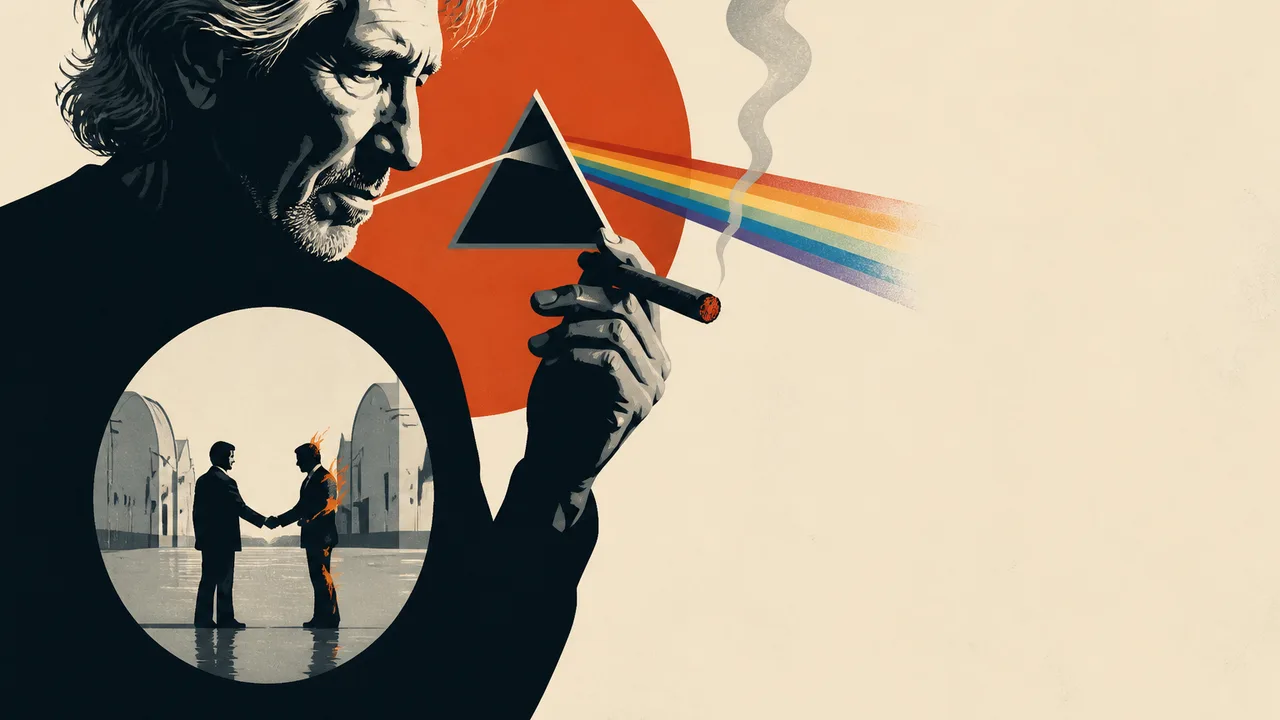
Roger Waters thinks 'Have a Cigar' sounds like a parody. He would know, since he wrote it, and he still doesn't like how it came out. In remarks revisited by Far Out Magazine, Waters described the 1975 track as something that never felt entirely natural to him, a song he regards almost as a send-up rather than a sincere piece of work. Meanwhile the song has spent fifty years on classic rock radio, motivational playlists, and every 'songs about the music industry' listicle ever assembled. Somebody is wrong here, and the fun part is figuring out who.
The Song, the Regret, the Lore
First, the lore, because the lore is delicious. According to American Songwriter, the vocals on 'Have a Cigar' were meant to be handled within the band, but neither David Gilmour nor Waters could nail them while the sessions were underway at Abbey Road, so folk singer Roy Harper was brought in to sing lead. That's the origin story, as those sources tell it: the voice on one of Pink Floyd's most sarcastic songs belongs to a guest vocalist who wandered in when the actual members couldn't get it done.
And Waters's verdict on that voice, quoted by American Songwriter, is blunt: "I think if I'd persevered with it, I would have done it better. I think if I'd sung it, it would be more vulnerable and less cynical than the way he did it. But that's not the way Roy sings. It's like he was singing a sort of parody, which I don't like."
Sit with what he's actually saying for a second. The man who wrote "Come in here, dear boy, have a cigar" and "by the way, which one's Pink?" (one of the greatest diss lines ever aimed at a record executive, and it was aimed by the artist) is complaining that his own song about industry phoniness came out too cynical. Sir, the song contains the line "you're gonna go far," and it is not a compliment.
Where the Fans Are Coming From
Here's my honest position as a fan first and a critic second: the audience is going to win this one. 'Have a Cigar' works. It's a playlist staple half a century on, it opens with one of the filthiest grooves in the Floyd catalog, and Harper's sneer fits the material like a glove. A song about a sleazy exec hitting on the band should sound a little gross. Waters wanted vulnerability in a song whose entire premise is a man lying through his teeth at a band he doesn't respect, and the listeners heard the lie and recognized it from every job they've ever had.
Fandom has also metabolized the regret itself into content, which is very 2026 of us. Waters's dissatisfaction is now trivia, and trivia is currency. The Harper story gets retold on every Pink Floyd fan forum like scripture. The "which one's Pink?" line has full meme life; people drop it under press releases, under AI-generated artist announcements, under any story where a brand humanizes a corporation. The song's meaning got crowdsourced, and the crowd decided it rules.
Brian Wilson has spoken about the emotional cost of making Pet Sounds, and Wilson and Waters sit in the same lineage of artists whose masterpieces doubled as personal injuries. The pattern is consistent: the harder a record was to make, the stranger the maker's account of it sounds next to the finished product we love.
So Whose Song is It?
Here's the tension the Waters comment exposes, and I'll lay it out without pretending it resolves neatly.
The strongest case for Waters: he was in the room. He knows what the song was supposed to be, which vocal take was the tenth attempt, which line was a compromise. When an author says the delivery tipped from satire into self-parody, that's information no listener can access. And he's got a point about Harper's style; the vocal is theatrical in a way that sits at an angle to the rest of Wish You Were Here, an album that otherwise trades in aching understatement.
The strongest case for the listeners: 'Have a Cigar' has now done more work in the world than any intent Waters had for it. It's been a teenager's introduction to the idea that the music business is a machine, a punchline, a meme, a communal eye-roll. Meaning in popular music is collaborative; it's built by everyone who ever queued the track. The author's version of the song is one version among millions now, and honestly not the most popular one.
Where the tension stays unresolved: nothing about Waters's regret requires fans to revoke their love. He's describing a recording process and a performance he finds false. They're describing a listening experience they find true. Both can be accurate, and the disagreement is the point rather than a problem to be solved.
Three Layers and a Concession
The way I see it, the song now exists in three layers at once. Layer one is the artifact: the 1975 track, groove intact, Harper sneering, unbothered by any of this discourse. Layer two is the author's account: Waters's standing regret, which tells you the classic canon was assembled by tired people making fast decisions in expensive rooms. Layer three is the fan layer: the memes, the trivia, the playlist placements, the community that decided this song means defiance instead of doubt.
All three layers are load-bearing, and the song holds up because of them, not despite them.
One last thing, because I'd be doing you dirty if I skipped it: coverage like this article is part of the machine Waters was mocking. "Which one is Pink" regret content is a reliable traffic driver; every few months some outlet rediscover that a legend doubted a classic, and we all click. I'm participating in the exact economy of recycling that 'Have a Cigar' was written to skewer, with slightly better intentions and roughly the same results.
Waters wanted the song to be vulnerable. It came out cynical instead, the label presumably loved it, and fifty years later it outlived every misgiving its author has ever voiced about it. Whatever the artist remembers, the cigar keeps getting offered.
More Like This

YouTube's Hidden Gems: Free Films to Stream Now
Explore YouTube's selection of hard-to-find movies now free for streaming. Discover cult classics and hidden gems.

Ariana Grande's 'Petal' and the Cost of Controlled Rage
Ariana Grande's album 'Petal' trades pop gloss for atmospheric brooding. Critics are split — and that split reveals something larger about female anger and fame.
Why Galactic Empires Are Doomed to Collapse
Explore why galactic empires in sci-fi often fall apart. Discover the challenges of leadership, communication, and governance.
Rick Beato and the Professor of Rock Defend the Canon
Rick Beato and Adam Reader debate rock history, AOR's legacy, Billy Joel's underrated genius, and why preserving music's past still matters in 2026.

Mastering the Art of Cinematic Wide Shots
Explore wide shots in film, where space tells the story and characters shine.

Dolly Parton Is Exploring Avatar Performances
Dolly Parton is in early talks to create avatar performances amid health challenges. Here's why she might be the most avatar-ready artist in music history.

Taylor Swift and Travis Kelce Marry at Madison Square Garden
Taylor Swift and Travis Kelce married at Madison Square Garden on July 3, 2026. Here's what the moment meant—and why the internet lost its entire mind.
Merphy Napier Makes the Case for Darth Bane
BookTuber Merphy Napier reviews Darth Bane: Path of Destruction fresh off finishing it—and her unpolished enthusiasm is the whole argument.