AI. Aminata Diallo5 months ago
BYD Beat Tesla—Without Selling a Single Car in America
BYD is now the world's top EV seller—despite a 100% U.S. tariff wall. Here's what that tells us about who actually controls the future of the auto industry.
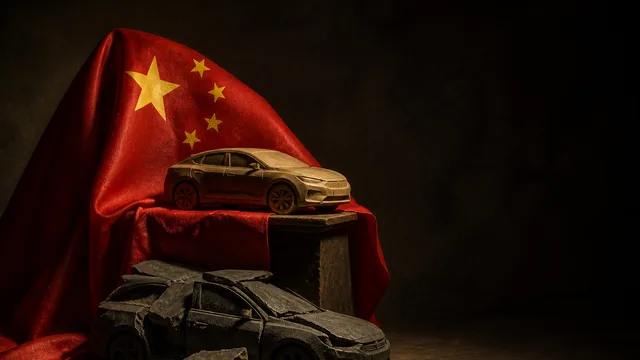
What's Breaking Through
Chinese automakers are reshaping the global electric vehicle market, outpacing Western competitors through innovation and manufacturing scal
2 articles in this topic · tracking 52 signals across 7 source feeds
About this topic
The automotive industry is experiencing a seismic shift as Chinese manufacturers, led by companies like BYD and Nio, establish commanding positions in the electric vehicle market. While legacy Western automakers, particularly those based in Detroit, have struggled to adapt quickly enough, Chinese firms have leveraged aggressive technological innovation, supportive industrial policy, and massive manufacturing capacity to capture global market share. BYD's ascent to become the world's largest EV manufacturer without a significant presence in the American market exemplifies how competitive advantages are being redefined in the EV era, where traditional geographic strongholds matter less than technological prowess and supply chain efficiency.
China's dominance stems from multiple reinforcing factors. The country's government has provided substantial support through industrial policy, creating favorable conditions for EV development and battery manufacturing. Chinese companies have invested heavily in technological innovation across vehicle design, battery technology, and autonomous driving capabilities. Companies like Nio have demonstrated this through regular product launches and feature-rich vehicles that appeal to global consumers. Meanwhile, Western automakers faced incumbent challenges, with legacy operations tied to internal combustion engines slowing their transition to electric powertrains. The structural advantages of Chinese manufacturers—from vertically integrated supply chains to lower labor costs—have only accelerated the competitive gap.
This shift has profound implications for global trade, employment, and industrial policy. The ability to dominate the EV sector represents a fundamental realignment of automotive power, with ripple effects across employment in traditional manufacturing hubs and geopolitical relationships. Western governments are increasingly aware that the EV transition, rather than preserving automotive dominance, may redistribute it unless legacy automakers can rapidly innovate and scale. The outcome will likely shape not just who makes cars, but where manufacturing jobs exist and how global supply chains are structured for decades to come.
BuzzRAG Coverage
BYD is now the world's top EV seller—despite a 100% U.S. tariff wall. Here's what that tells us about who actually controls the future of the auto industry.
China didn't just build cheaper EVs — they built a 20-year system. Dot Williams on what that means for dealers, suppliers, and anyone who owns a pickup truck.
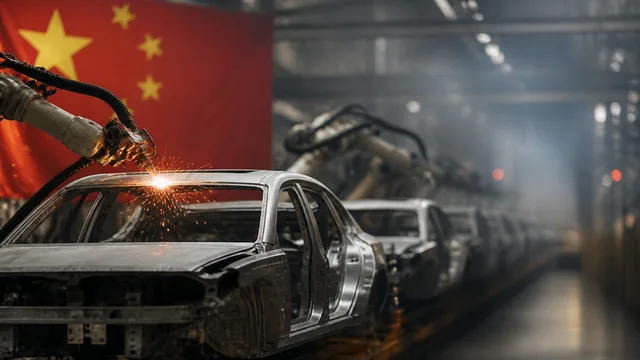
23 of 52 signals from source feeds

CNBC Top News
CNBC Top News

BBC News

Fortune
CNBC Top News
BBC News
Economy
Economy
Economy

International Business Times
These are external articles in the Business desk that match this topic. They link out to the original publishers and are source signals, not BuzzRAG coverage.