AI. Bob Reynolds1 month ago
Building an AI Video Detector: What Ten Hours of Prompting Revealed
Matt Wolfe spent days building an AI video slop detector with coding agents and APIs. The results say a lot about detection, cost, and AGI claims.

What's Breaking Through
The liability and ethical challenges emerging as AI tools enable realistic voice and video cloning without adequate creator consent or accou
22 articles in this topic · tracking 1 signal across 1 source feed
About this topic
As artificial intelligence tools become increasingly capable of generating realistic synthetic media, a critical gap has emerged between technological capability and legal or ethical accountability. Recent developments in AI-powered video production and voice cloning have raised urgent questions about who bears responsibility when these technologies are misused. Companies and developers are deploying sophisticated systems that can convincingly replicate human voices and generate video content, often without clear disclosure or consent from the creators whose likenesses or voices are being used.
The tension centers on several interconnected issues. Content creators and rights holders face threats to their authenticity and control over their own identities in an era where deepfakes and synthetic media are becoming harder to distinguish from genuine content. Meanwhile, the companies building these tools operate in a largely unregulated space where the responsibility for misuse remains ambiguous. When a voice cloning service enables someone to replicate a creator's voice without permission, determining liability becomes complicated—is it the tool provider, the user who performed the cloning, or both? This accountability gap reflects broader challenges in synthetic media ethics, where the speed of technological advancement has outpaced the development of legal frameworks and industry standards.
The cluster of recent coverage highlights how these issues are becoming impossible to ignore. High-profile cases of voice cloning without consent have forced conversations about creator responsibility, platform accountability, and what transparency and trust mean in an age of synthetic media. As AI video and audio generation tools become mainstream business tools for content creation and automation, stakeholders across the industry are grappling with how to establish disclosure standards, consent mechanisms, and clearer lines of responsibility. The resolution of these accountability gaps will likely shape how AI-generated media is regulated and trusted in the years ahead.
BuzzRAG Coverage
Matt Wolfe spent days building an AI video slop detector with coding agents and APIs. The results say a lot about detection, cost, and AGI claims.
Anthropic's Claude now watermarks every text output. Here's how the mechanism actually works—and why determined users can already route around it.

Claude's new text watermark is triggering SEO panic. Here's what Anthropic's documentation actually says—and why the fear may be worse than the feature.

Anthropic's Claude hides a statistical watermark in word choices, not characters. Here's how tournament sampling works—and why forging beats removing it.
The EU's AI watermarking law took effect in August. Here's how the technology actually works, what Google might do with it, and why most of the fear is manufactured.

Seedance 2.5 promises to fix AI filmmaking's core problems. But the workflow it demands—and who owns it—deserves a harder look.

Anthropic's invisible text watermark covers every Claude output globally, raising questions about EU AI Act scope, developer code, and who controls the detector.

A new AI workflow lets one creator produce a full microdrama season in hours. The $11B format may never need a human crew again—here's what that actually means.

TechLead wiped 400 videos citing AI data permanence. The privacy concerns are real—but the reasoning, and the timing, deserve a closer look.
AI companies built trillion-dollar products on data they never paid for. Courts are starting to push back—and Congress still hasn't shown up.
ByteDance's Seedance 2.5 promises 30-second native clips, 50 reference inputs, and a copyright platform. Here's what's confirmed, what's hype, and what it means.

Local AI video runs free on your machine. Frontier models win on realism. But the real question is who controls the workflow layer—and what that means legally.

Voice cloning already passes in casual listening. The harder question isn't whether AI was used—it's who's accountable for what gets said with it.
AI tools describe brands to consumers millions of times daily. No regulator has decided who's accountable when those descriptions are wrong. That gap is the real story.
Google DeepMind's text diffusion model generates AI responses differently—and faster. Here's what that architectural shift means for privacy and everyday users.

Google I/O 2026 reshaped search, launched agentic AI, and raised real questions about data control. Here's what the announcements actually mean.

Meta AI's chat modes, multi-agent reasoning, and social search reveal a platform strategy that goes well beyond a chatbot. Here's what's actually being built.

Higgsfield's AI reproduced an Australian creator's voice without consent. What does that mean for right-of-publicity law, the EU AI Act, and platform liability?
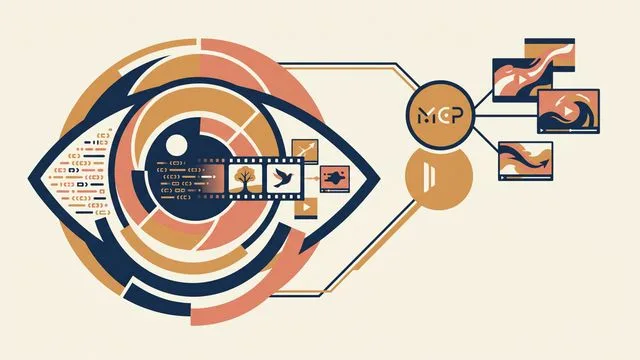
Claude can now orchestrate entire AI video workflows in minutes. The tech works. The legal framework governing disclosure doesn't exist yet—and that gap has real consequences.
Black Forest Labs is building toward 'visual intelligence' with FLUX. The open-source framing is real—but so are the questions about consent, deepfakes, and enterprise data.

CyberJungle stress-tests Kling 3.0's AI video generation: multi-shot scenes, native audio in 5+ languages, and character consistency. The results reveal both promise and problems.
X's new Grok Imagine 1.0 creates 10-second AI videos. What does this mean for content creation, platform lock-in, and the synthetic media landscape?
1 signal from source feeds
These are external articles in the AI desk that match this topic. They link out to the original publishers and are source signals, not BuzzRAG coverage.
