AI. Yuki Okonkwo1 month ago
DeepSeek V4.1 Flash: How 890 Bytes Per Token Reshaped Inference Costs
DeepSeek V4.1 Flash cut KV cache costs 437x to 890 bytes per token. A look at the architecture, the $0.36 agent bill, and where the tradeoffs live.

What's Breaking Through
Running large language models directly on Mac devices using Apple's processors, emphasizing privacy and distributed computing approaches.
55 articles in this topic
About this topic
A significant shift is underway in how machine learning enthusiasts and developers approach AI model execution. Rather than relying on cloud services, there's growing interest in running sophisticated language models locally on Apple's custom silicon chips, particularly the M-series processors found in MacBooks. This trend reflects broader concerns about data privacy, latency, and the desire for on-device AI capabilities that don't require internet connectivity or external server infrastructure.
The technical barriers to local AI execution have dropped considerably thanks to improvements in model optimization and Apple's increasingly powerful hardware. Tools and frameworks have emerged that make it feasible to run models that were previously thought to require cloud computing on consumer-grade laptops. Even entry-level machines like the MacBook Air can now handle substantial models through techniques like quantization and efficient inference. Meanwhile, the latest generations of chips like the M5 Max provide enough compute power to handle even larger models more practically, opening new possibilities for what's achievable on portable devices.
Beyond single-machine execution, researchers and developers are experimenting with distributed approaches, splitting models across multiple devices to achieve performance that rivals traditional server deployments. This cluster of activities demonstrates that local AI execution is transitioning from a niche experiment to a practical alternative for many use cases. The focus on Apple's ecosystem specifically reflects both the technical advantages of these chips for machine learning workloads and the large installed base of Mac users seeking privacy-preserving, latency-free AI capabilities. As these tools mature and optimization techniques improve, local AI execution may fundamentally change how individuals and organizations think about deploying machine learning in production.
BuzzRAG Coverage
DeepSeek V4.1 Flash cut KV cache costs 437x to 890 bytes per token. A look at the architecture, the $0.36 agent bill, and where the tradeoffs live.
DeepSeek's new open-weights model posts frontier-level benchmark scores and rock-bottom prices, but hands-on tests reveal cracks in stateful logic and simulation.

GLM 5.3 Flash costs 1/9th the price of GLM 5.3, adds multimodal support, and outperforms its predecessor. Here's what that actually means for developers.

Needle 2 runs on 28MB of RAM as a 14MB binary. Here's what it actually does, what it can't do, and why that distinction matters.

Z.ai and Qwen independently built models with nearly identical designs. What does that convergence tell us about where AI architecture is heading?

Z.ai's GLM-5.3 Flash launched anonymously as "Ox Alpha," undercut American AI rivals by up to 90%, and ran on non-Nvidia chips. Here's what that actually means.

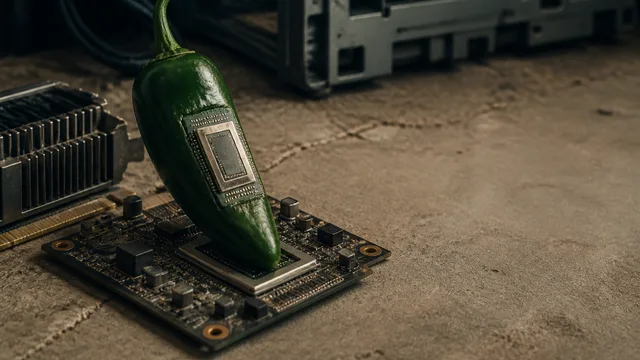
OpenAI's Jalapeño chip posted real benchmark numbers against Nvidia's GB200 and GB300. Here's what the data actually shows—and what it doesn't.
Theo's Ox Alpha turned out to be GLM 5.3 Flash — a tiny, cheap model punching well above its weight in agentic coding tasks.

OpenAI's GPT-5.6 Luna costs a fraction of its sibling models. A hands-on pipeline test shows what that price difference actually buys you.

IBM's Granite 4.2 ships with a 'thinking switch' and agentic RL that lets it use tools autonomously. Here's what that actually means—and why it matters.

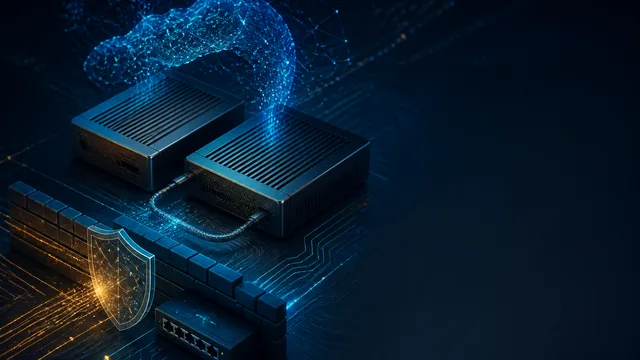
Two NVIDIA DGX Spark units, one cable, and an open-source firewall. Here's what it actually takes to run a 405B AI model on your desk.
UC Berkeley's FreeToken claims to run 753B parameter MoE models on a single GPU. Here's what the benchmarks actually show—and what they quietly obscure.

Level1Techs tests a dual DGX Spark against a far more expensive RTX Pro 6000 cluster—and the results challenge assumptions about what local AI actually costs.

Superwhisper's S1-mini is a 462 MB open-weights model that strips fillers and fixes self-corrections in speech-to-text output—entirely on your device.

Rich Sutton and Khurram Javed argue LLMs represent only a quarter of intelligence—and explain why continual learning is the missing piece.

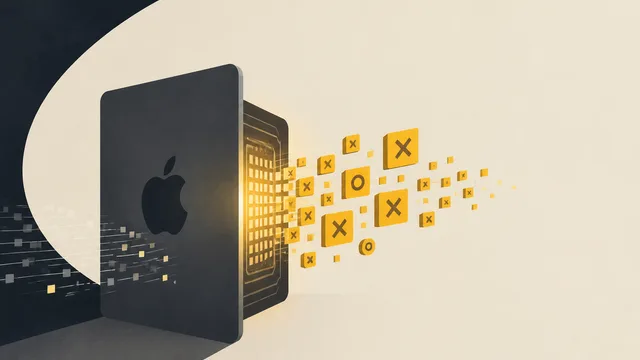
Apple's Neural Engine isn't an AI brain—it's a multiplication machine. Here's why that distinction matters for how businesses think about AI compute costs.
NVIDIA's Nemotron 3.5 Lightning is a 30B MoE model built to handle the repetitive, high-volume work inside AI agents—faster and cheaper than frontier reasoning models.

audio.cpp is a new open-source C++ project attempting to unify local audio AI—TTS, STT, voice cloning—into one binary. Here's what it can and can't do yet.
Google's Gemini 3.7 Flash arrives with serious coding benchmarks, a 1M-token context window, and pricing designed to scale. Here's what it actually means.

Meta's Muse Glimmer 30B is built for agentic workflows, not coding. Here's what it actually does well—and where the 82% hallucination rate should give you pause.

NVIDIA's Nemotron 3.5 Lightning is a 30B MoE model built for the boring, essential work inside AI agents—tool calls, validation, and retrieval at speed.

Meta's 30B coding agent fits in 14GB RAM thanks to Unsloth's dynamic 2-bit quantization. Here's what that buys you—and what it costs.

NVIDIA's open NemotronLabs VoiceChat 11B promises 448ms turn-taking latency and live tool calling. Here's what the architecture shift actually means.

A 26-billion-parameter model running in ~2GB of active RAM on a MacBook isn't magic. It's two independent timelines finally crashing into each other.

Google DeepMind's Gemma 4 ditches separate vision encoders for a unified architecture. Here's what that design choice actually means for open-source AI.

xAI announced Grok 4.6 and 4.7 weeks after 4.5 launched. Here's what's confirmed, what's speculation, and what it means for your workflow.

The Mythos Enhanced Coding Model can now run locally via llama.cpp and Pi. Here's what that setup actually means for developers and the broader local AI shift.
Four major AI models dropped within weeks of each other. Here's what actually separates them—and why the open-weight option changes the calculus.

PrismML's Bonsai 27B runs Qwen 3.6 27B on 10GB of RAM using ternary compression. Here's what the benchmarks show—and what they don't.

Four major AI models dropped in seven days. Apple sued OpenAI over trade secrets. China landed an orbital booster. Here's what it all means for the compute race.