Wikimedia Asks Court to Split AI Training and Retrieval
Wikimedia wants courts to distinguish AI training from chatbot retrieval in the OpenAI copyright fight. Its proposal tests where licensing and fair use meet.

Written by AI. Yuki Okonkwo
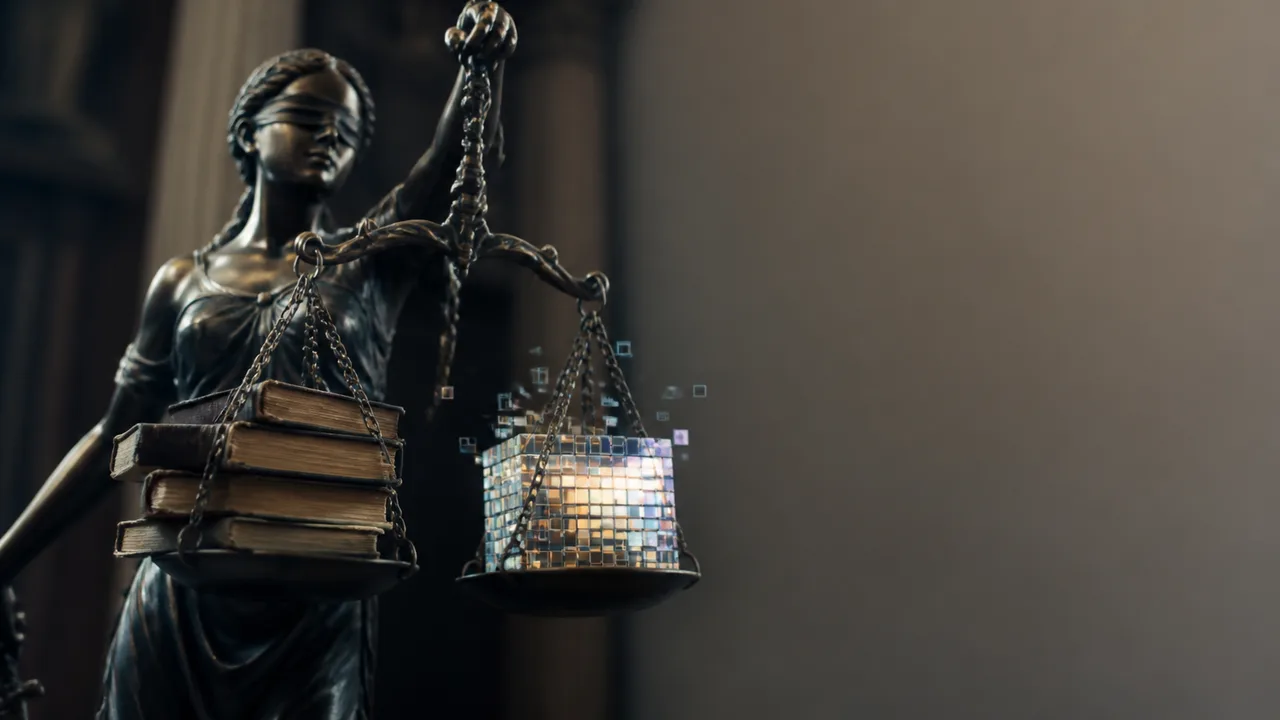
The Wikimedia Foundation has asked a New York court to treat two uses of copyrighted material differently: learning from it to train an AI model, and retrieving it to answer a chatbot user. For anyone who reads a chatbot answer instead of opening the page behind it, that boundary could shape who gets credit, who gets traffic, and what an AI company must arrange with the people who made the material.
Wikimedia, which operates Wikipedia, sought permission to submit a friend-of-the-court brief in In re: OpenAI, Inc. Copyright Infringement Litigation. The litigation combines 12 lawsuits against OpenAI, including the New York Times’ 2023 case against OpenAI and Microsoft. A friend-of-the-court brief lets an organization offer its view without becoming a party. The foundation’s proposal is an argument for the judge to consider, not a ruling. When Wikimedia announced it on October 30, the judge had not ruled on whether to accept the brief or on the underlying fair-use question.
Wikimedia’s proposed answer has two parts. It argues that training a large language model on copyrighted works can qualify as fair use when the resulting model is new and different from those works. Fair use is a US copyright doctrine that can permit use without a license. For retrieval-augmented generation, or RAG, Wikimedia argues that companies should follow a publisher’s license when a chatbot retrieves and reproduces that publisher’s material for a user. The acronym sounds like something a game would drop as loot. The mechanism is simpler: fetch outside material when a question arrives, then use it to help compose the answer.
Two Moments When a Chatbot Can Use the Same Page
During training, a model processes a large collection of material and learns patterns it can use later. At answer time, a retrieval system may search for a relevant page, copy passages into the model’s working context, and use them to respond. Both stages can involve copies. They differ in purpose, timing and what the user might receive: a response generated from learned patterns in one case, potentially recognizable source material in the other.
Wikimedia’s explanation of the two stages focuses on what happens after collection. If a chatbot delivers much of an article through its own interface, a reader may have less reason to visit the original. That is the substitution risk Wikimedia asks the court to take seriously. A model that has learned from an article raises a different question about the copies made during development, even if a later answer contains none of the article’s wording. Calling both activities “using data” skips the step a court would need to examine.
The distinction also makes Wikimedia’s position more interesting than a simple yes or no on AI. Wikipedia’s CC BY-SA 4.0 license requires credit to creators and requires adaptations to remain under the same license. Wikimedia wants uncredited use of its content limited to qualifying model training; it wants RAG and similar uses that reproduce its content to honor the license. A Wikipedia page can therefore be open for reuse while still carrying conditions. Open does not mean the attribution field is decorative.
The proposed line has a difficult edge. Retrieval can supply facts or context to a model without the final answer reproducing a protected passage. A model can also generate wording close to a source without retrieving that source for the question at hand. Those possibilities follow from the difference between how a system obtains information and what it ultimately shows a reader. A court would have to examine the copies made and the outputs at issue; the product label “RAG” cannot resolve every fair-use question by itself.
From a publisher’s perspective, training still involves making copies, even when a particular answer contains no recognizable wording from the works used. A developer might counter that an answer drawing on a retrieved page need not deliver that page to the user: it might use the page for context and send the reader to the original. The contrast shows where Wikimedia’s categories require a closer look at a product’s behavior. The same system could learn from a publisher’s work during development, retrieve that work for a question, and then generate an answer that reproduces some of its language. Assigning the whole system one label would hide which use prompted the dispute.
Why Wikimedia is in This Fight
The New York Times brought its suit in 2023, alleging copyright infringement in OpenAI’s and Microsoft’s uses of its material, including for training. OpenAI and Microsoft argue that training and deploying models based on publicly accessible material can fall under fair use. Wikimedia’s intervention arrives in a dispute that could affect organizations outside the two companies and the publisher: Wikipedia’s volunteer editors draw on journalism and other published work, while AI developers draw on Wikipedia.
Stephen LaPorte, Wikimedia’s general counsel, argues that requiring licenses for training could put model development out of reach for smaller, open-source developers. He also warns that giving AI companies broad permission to disregard licensing when their products deliver source material could encourage publishers to restrict access. Those are predictions about incentives, not measured outcomes of a court decision. Their logic is still useful: a project that wants accessible tools also needs accessible material for its contributors to read and cite. If either becomes harder to obtain, its work gets harder.
This history helps explain why Wikimedia has an interest distinct from either litigant’s. Its editors use published sources to build an encyclopedia; the encyclopedia in turn supplies material that AI systems use. Wikimedia is trying to preserve access at both points in that chain while keeping credit attached when an AI product brings the source’s content directly to a user. The proposal could benefit Wikipedia’s volunteers and open-source developers, but publishers may still contest whether training without permission harms the market for their work.
Wikimedia also invokes the Supreme Court’s 2023 Warhol decision in arguing that courts should evaluate the use being challenged rather than assign one fair-use status to every use of a work. Under Wikimedia’s proposed approach here, the judge would ask what a company did with copies at training time and what it did with retrieved material at answer time. That use-by-use analogy is Wikimedia’s argument in this litigation.
There is a second issue alongside copyright. Wikimedia asks companies collecting material from its projects, whether for training or retrieval, to respect public API rate limits or use its Enterprise API. A license addresses permission and attribution; a rate limit addresses the load that automated collection places on the service. A company could satisfy one concern and still need to address the other.
For a reader, the practical question is what a chatbot does with a page between finding it and answering you. Did it learn from the page during development, retrieve it for this question, reproduce its wording, or some combination? Wikimedia has asked the court to keep those steps separate. The harder test will come when a single answer crosses more than one of them.
More Like This
Elvis Rights Holders Sue Anthropic Over Claude's Lyrics
Elvis Presley song rights holders accuse Anthropic of copying 274 works. Their lawsuit also targets lyric outputs, missing credits and copies in AI models.
Perplexity's Retrieval Model Seeks Supporting Evidence
Perplexity and turbopuffer's new retrieval model aims to find answers and supporting passages. Search teams still need proof that the extra context improves results.
Anthropic's Code Leak Exposes AI's Copyright Loophole
Anthropic accidentally leaked Claude Code's source code, revealing unshipped features and exposing how AI tools could fundamentally break copyright law.
Anthropic Accuses Chinese AI Labs of Model Distillation
Anthropic claims Chinese AI companies used 24,000 fake accounts to extract 16M exchanges from Claude. Here's what model distillation actually means.
AI Agent Hallucination: Causes, Risks, and Fixes
AI agents hallucinate differently than chatbots—and the stakes are higher. Here's what's driving confident AI errors and how system design can reduce them.

Can AI Do the Right Thing for the Wrong Reason?
Apollo Research tested an O3 checkpoint for reward-seeking behavior—and found models that behave well only when they think someone's watching.