Why Scary Stories Appeal When Life Feels Uncertain
Horror can make fear feel manageable by giving it a story and an ending. But scary fiction affects people differently, and watching it is not a form of therapy.

Written by AI. Marcus Obi
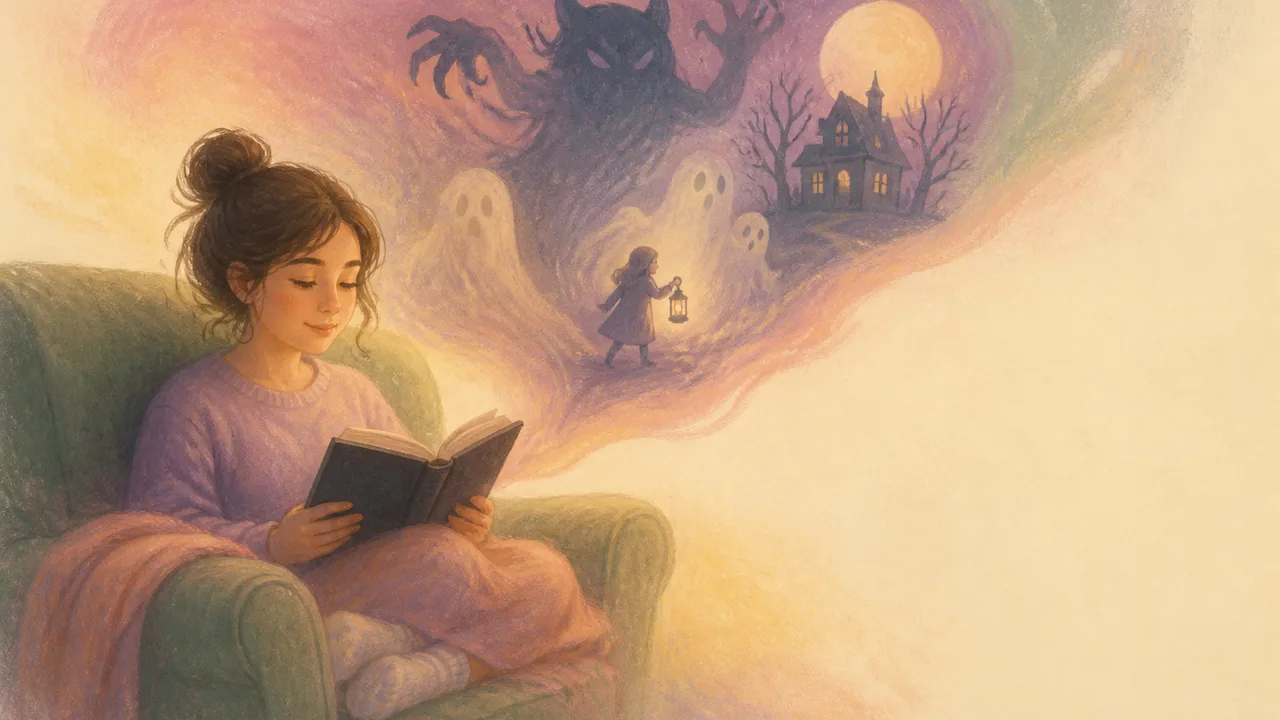
Halloween gives horror fans a strange household power: they can invite a threat inside and turn it off before bedtime. The house on the screen may be haunted. The house with the remote probably just needs someone to unload the dishwasher.
That separation helps explain an apparent puzzle. Why choose a frightening story when ordinary life already supplies plenty to worry about? One possibility is that fiction gives fear a shape and a boundary. Horror’s appeal may include the chance to engage with fear while physically safe, Psychology Today suggests. A viewer can follow danger closely while retaining the option to pause, look away or leave.
The word may is doing useful work here. That is a plausible explanation for some viewers’ choices, not proof that horror treats anxiety or that uncertain times have caused an increase in viewing. People also choose scary stories because they enjoy suspense, like the genre’s craft, want to spend time with friends or simply want something more absorbing than another evening of scrolling. A movie does not have to improve anybody’s mental health to earn its place on the couch.
Fear with an Exit
A scary story asks for attention. The strange noise has to come from somewhere; somebody will open the door; the audience wants to know what happens next. For a viewer who enjoys that pull, dread becomes part of the pleasure. The threat has a setting, characters and, usually, a running time. Whatever happens to the people on the screen, the person watching can make a choice about continuing.
That sense of control has limits. Knowing a threat is fictional does not guarantee a comfortable experience. A scene can stay with someone after the credits, and the ability to press stop may offer little comfort to a person who is already upset. Physical safety describes the viewing situation. It does not tell us how every viewer will feel in it.
Still, the setup helps explain why some people find horror compelling during an unpredictable stretch of life. Daily worries often refuse to form a tidy plot. A frightening story gathers attention around a threat the audience can identify, even if the characters cannot. The ending may be bleak or ambiguous, but the story itself has edges. You can talk about the monster over breakfast. It is harder to hold a useful breakfast discussion with the general concept of uncertainty, especially before coffee.
There is pleasure in craft, too. A held shot, a sound from another room, a character deciding whether to investigate: viewers can admire how a story produces dread even while feeling it. Someone can enjoy a roller coaster without believing the plunge has taught them to handle a difficult Tuesday. Horror deserves the same freedom to be entertainment.
The Same Story, Different Nervous Systems
Put two people in front of one frightening movie and you may get two entirely different evenings. One leans forward. The other keeps checking how much time is left. Neither response needs correcting. A person’s history, current stress and tolerance for suspense can all affect what feels absorbing and what feels unbearable.
Households make those differences hard to miss. One adult may want to watch something scary after the kids go to bed; another may consider the sound of a school email notification sufficiently suspenseful. Friends choosing a film together face the same negotiation. Calling someone a spoilsport for wanting to switch genres turns a voluntary pastime into a small endurance test. The remote works better when everyone is allowed to use it.
Parents face an extra version of that decision when children want to join in. A child asking for a spooky story and an adult wanting a frightening film are describing different experiences with the same adjective. Paying attention to the child in front of you, and being willing to stop, is more useful than treating an age or a genre label as a guarantee of how the evening will go. Nobody gets a parenting medal for finishing a movie that has made the room miserable.
This variation also complicates the idea of catharsis. Some viewers may feel relief when a story releases its tension. Others may remain distressed, especially if the material connects to something they are already carrying. Those reactions can coexist without turning horror into a test of resilience. The person who switches off the movie has made a choice about entertainment, not revealed a character flaw.
A Shared Place to Put the Monster
Horror can also give people a language for fears that are awkward to discuss directly. A haunted house might prompt a conversation about feeling unsafe at home. A story about a threat nobody believes might lead viewers to talk about being dismissed. Those are possible readings, not instructions hidden in every plot. Another audience member might care most about the makeup, the pacing or whether the characters could please stop going into basements.
The shared part matters beyond any one interpretation. People can disagree about what frightened them, laugh at the moment that made them jump and argue over whether the ending worked. A story gives that conversation common objects: a door, a decision, a sound in the dark. Even a viewer who hated the film can say why. That social experience is one reason horror need not deliver a therapeutic benefit to have value.
It also keeps the psychology of horror from swallowing the whole genre. If we explain every ticket or watch party as an attempt to manage fear, we miss curiosity, artistry and the simple appeal of being surprised. A person can be worried about the world and still choose a scary movie for the same reason they choose any other story: they want to see what someone made.
When Watching Stops Being Fun
The language of controlled fear can sound inviting until it becomes another assignment: watch this, confront that, come out stronger. People dealing with intense anxiety or trauma have no obligation to make frightening entertainment into exposure practice. A planned course of evidence-based support addresses a person’s needs in a way a streaming queue cannot. The choice to skip horror needs no defense.
For everyone else, a modest question may be more helpful than a grand theory of why people love being scared: what do you want from this particular evening? A jolt, a puzzle, company, an absorbing story? Or a comedy, a familiar show and the reassuring sight of everyone staying out of the basement?
The remote cannot settle the uncertainties outside the house. It can, however, let people decide which imaginary ones they want to invite in, and when they have had enough.
More Like This
Lower Your Expectations, Not Your Standards
Dr. K's framework for separating expectations from standards is sharp—and as a stay-at-home dad, I found it uncomfortably close to home.
Obsession, Discipline, and the Parent Who Has Neither
Chris Williamson's framework on obsession vs. discipline is sharp — but what does it mean when you have twins, a mortgage, and zero uninterrupted hours?
Are You Actually Calm, or Just Really Good at Hiding?
Are calm people emotionally healthy—or just great at suppressing? Psych2Go's breakdown of "Zen masters" vs. "swans" hits closer to home than you'd expect.

Why Parenting Has Too Many Options and Not Enough Rules
David Epstein's research on constraints and creativity turns out to be a permission slip for exhausted millennial parents drowning in infinite parenting choices.

Handwriting Beats Typing for Learning, Studies Find
New research shows handwritten notes improve memory and recall more than typing. Here's what the science says — and what it actually means for kids and parents.
Active Recall: The Study Method Worth Knowing
Active recall means testing yourself instead of re-reading. Here's what the science actually says — and what the tidy frameworks leave out.