Warhound's Gene-Edited Dogs Face a Test Beyond Cloning
Warhound plans cloned, gene-edited working dogs and protective gear. Earlier dog research shows what is feasible, while health, welfare and performance remain open.

Written by AI. Mei Zhang
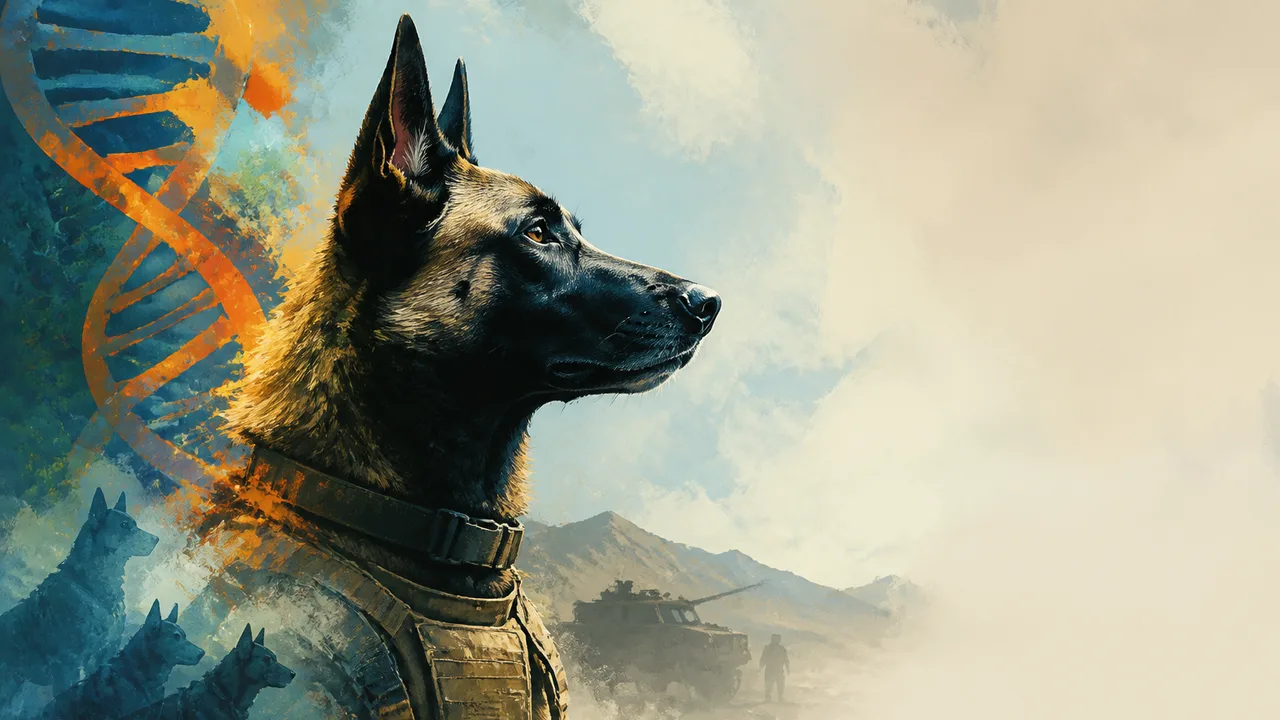
Warhound has raised $200 million to develop cloned, gene-edited working dogs for the US military, law enforcement and emergency responders. The startup, developed by Colossal Biosciences cofounder Ben Lamm and Anduril founder Palmer Luckey, also plans protective equipment for the dogs. The cloning, gene editing, and protective equipment are separate efforts, each with a different test of success.
Lamm said Warhound has collected blood samples from top-performing US working dogs, mostly Belgian Malinois, along with some Labradors and shepherds, and is editing cells with the aim of cloning the donors. The company expects its first puppies in early 2027. Its initial genetic goals concern health conditions such as hip dysplasia; Lamm has floated more ambitious changes to dogs’ abilities for later. A puppy born on schedule would show that one stage of the plan worked. It would take a healthy adult dog doing a job well to test the larger promise.
The simplest way to understand the program is as a sequence. Select dogs that already excel at demanding work. Try to make genetically related puppies. Edit genes in pursuit of healthier dogs. Eventually, explore whether edits can improve performance. Add equipment intended to protect them and help them work with handlers. Success at the first step doesn’t give the team a free pass through the others. A good recipe can be copied; dinner still depends on the ingredients, the kitchen and the cook. 🧬
Cloning Has a History, and a Cost
Warhound is entering a field with precedents. Research on cloned service dogs has found puppies with many of their donors’ desirable traits, and researchers have previously edited dogs for targeted traits or conditions, including muscle disease. Those examples make the proposed techniques easier to place than the phrase “superdog” does. They also sharpen the question: how reliably can a company combine cloning and edits to produce healthy dogs suited to work?
Cloning carries an animal-welfare bill before a puppy ever trains. Successful live offspring remain uncommon, and surrogate mothers can face risks. The dogs involved in producing a clone count when judging a program’s welfare, as well as the puppy that eventually appears in a photograph. If Warhound produces a strong working dog, readers will still need to know what happened to the other animals involved in producing it.
Lamm says the company’s intended standard is that no dog enters service with a genetic marker known to cause a common career-ending condition. That is an understandable goal for a job that demands physical fitness. It is also narrower than a promise that an edited dog will stay healthy throughout its career: screening for a known marker, changing an embryo and observing the grown dog answer different questions. A sensible assessment would follow health over time, including conditions the company hoped to prevent, rather than treating a clean genetic check as the final exam.
One Edit is a Different Assignment from a Better Worker
Earlier dog-editing efforts offer a useful comparison. Researchers have attempted edits involving hip dysplasia, hypoallergenic traits and muscle disease, though the long-term health effects of those changes remain unclear. Warhound’s nearer-term plan resembles that targeted approach when it focuses on disease risk. Its longer-term ambition asks more of the science: produce dogs that perform demanding tasks better, repeatedly, across animals.
A trait can involve hundreds or thousands of genetic changes, Ben Novak, a scientist working in wildlife cloning, said. That creates a practical problem for the DNA-as-recipe metaphor. Finding one ingredient associated with a condition is a different task from rewriting a whole meal so that it tastes better every time. Warhound has discussed future performance enhancements; Lamm has even proposed using wolf olfactory-receptor genes to improve dogs’ sense of smell. The proposal is a hypothesis about an edit and its effect, not a measurement of what a future dog can detect.
The comparison also has a limit. Work on a defined condition and work on an operational trait need different measures. A health edit should be assessed against the condition it targets and the dog’s broader health. A detection dog has to find the intended target while working with a handler; training and the working environment enter the result. If a cloned, edited dog excels, the program would need a way to separate the effects of the chosen donor, the edit and the training before claiming that gene editing supplied the improvement.
The company’s supply-chain argument deserves similar care. Warhound says it wants to build a domestic supply of elite working dogs and reduce reliance on European breeders. Selecting US donor dogs could fit that objective. A dependable supply, though, requires more than births: dogs must develop well, complete training and be suitable for service. Each of those stages can shrink the number of usable working dogs. The $200 million raised gives Warhound resources to pursue the program; it does not tell us how many dogs will reach that finish line.
The Vest Has Its Own Job
Anduril’s role brings a different kind of engineering into the kennel. The near-term equipment plan includes body armor rather than computers implanted in dogs, Lamm told WIRED. Goggles, vests and body armor are among the proposed tools; Warhound also expects the dogs to train for tasks such as bomb detection and search and rescue. Those plans place equipment and genetics side by side, but the outcomes can be evaluated separately. Protective gear could be useful on a dog whose genome was never edited. An edited dog could still need equipment that fits and lets it do its job.
That separation offers a fairer way to examine the project than treating every component as proof of every other one. Gear can be tested for fit and protection. A genetic health goal calls for follow-up on the dog’s condition. A claim about better working performance calls for results on the relevant task. Warhound’s stated aim to protect dogs and strengthen their work with handlers deserves those tests, especially because the work may take dogs into dangerous settings.
The scientific goals may be achievable but could involve many failures and defects along the way, Robert Lanza, a cloning researcher, said. That warning and the company’s health ambitions can both be taken seriously. A program could improve the lives of dogs that reach service while imposing costs on animals used during development. Tracking both groups would show whether the promise of healthier working dogs extends across the whole process.
When Warhound’s first puppies arrive, their birth will be an early milestone. The more revealing questions come later: how healthy are they, what can they do with their handlers, and how many animals did it take to get them there?
More Like This
Altermagnetism: Physics Just Got a Third Magnetic Class
Physicists have confirmed a third fundamental class of magnetism. Here's what altermagnetism actually is, why it matters, and who's positioned to control it.

How Origami Is Reshaping Modern Engineering
From medical stents to space telescopes, folding geometry is quietly rewriting how engineers think about structure, material, and design.