US Ban on Canadian Goods Changes the Importer's Calculus
Selected Canadian goods now face a US import ban. Earlier tariffs left a costly route to market; the new cutoff makes product classification and existing stock decisive.

Written by AI. Raj Mehta
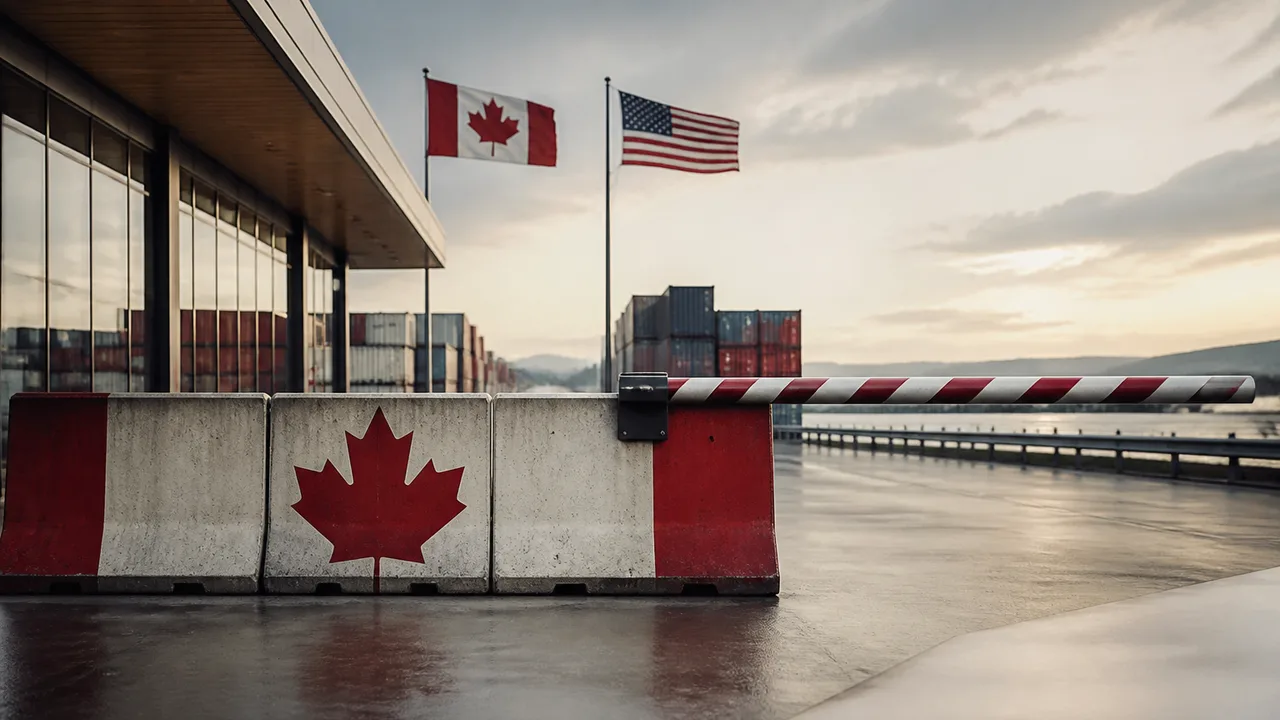
At 12:01 a.m. Eastern on September 29, selected Canadian alcohol, dairy-related goods and motorcycles became ineligible for importation into the United States. For a business trying to fulfill a US order, the question now reaches beyond the product and its price: where was that shipment when the customs clock ran out?
The answer can differ among goods from the same supplier. A covered product imported before the cutoff may still qualify for entry into US commerce. One admitted to a bonded warehouse or foreign trade zone before the cutoff may also be withdrawn under the applicable 50% duty. For newly arriving products covered by the exclusions, US Customs and Border Protection will reject entry, according to guidance summarized by trade-compliance firm GHY International.
An importer with released stock may fill an order today. If its next order requires a fresh shipment of the same covered Canadian product, paying the tariff is no longer a route to delivery. A distributor may feel the restriction most sharply when it tries to replace what it has sold.
Where the Shipment Stood
The restricted product categories include whey products, molasses, many alcoholic beverages packaged for direct consumption, and motorcycles and mopeds with petrol engines larger than 800cc. The exclusions cover selected products within those categories. A motorcycle’s engine size or a drink’s classification can determine whether an importer faces the new rule.
GHY International sets out the September 29 customs guidance. Covered goods imported before 12:01 a.m. Eastern may still be entered for consumption, the customs step that clears goods for the domestic market. Goods admitted to a bonded warehouse or foreign trade zone before the cutoff may also be withdrawn for consumption, subject to the applicable 50% duty. Arrival, admission to a customs-controlled facility and release into domestic commerce are separate events.
The guidance also says CBP will cancel entries containing covered products that have not been released. An order placed before September 29 does not, by itself, settle whether a shipment qualifies for the earlier treatment. An importer needs to establish the product’s classification and its customs status at the cutoff. Those are different questions from whether a buyer still wants the goods.
Consider two hypothetical orders for the same covered product. One US buyer has qualifying pre-cutoff goods in a bonded warehouse and can withdraw them, paying the applicable duty. Another has sold its released inventory and needs its Canadian supplier to send more. The first has a route to fulfill an order; the second cannot restore its stock through a fresh import of that covered product under the new rule. The comparison describes what the customs rules permit, not how much inventory any actual buyer holds.
That is the change from the earlier tariff. Additional 50% duties on specified Canadian dairy, alcohol and motor-vehicle goods took effect on August 22 after a three-day suspension, GHY says. Proclamations signed on September 8 altered some tariff coverage and scheduled selected goods for exclusion on September 29. Under a duty, an importer could decide whether a sale still worked after the extra charge. For a fresh import covered by the exclusion, agreeing to pay 50% no longer secures entry. Qualifying goods already inside the earlier customs window retain a route under the duty rules.
The dispute that produced those rules has competing explanations. President Donald Trump said the restrictions answered what he called Canada’s “continued discrimination” against US dairy, vehicles and alcohol, the BBC reported. Canadian Trade Minister Dominic LeBlanc called US tariffs “illegal and unjustified” and said Canada would sign an agreement only if it served its economy and sovereignty, in remarks carried by CNBC. Canada has imposed tariffs of 15% to 50% on C$27.6 billion worth of US goods, describing them as a response to American duties. The governments’ arguments concern the terms of a trade deal; an importer must also work out what it can deliver under the rule in force today.
What the Trade Figures Can Tell a Supplier
Nearly C$1 billion in Canadian liquor exports to the United States falls within the trade affected by the ban, the BBC reported. The BBC also reported that about 93% of Canadian liquor exports in 2025 went to US buyers. That concentration helps explain why Spirits Canada, a group representing liquor producers, says the consequences for its industry could be significant. The export figures describe trade exposure, not sales already lost under a restriction that began on September 29.
For a covered producer, sales from stock already released in the United States could continue while fresh Canadian shipments are barred. That would postpone the effect on what a US customer can buy, without reopening the route to replenish that product. The figures do not say how much qualifying stock distributors hold, how many producers sell the particular products listed in the exclusions, or whether buyers will switch to alternatives.
The motorcycle numbers show another limit. Canada sent about 5,000 motorcycles worth roughly C$120 million to the United States in 2025, according to Statistics Canada data cited by the BBC. The exclusion concerns selected motorcycles and mopeds, including the engine-size category identified by CNBC. The broader motorcycle export total therefore cannot tell a dealer how many machines it could no longer import. A dealer with stock already released for sale faces a different immediate problem from one awaiting a fresh shipment of a covered motorcycle.
Prime Minister Mark Carney has called the bans relatively modest compared with other US trade actions, while acknowledging harm to directly targeted businesses and sectors. Scotiabank economist Derek Holt has characterized the measures as largely face-saving. Those assessments concern national scale and political purpose. Spirits Canada’s warning concerns an industry whose exports lean heavily toward one market. Neither assessment measures September 29’s eventual effect on revenue, jobs or prices.
The earlier 50% duty offers a useful comparison, with a limit: it shows how the legal route to a US buyer changed, but it cannot predict how many buyers will use existing stock or find replacements. The customs clock does not necessarily stop a US customer from receiving a Canadian product today. For a covered product, it determines whether the importer has a way to put another one on the shelf after that stock runs out.
More Like This

Global Wealth Is $600 Trillion — and Mostly Paper
The world's net worth hit $600 trillion, but 75% of that growth since 2000 came from rising prices, not productive investment. Here's what that means.

How Caterpillar Built a Century of Industrial Dominance
From crawler tractors to AI data centers, Caterpillar's $67.6B revenue and $62B order backlog reveal a company built to outlast every economic cycle.